Folgen

  • Meine Ruh' ist hin (My Peace is Gone): Johann Wolfgang von Goethe and Marie Franz
    Oct 13 2026

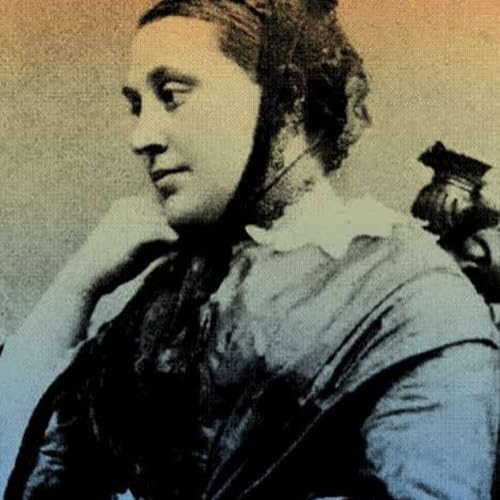
    In Goethe’s Faust, Gretchen sits alone at her spinning wheel, unable to stop thinking about Faust. Her thoughts circle obsessively around his absence, then intensify into physical longing. In this episode, I explore an extraordinary and virtually unknown setting of “Meine Ruh' ist hin” by Marie Franz (1828–1891).

    The episode features soprano Rebecca Nelsen and pianist Chanda VanderHart in a world-premiere recording I commissioned from an unpublished manuscript by Franz, preserved at the Händel-Haus in Halle, Germany.

    For more on Marie Franz's songs, see the page I created about her on my website Art Song Augmented, as well as an essay I wrote for the Women's Song Forum.


    Meine Ruh' ist hin

    Johann Wolfgang von Goethe

    Meine Ruh’ ist hin,
    Mein Herz ist schwer,
    Ich finde sie nimmer
    Und nimmermehr.

    Wo ich ihn nicht hab’
    Ist mir das Grab,
    Die ganze Welt
    Ist mir vergällt.

    Mein armer Kopf
    Ist mir verrückt
    Mein armer Sinn
    Ist mir zerstückt.

    Meine Ruh’ ist hin,
    Mein Herz ist schwer,
    Ich finde sie nimmer
    Und nimmermehr.

    Nach ihm nur schau’ ich
    Zum Fenster hinaus,
    Nach ihm nur geh’ ich
    Aus dem Haus.

    Sein hoher Gang,
    Sein’ edle Gestalt,
    Seines Mundes Lächeln,
    Seiner Augen Gewalt.

    Und seiner Rede
    Zauberfluss.
    Sein Händedruck,
    Und ach, sein Kuss!

    Meine Ruh’ ist hin,
    Mein Herz ist schwer,
    Ich finde sie nimmer
    Und nimmermehr.

    Mein Busen drängt sich
    Nach ihm hin.
    Ach dürft’ ich fassen
    Und halten ihn.

    Und küssen ihn
    So wie ich wollt’
    An seinen Küssen
    Vergehen sollt’!


    My Peace is Gone

    My peace is gone
    My heart is heavy;
    I shall never
    Ever find peace again.

    When he’s not with me,
    Life’s like the grave;
    The whole world
    Is turned to gall.

    My poor head
    Is crazed,
    My poor mind
    Shattered.

    My peace is gone
    My heart is heavy;
    I shall never
    Ever find peace again.

    It’s only for him
    I gaze from the window,
    It’s only for him
    I leave the house.

    His proud bearing
    His noble form,
    The smile on his lips,
    The power of his eyes,

    And the magic flow
    Of his words,
    The touch of his hand,
    And ah, his kiss!

    My peace is gone
    My heart is heavy;
    I shall never
    Ever find peace again.

    My bosom
    Yearns for him.
    Ah! if I could clasp
    And hold him,

    And kiss him
    To my heart’s content,
    And in his kisses
    Perish!

    English translation by Richard Stokes, from The Book of Lieder (Faber, 2005)

    Mehr anzeigen Weniger anzeigen
    25 Min.
  • Die gute Nacht, die ich dir sage (The Good Night That I Bid You): Friedrich Rückert and Clara Schumann
    Sep 23 2026

    In Friedrich Rückert’s “Die gute Nacht, die ich dir sage,” two people separated at night exchange greetings through an angel who travels between them. In this episode, I explore Clara Schumann’s 1841 setting of the poem and the ways her music gives shape to its strange sense of distance, suspended time, and listening. I also consider a special arrangement for two singers, in which the song itself seems to pass from one voice to another before the two finally come together for the words jetzt gute Nacht—“now good night.”

    The episode features a live performance of the song at the Oxford International Song Festival by Sophie Karthäuser, Stephan Loges, and Eugene Asti.


    Die gute Nacht, die ich dir sage

    Friedrich Rückert


    Die gute Nacht, die ich dir sage,

    Freund, hörest du;

    Ein Engel, der die Botschaft trage

    Geht ab und zu.


    Er bringt sie dir, und hat mir wieder

    Den Gruß gebracht:

    Dir sagen auch des Freundes Lieder

    Jetzt gute Nacht.


    The Good Night That I Bid You

    Friend, you hear

    The good night that I bid you;

    An angel, bearing the message

    Goes to and fro.


    He brings my message to you and has returned

    The greeting to me:

    The friend’s songs

    Now say good night to you, too.

    Mehr anzeigen Weniger anzeigen
    23 Min.
  • Evensong: Constance Morgan and Liza Lehmann
    Sep 9 2026

    Constance Morgan’s “Evensong” is a quiet nighttime poem in which a speaker asks the angels to fold their wings around her and “hush me to sleep.” But sleep in the poem carries a darker meaning. In this episode, I explore Liza Lehmann’s 1916 setting of the poem and the ways her music deepens that ambiguity.

    The episode features mezzo-soprano Catherine Wyn-Rogers and pianist Steuart Bedford, Lehmann’s grandson, from an album of Lehmann songs released by Naxos Records.

    For more information about Lehmann and her song, see my conversation with Christopher Reynolds, "Exploring Lehmann's 'Evensong,'" published in the Women's Song Forum.


    Evensong

    Constance Morgan

    Fold your white wings, dear Angels,
    Fold your white wings;
    Dew falls and the nightingale softly now sings.

    Across the lawn lie shadows,
    So still, so deep,
    Dear loving Angels, pass not by,
    Hush me to sleep.

    Night falls, and whisp’ring goes the wind
    Along the sea;
    Fold your white wings, dear Angels,
    Fold them, dear Angels,
    Fold them round me.

    Mehr anzeigen Weniger anzeigen
    22 Min.
  • They bore him barefaced on the bier: William Shakespeare and Cheryl Frances-Hoad
    Aug 19 2026

    In Act 4, Scene 5 of Hamlet, the grieving Ophelia moves in and out of song, singing fragments about death and loss. In this episode, I explore Cheryl Frances-Hoad’s setting of one of those fragments, “They bore him barefaced on the bier,” and the ways her music captures the strange instability of Ophelia’s song—its off-kilter dance rhythms, its collisions of simplicity and dissonance, and the moment when song itself seems to break down under the pressure of grief.

    The episode features soprano Ruby Hughes and lutenist Jonas Nordberg, performing Nordberg’s arrangement of the song on Hughes’s 2026 album Amidst the Shades.


    They bore him barefaced on the bier;
    Hey non nonny, nonny, hey nonny;
    And in his grave rain'd many a tear:--
    Fare you well, my dove!

    And will he not come again?
    And will he not come again?
    No, no, he is dead:
    Go to thy death-bed:
    He never will come again.

    His beard was as white as snow,
    All flaxen was his poll:
    He is gone, he is gone,
    And we cast away moan:
    God ha' mercy on his soul!

    From Hamlet, Act 4, Scene 5

    Mehr anzeigen Weniger anzeigen
    32 Min.
  • hyacinth, songs of the minotaur, no. 5: Duncan McFarlane and Cecilia Livingston
    Mar 17 2026

    The Minotaur is a half man/half bull from Greek mythology that is often viewed as a monster. Cecilia Livingston and Duncan McFarlane's song cycle hyacinth reimagines the Minotaur as a lonely child, imprisoned because of the way he looks, remembering fragments of a life above ground and, above all, remembering his mother.

    The episode features a recording of the song by soprano Laura Strickling and pianist Daniel Schlosberg. They will be releasing a professional recording of the cycle this August with the Sono Luminus label.

    You can find more information about Cecilia Livingston's music via her website.

    Mehr anzeigen Weniger anzeigen
    35 Min.
  • Das Blatt im Buche (The Leaf in the Book): Anastasius Grün and Pauline Decker
    Feb 24 2026

    This episode explores the first song in a cycle I assembled from stand-alone songs by Pauline Decker—using curation as a form of advocacy.

    It features a world-premiere recording of the song by tenor James Gilchrist and pianist Jocelyn Freeman. A recording of the entire song cycle, also featuring mezzo-soprano Katie Bray, can be found on my website Art Song Augmented. The score to the cycle is available via ClarNan Editions, a division of Classical Vocal Reprints.

    For an account of the creation of this cycle, see my essay "Love Letters" from the Women's Song Forum.


    Das Blatt im Buche

    Anastasius Grün


    *Ich seh’ eine alte Dame,

    Die ein altes Büchlein hat,

    Es liegt in dem alten Buche

    Ein altes, dürres Blatt.

    So dürr sind wohl auch die Hände,

    Die’s einst im Lenz ihr gepflückt.

    Was mag wohl die Alte haben,

    Sie weint, wenn sie’s erblickt?


    The Leaf in the Book

    *I see an old woman

    Who has a small, old book,

    In the old book lies

    An old, dried leaf.

    The hands that once picked it for her in springtime

    Are likely just as dry.

    Whatever could be amiss with the old woman,

    She weeps whenever she sees it?


    (translation by Sharon Krebs)


    * The original first line of Grün's poem is "Ich hab' eine alte Muhme" (I have an old aunt). I changed it to "Ich seh' eine alte Dame" (I see an old woman).

    Mehr anzeigen Weniger anzeigen
    30 Min.
  • Labor Day: Lainie Fefferman and Jascha Narveson
    Sep 29 2024

    I head back to university teaching tomorrow—and I know many teachers and students who are already back at it. In honor of this back-to-school season, here's an episode on a wild and wonderful song by New-York-based composers Lainie Fefferman and Jascha Narveson. In addition to composing a wide variety of music as individual artists, they are part of a synth-pop duo called The Beverage Station. The duo will release a full album, including this song, on May 30, 2025, from Gold Bolus Recordings.


    Labor Day
    Lainie Fefferman

    Brand-new faces
    Familiar halls
    Tracking paces
    Feel it in my throat

    Bones break
    Back aches
    I could punch through walls

    And then there's you

    Heart explosions
    Arms aglow
    Big emotions
    Pack up its time to go

    Hours come
    Seconds go
    Cut to my fun walk home

    Where there is you

    Familiar faces
    Brand-new halls
    Making spaces
    Sharing all I love

    Calm comes
    Back stroke
    Keeping tallies of smiles and cheers

    I know I've lost what I'm doing here


    Mehr anzeigen Weniger anzeigen
    34 Min.
  • Frosty in Desire: William Shakespeare and Rodrigo Ruiz
    Sep 25 2024

    On September 27, 2024, Signum Records will release a recording of Rodrigo Ruiz's cycle of seventeen songs, Venus & Adonis, based on William Shakespeare's poem of the same name. In this episode, I dive into one of my favorite songs from the cycle, where Venus takes Adonis's hand and entreats him to open his heart to her.

    For more information about Rodrigo Ruiz, you can find him on Instagram, X (formerly Twitter), and LinkTree.

    You can also learn more about his songs from this page on my website Art Song Augmented, and from this episode on his setting of a poem by Heinrich Heine.

    The recording in this episode features soprano Grace Davidson and pianist George Herbert, who also appear on the forthcoming album of the cycle.

    Frosty in Desire
    William Shakespeare (adapted by Rodrigo Ruiz)

    POET
    With this she seizeth on his sweating palm,
    and trembling in her passion, calls it balm,
    Earth’s sovereign salve to do a goddess good.

    Pure shame and awed resistance made him fret,
    which bred more beauty in his angry eyes.

    So fastened in her arms Adonis lies;
    still is he sullen, still he lours and frets,
    'twixt crimson shame and anger ashy pale.

    Still she entreats, and prettily entreats;
    she red as coals of glowing fire,
    he frosty in desire.

    (25, 27–8, 69–70, 68, 75–6, 73, 35–6)

    Mehr anzeigen Weniger anzeigen
    30 Min.