Read Me A Nightmare Titelbild

Read Me A Nightmare

Read Me A Nightmare

Von: Angelique Fawns
Jetzt kostenlos hören, ohne Abo

Nur 0,99 € pro Monat für die ersten 3 Monate

Danach 9.95 € pro Monat. Bedingungen gelten.

Über diesen Titel

Season 2 of "Read Me A Nightmare" shifts its focus to conversations with writers, editors, and creators working in and around dark fiction — about craft, career, and the realities of making stories in the world.Visit www.fawns.ca to learn more. Please --if you enjoy the episode, leave a review!

angeliquemfawns.substack.comAngelique Fawns
Kunst
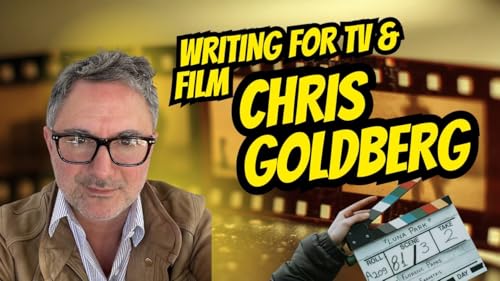
  • Writing for TV & Film with Chris Goldberg
    Jan 22 2026
    Don’t miss this raw and authentic interview with Chris Goldberg. He tells the honest truth about optioning IP for film and the current state of the industry.He’s rarely interviewed, so I am so grateful he’s chosen to share his story with us.Prefer to watch your interviews? See it on YouTube.Chris Goldberg is veteran in the film industry and is heavily involved the book-to-film world. He’s the founder and force behind Winterlight Pictures and is working on over 25 projects at places like A24, Netflix, Sony, Plan B, 87Eleven, and Lionsgate to name a few. He’s been been involved in huge hits like The Martian, and The Fault in Our Stars. Some of his projects currently in development include The Maid with Universal Pictures, and Biter staring Zöe Kravitz.Here is a notice in deadline.com about one of his projects which involves Patrick Hoffman’s The White Van.Black Label Media’s Molly Smith, Rachel Smith, Thad Luckinbill and Trent Luckinbill will produce alongside Chris Goldberg at Winterlight Pictures, who brought the project to Singer and Black Label Media, with Black Label also financing. Seth Spector will executive produce.Here are some of the highlights from the interview:AF: Can you tell people a bit about who you are?CG: You were one of the very first people I met on Substack when I started, so it’s really great to be here talking with you. I’m a producer and a writer. I started my career in New York as a literary scout, finding books to turn into movies for Fox. I did that for about ten years, reading constantly and reporting back to executives on what might work as film or television. After that, I moved to Los Angeles and worked as a development executive.About five years ago, I started my own production company, Winterlight Pictures, and at the same time I began writing again for the first time in about twenty years. Substack has been a completely unexpected experience for me. I didn’t go there with a big plan, but it’s turned into a creative home and a place where I’ve met people—like you—who share similar interests in storytelling, film, and the business behind it all.AF: What is Winterlight Pictures, and how does it fit into your work as both an executive and a creator?CG: Winterlight Pictures is my production company, and it really allows me to combine all the different parts of my background. When I was coming up in the industry, there was very much an attitude that being an executive and being a creative had to be separate. If you were a producer or development executive, you weren’t supposed to be a writer.For a long time, that separation shaped my life. I always wanted to write, but I was deeply immersed in developing other people’s work. Now, having my own company gives me the freedom to wear multiple hats. I can develop projects, produce them, and also create my own material. That balance works for me in a way that it never could when I was under a studio contract.AF: You’ve mentioned before that you stopped writing for a long time. Why did that happen?CG: When I was coming out of NYU, I was very focused on being a writer. I met director Whit Stillman when I was about twenty-one, and I asked him for advice. I told him I was about to take a job as an assistant and reader at Fox, and I asked whether he thought that was a good idea.“If you want to be a writer, go work at a gas station. Don’t take that job.” Whit’s advice to ChrisHis reasoning was that I’d be reading five-hundred-page books for studios every weekend, and the last thing I’d want to do afterward was sit down and write my own work. He was completely right. I took the job anyway, and I didn’t write again for almost twenty years.AF: So, should you have taken that job at the gas station?CG: I don’t regret it exactly, but I do think about it a lot. For twenty years, I worked with writers, read constantly, gave notes, developed scripts, and helped shepherd projects forward—but I didn’t write myself. When I finally came back to it five years ago, it felt like rediscovering a part of myself that I’d put away.At the same time, I gained an incredible education. I saw how projects really get made, how many drafts it takes, how notes shape a script, and how ideas evolve. So while I lost time as a writer, I gained perspective that I wouldn’t trade.AF: How did that background shape you as a writer once you returned to it?CG: My version of the “10,000 hours” was working at Fox. (Authorial note: Malcolm Gladwell famously said it takes 10,000 hours of practice to achieve true expertise.)Writing loglines, reading submissions, and getting immediate feedback from executives rewired how my brain works. You learn very quickly what makes an idea pop, what feels urgent, and what feels commercial.I also learned by watching writers revise. Seeing draft after draft, watching how notes land, and how stories change in response—that’s an education you can’t really get anywhere else. All ...
    Mehr anzeigen Weniger anzeigen
    33 Min.
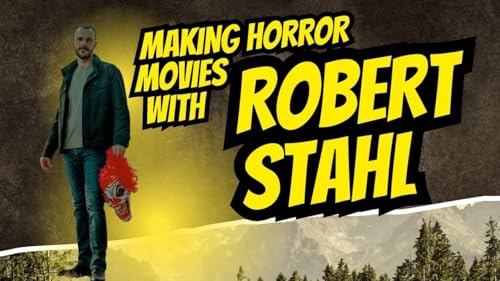
  • Making Horror Movies with Robert Stahl
    Jan 11 2026
    Prefer to WATCH this interview? CLICK HERERobert Stahl is a long-time writing friend of mine and we met because he follows my monthly short story call lists. This Texan native also makes the most blood-chilling (and fun) little horror movies.Check them out! You Better Watch Out (trigger warning: gory)Trick (trigger warning: really spicy and gory)Think Robert Rodriguez.I saw his latest Christmas horror short on YouTube and decided a catch-up in 2026 was a must-do. Learn more about Robert at www.robertestahl.com.We also talk about his recent anthology Show Me Where It HurtsAngelique: One thing that really stands out about you is that you’ve actually made horror movies—something many writers dream about. Can you tell us about your short films?Robert: I’ve done two short horror films, both under ten minutes. I wrote and produced them and worked with a very talented local director. The first was a gay slasher short called Trick, and the second was You Better Watch Out. The second one won Audience Choice at a local film competition, which I’m very proud of.Angelique: Is filmmaking something you see as profitable, or is it more of a passion project?Robert: Those films were definitely passion projects. They’re more expensive to make than they are profitable. For me, they were a way to learn the process and train myself. I do have ideas for full-length screenplays, but with a full-time job, it’s all about finding the time.Angelique: Your production quality is impressive. It feels like the industry should be snapping this kind of work up.Robert: Thank you. I think it’s possible to get there eventually, but I have to focus on one project at a time. Right now, that focus is writing fiction.Angelique: Let’s talk about your short story collection. Why did you choose to work with JournalStone instead of self-publishing?Robert: I wanted the experience of working with a publisher. I liked the reputability and the extra validation. I shopped the collection around for about a year and a half, got plenty of rejections, and eventually connected with JournalStone after seeing other authors I respected working with them.Angelique: What did that publishing process look like?Robert: They handled formatting, cover art, ebook versions, and distribution. It was a very smooth process, and I’d recommend them to other writers.Angelique: Was it financially worthwhile?Robert: I’m not retiring anytime soon, but it did reasonably well. It’s a profit-split model, not an advance, and everything was very transparent. I’d happily work with them again.Angelique: There’s a lot of talk online about big numbers and writing income, but not much honesty about expenses. What’s your take?Robert: Exactly. There are many ways to lose money in publishing. My experience with JournalStone was straightforward and fair, but writing—especially short fiction—is rarely career-changing income.Angelique: Do you see novels or novellas as the next step?Robert: Definitely. When you go to conventions, authors with more books have more opportunities. I want to build my inventory—novels, novellas, maybe comics or screenplays.Angelique: Are you aiming to make writing your full-time career?Robert: I made peace with the fact that I do this for love, not money. If something big happens, great—but that’s not my focus. Having a day job lets me create without pressure.Angelique: I think we write horror for similar reasons—processing difficult things in the world. Is that true for you?Robert: Absolutely. I’ve had a dark inner world since childhood. Writing horror helps me channel it. My mother had dementia, and that experience directly inspired one of my stories, Family Time. Writing gives me a way to work through those emotions.Angelique: That comes through in your work. Your film You Better Watch Out barely has dialogue, which I didn’t even notice when watching.Robert: That was intentional. We wanted to challenge ourselves and rely on visual storytelling. There are maybe a couple of spoken lines, but it’s mostly pure action and atmosphere.Angelique: What’s your main focus going into 2026?Robert: Building more work—hopefully another short story collection, a novel or novella, and continuing to explore screenplays and comics. I just want to keep getting better.Angelique: And where can people find you?Robert: I’m on all the socials, and my website is robertstahl.com, where people can also sign up for email updates.If you want to hear my ORIGINAL interview with Robert, check it out here. He also reads his short story “Treats.” This is a public episode. If you'd like to discuss this with other subscribers or get access to bonus episodes, visit angeliquemfawns.substack.com/subscribe
    Mehr anzeigen Weniger anzeigen
    19 Min.
  • Writing Stories with Eda Easter
    Jan 6 2026
    Welcome to SEASON 2 of Read Me A Nightmare!We are shifting the focus of this podcast a little and focusing on interviews and insights to help YOU sell stories in 2026. The Last Girls Club is OPEN for submission right now.Prefer video? WATCH the interview here.Horror - Theme for Spring’s Issue: Haunted - Jan 1-15 - 2500 words or less - pay .015 cents per word, $15 USD max - sub sims welcome - no reprints.Haunted. In the night; in the dark. We’re going old school Shirley Jackson “and the furniture laughed” creeping dread. It doesn’t have to be a house, it could be a submarine, a tent, a treehouse, a rabbit warren, whatever. Save the monster until the very end. We want growing shadows, days lost, locked doors that are suddenly ajar, lost journals in random cabinets. Do your worst, but give us your best.More about this market: I want stories from the female gaze (think Aliens, Resident Evil, Hereditary, Tank Girl). I’m tired of reading what men want to do to us. I want to read what we want to do to them. Bring me smart female protagonists whose first inclinations are not to seduce the guard to get out of situations; they’ve got skills, they can get violent easily. I’m fine with them developing over the course of the story into someone like that, but please don’t revert to clichés unless you have your tongue firmly in your cheek. Please don’t use graphic rape for fridging purposes. If it’s part of a character’s backstory or development, fine, but don’t shoot the damn dog just to piss off your main character.My focus is horror, supernatural, and creeping dread. I’m not averse to extreme/slasher horror. I always love a bit of sci-fi or dystopia, but it’s not our focus, so if it’s your venue, make it scary. If you spackle a layer of women’s issues into it, even better; such as disenfranchisement, slut-shaming, violence against trans people, racism, misogyny, sex work exploitation, inequitable emotional work and housework, whatever exists in this world that pisses you off, feel free to put a metaphorical ax between its eyebrows.SUBMIT HERE(Listen to the podcast to hear more about this particular call.)I volunteer my time helping the short story world for free. But if you could join the next tier, not only will you get free books (with market insights), you get extra content to accelerate your fiction career!My Insights: I sold a story to Eda for the Fall 2021 issue, The Gay 90s, and through the editing process became fast friends with this truly gorgeous human being. There is only one Eda Easter in the world, and I don’t know if that is a blessing or a curse. I just know I absolutely love her. Lucy and the Cosmic Comet ride was my way of processing the Heaven’s Gate mass cult suicide. As always, I like to take something dark and put a positive spin on it.At the bottom of this post, you’ll find links to the last two episodes I recorded in Season One with Eda. This includes little excerpts from her writing, including a chapter from Killer RV.Cool things referenced in the interview.Last Girls Club PatreonVillian ClassAngelique: I’m here today with one of my favorite people, Eda Easter of Last Girls Club magazine. Let’s chat.Eda: We’re live!Angelique: You wanted to talk about the spring theme for Last Girls Club, which is “Haunted.”Eda: Yes—and haunted can mean a lot of things. Haunted treehouse, haunted suburb, haunted warren—I don’t care. I wanted to do something lighter, because the winter issue was secret police, ice, and desperate times.Angelique: Very dark. Very serious.Eda: Very boots-on-the-ground. So I thought, let’s shift toward something more Shirley Jackson–style haunted. Let’s lighten it up—which is funny, because that’s what counts as light for us.Angelique: I love it. Ghost stories are the most fun. The Haunting of Hill House is one of my favorite books and movies of all time.Eda: My favorite line is “and the furniture laughed.” That moment where you realize everything is coming for you—even the ottoman. An evil ottoman!Angelique: Now you’re staring at your ottoman, aren’t you?Eda: Absolutely.Angelique: So tell me, what is it about Last Girls Club? You really embrace the feminine gaze. Punk rock feminist.Eda: Angry women. I realized that’s the core of it. Angry women are not crazy. So many of my favorite characters are women who would burn things down—or had to be killed off or “fixed” so they could be happy and get married.That’s why I hated Cruella. They framed her as evil because she was ambitious, great at her career, and didn’t want to give it up for a kid. That really got under my skin.Angelique: Okay, note to self: don’t watch if I don’t want to be enraged.Eda: You should watch it because it’s enraging. Disney is insidious about enforcing norms for girls.Angelique: And we’re all Tank Girl around here.Eda: Always.Angelique: I love evil heroines. They’re my favorite. I spent so many years caring if...
    Mehr anzeigen Weniger anzeigen
    17 Min.
Noch keine Rezensionen vorhanden