Life of the Record Titelbild

Life of the Record

Life of the Record

Von: Life of the Record / Talkhouse
Jetzt kostenlos hören, ohne Abo

Über diesen Titel

Classic albums, told by the people who made them.Life of the Record / Talkhouse Musik
  • The Making of FUR AND GOLD by Bat for Lashes - featuring Natasha Khan and David Kosten
    Feb 13 2026
    In celebration of the 20th anniversary of the debut Bat for Lashes album, Fur and Gold, we take a detailed look at how it was made. Natasha Khan had grown up in Hertfordshire, England and studied art at the University of Brighton. After graduating, she taught as a schoolteacher while writing songs and performing as Bat for Lashes. Her manager, Dick O’Dell, got her a publishing deal and connected her with producer David Kosten to work on some demos. The first Bat for Lashes single, “The Wizard” was released on her own label in early 2006. After signing with Echo, Natasha and David began working on a full-length album together at Jacobs studio in the Surrey countryside. They brought in other musicians, including Abi Fry and Caroline Weeks, who had been playing as a group with Natasha at this time. Fur and Gold was eventually released in 2006. In this episode, Natasha Khan and David Kosten have an in-depth conversation where they revisit their initial collaboration that continued long after this record. David shares how he was first asked to co-write with Natasha until he realized she had no interest in co-writing and already had a fully formed vision for this album. Natasha describes wanting to create the world of the album and use unconventional recording techniques, such as recording in a forest and under blankets, to try to achieve the sound she had imagined. Even though Natasha had a fondness for lo-fi MIDI sounds, she worked with David to craft a unique hybrid of well-recorded acoustic instruments with lower quality digital components. The result was the Mercury Prize-nominated Fur and Gold, which launched Natasha’s music into the world. From a cinematic approach of method acting and practical effects, to a shared love of girl groups, to David finding a CD-R meant for another producer, to a memorable tour with Devendra Banhart, to taking inspiration from contemporaries Cat Power, Joanna Newsom and Gwen Stefani, to being averse to anything trip-hop, to having high standards and holding the vision, we’ll hear the stories around how the album came together.
    Mehr anzeigen Weniger anzeigen
    1 Std. und 45 Min.
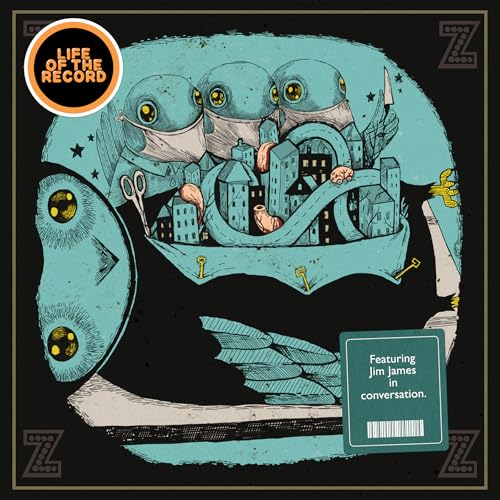
  • The Making of Z by My Morning Jacket - featuring Jim James
    Jan 22 2026
    For the 20th anniversary of the fourth My Morning Jacket album, we take a detailed look at how it was made. The band originally formed in 1998 in Louisville, Kentucky by Jim James, Johnny Quaid, Tom Blankenship and J. Glenn. After signing with Darla Records, they released their debut album, The Tennessee Fire in 1999. Danny Cash joined on keyboards before the release of their second album, At Dawn, in 2001. Patrick Hallahan took over on drums as they signed to ATO Records. Their third album, It Still Moves, was released in 2003. At this point, Johnny Quaid and Danny Cash decided to leave the band so they held auditions and recruited Bo Koster and Carl Broemel. For their fourth album, they hired producer John Leckie and began recording outside of their home studio for the first time. Z was eventually released in 2005. In this episode, Jim James describes this pivotal moment for the band when they were challenging themselves by recording outside of Louisville with a seasoned producer. By working with John Leckie, they were able to rely on his expertise in the studio and push themselves in a new direction sonically. He discusses how their early characterization as a southern rock band made him want to evolve musically and try new approaches by incorporating synthesizers and drum machines. He also shares how he was experiencing depression at the time and struggling after the suicides of two of his close friends, Tim Cushing and Aaron Todovich. With the pressure of trying to make a great record mounting, he describes how his depression was clouding his judgement as he felt like this might be the last record the band would ever make. Luckily the band was able to continue and Z proved to be a turning point as new members Bo Koster and Carl Broehmel have remained two decades later. From borrowing a Juno synth and demoing with a cheap Walmart keyboard, to getting into Prince and Fela Kuti for the first time, to mixing at the legendary Sunset Sound, to calling on friends Andrew Bird and M. Ward to play on the record, to writing abstractly about the state of the world, to using music as an outlet for anger, to the enduring quality of these songs that continue to make the MMJ setlists, we’ll hear the stories of how the album came together.
    Mehr anzeigen Weniger anzeigen
    1 Std. und 38 Min.
  • The Making of "Fairytale of New York" by The Pogues - featuring Steve Lillywhite, Jem Finer and James Fearnley
    Dec 15 2025
    In celebration of the Pogues’ 'Fairytale of New York' EP, we take a detailed look at how their classic Christmas single came together. The Pogues originally formed in London in 1982 by Shane MacGowan, Spider Stacy and Jem Finer. MacGowan had gotten his start playing in the punk band, the Nipple Erectors, and when that band broke up, he began playing in an Irish traditional music style. Gradually, he brought in James Fearnley, Cait O’Riordan and John Hasler to become a sextet. Andrew Ranken replaced John Hasler as they signed with Stiff Records. Their debut album, Red Roses for Me, was released in 1984. For their second album, they added Philip Chevron on guitar and hired Elvis Costello as their producer. Rum Sodomy & the Lash was released in 1985, and they continued working with Costello for the Poguetry in Motion EP, released in 1986. At this point, Cait O’Riordan left the band and they updated the lineup to include Darryl Hunt and Terry Woods. They signed to Island Records and hired Steve Lillywhite to produce their third album. If I Should Fall from Grace with God was eventually released in 1988 and included the Christmas single, “Fairytale of New York.” In this episode, Steve Lillywhite describes working with the Pogues at this pivotal time in their career when they were expanding the lineup and becoming more ambitious with their song structures and arrangements. Despite not having experience recording a traditional folk band, Lillywhite proved to be the right producer for the Pogues at this moment. His input and confidence in the studio led to them splicing two sections of “Fairytale of New York” together and also enlisting his wife Kirsty MacColl to sing the female part in the song. Jem Finer talks about his initial writing process for the song and how he wrote two potential Christmas ideas that his wife Marcia dismissed as being far too sentimental. Her input led to him rethinking the song and writing about a down on their luck couple, inspired by people who lived in their neighborhood in London. Finer describes how Shane MacGowan then took the song and moved the setting to New York City and added some key lines that were taken from real conversations. James Fearnley describes the thrill of recording the opening section with just piano and voice and how he practiced repeatedly to be able to get that part right. He talks about how the song deserved an ambitious string arrangement and so he worked out some ideas on a synthesizer before bringing in Fiachra Trench to help with the orchestration. By taking inspiration from film scores like Ennio Morricone’s Once Upon a Time in America and Leonard Bernstein’s On the Waterfront, Fearnley talks about wanting to bring a cinematic sound to match the classic American story that was being told. From the song’s long gestation period of a few years, to Steve Lillywhite bringing the tapes home and casually asking Kirsty MacColl to sing on it, to the inspiration behind the classic “I could’ve been someone” line, to the initial disappointment of getting to number 2 in the charts, to the perfect sparring duet partners in Shane and Kirsty, to the anti-Christmas Christmas song that has become timeless, we’ll hear the stories of how the record came together.
    Mehr anzeigen Weniger anzeigen
    1 Std. und 13 Min.
Noch keine Rezensionen vorhanden