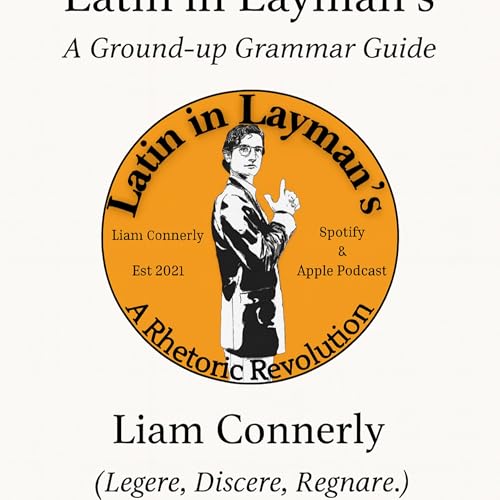
Latin in Layman’s - A Rhetoric Revolution Titelbild

Latin in Layman’s - A Rhetoric Revolution

Latin in Layman’s - A Rhetoric Revolution

Von: Liam Connerly
Jetzt kostenlos hören, ohne Abo

Über diesen Titel

Latin in Layman’s gives you the ability to understand and command language in a whole new respect. Join a typical grammarian and classicist as I expand your vocabulary, understanding of grammar, Etymology, terminology (i.e. legal, medical, botanical, etc.), and so much more. I also utilize this platform to expand on greater thoughts of mine, as well as discussing the importance of language and the promotion of "The Language Revival" (as I like to call it...) Thank you for your interested in knowledge, language acquisition, the command of one's own language, and the understanding of the world.Liam Connerly Sprachen lernen
  • REBOOT: Understanding the difference and similarities between the Medical suffixes "-otomy", "-ectomy", and "-itis"
    Feb 19 2026

    My links:

    My Ko-fi: https://ko-fi.com/rhetoricrevolution

    Send me a voice message!: https://podcasters.spotify.com/pod/show/liam-connerly

    TikTok: ⁠https://www.tiktok.com/@mrconnerly?is_from_webapp=1&sender_device=pc⁠

    Email: ⁠rhetoricrevolution@gmail.com

    Instagram: https://www.instagram.com/connerlyliam/

    Podcast | Latin in Layman’s - A Rhetoric Revolution https://open.spotify.com/show/0EjiYFx1K4lwfykjf5jApM?si=b871da6367d74d92

    YouTube: https://www.youtube.com/@MrConnerly


    1. Lobotomy: A surgical procedure involving the cutting or scraping away of a part of the brain, usually the frontal lobes, in order to treat mental illness. Etymology: From the Greek roots “lobo” (meaning “lobe”) and “tomy” (meaning “to cut”).

    • 1. Lobectomy: Surgical removal of a lobe of an organ, typically the lung.

    2. Hysterectomy: A surgical procedure in which the uterus is removed, either partially or completely. Etymology: From the Greek roots “hystera” (meaning “uterus”) and “tomy” (meaning “to cut”).

    3. Appendectomy: Surgical removal of the appendix.

    5. Mastectomy: Surgical removal of the breast.

    • “Mastos” (meaning “breast”)

    6. Nephrectomy: Surgical removal of a kidney. (Nephrologist)

    3. Phlebotomy: The practice of making an incision (or puncture) into a vein in order to draw out blood. Etymology: From the Greek roots “phlebos” (meaning “vein”) and “tomy” (meaning “to cut”).

    4. Thoracotomy: A surgical procedure in which an incision is made in the chest wall, usually to diagnose or treat a condition of the lungs or other organs in the chest. Etymology: From the Greek roots “thorax” (meaning “chest”) and “tomy” (meaning “to cut”).

    10. Thyroidectomy: Surgical removal of a part or all of the thyroid gland.

    5. Uvulotomy: A surgical procedure in which a portion of the uvula, a small fleshy protuberance at the back of the throat, is removed. Etymology: From the Latin root “uvula” (meaning “little grape”) and “tomy” (meaning “to cut”).

    6. Gastrotomy: A surgical procedure in which an incision is made in the stomach in order to diagnose or treat an abdominal condition. Etymology: From the Greek roots “gaster” (meaning “stomach”) and “tomy” (meaning “to cut”).

    • 7. Gastrectomy: Surgical removal of part or all of the stomach.

    7. Amputation: The surgical removal of a limb, either partially or completely. Etymology: From the Latin root “amputare” (meaning “to cut off”).

    1. Appendicitis: inflammation of the appendix, from the Greek word "itis" meaning inflammation.

    2. Gastritis: inflammation of the stomach lining, from the Greek word "gaster" meaning stomach.

    3. Bronchitis: inflammation of the bronchial tubes, from the Greek word "bronchia" meaning windpipe.

    4. Sinusitis: inflammation of the sinuses, from the Greek word "sinus" meaning curve.

    5. Nephritis: inflammation of the kidneys, from the Greek word "nephros" meaning kidney.

    6. Colitis: inflammation of the colon, from the Greek word "kolon" meaning large intestine.

    7. Cystitis: inflammation of the urinary bladder, from the Greek word "kystis" meaning bladder.

    8. Urethritis: inflammation of the urethra, from the Greek word "ouretheros" meaning urinary canal.

    9. Peritonitis: inflammation of the peritoneum, from the Greek word "peritoneon" meaning covering.

    10. Otitis: inflammation of the ear, from the Greek word "otos" meaning ear.

    Mehr anzeigen Weniger anzeigen
    30 Min.
  • REBOOT: A meaningful Q&A with my audience - From failures to motivations to life's most important things and all things in-between
    Feb 17 2026

    My links:

    My Ko-fi: https://ko-fi.com/rhetoricrevolution

    Send me a voice message!: https://podcasters.spotify.com/pod/show/liam-connerly

    TikTok: ⁠https://www.tiktok.com/@mrconnerly?is_from_webapp=1&sender_device=pc⁠

    Email: ⁠rhetoricrevolution@gmail.com

    Instagram: https://www.instagram.com/connerlyliam/

    Podcast | Latin in Layman’s - A Rhetoric Revolution https://open.spotify.com/show/0EjiYFx1K4lwfykjf5jApM?si=b871da6367d74d92

    YouTube: https://www.youtube.com/@MrConnerly


    1. What has been the most meaningful experience of your life so far?

    • steeeeAAzy

    2. How do you define success?

    • latininlaydudemanbro

    3. What do you believe is the key to a fulfilling life?

    • cstrevel

    4. What has been the most difficult lesson you've learned in life?

    • rich

    5. What advice would you give to your younger self?

    • bbest

    6. What do you believe is the most important thing to prioritize in life?

    • sunkissedbri

    7. What has been your biggest mistake and what did you learn from it?

    • allaboutemia

    8. How do you handle failure?

    • guy

    9. What motivates you to keep going?

    • yepyep546

    10. What do you think is the most important thing in life?

    • christopherwalken


    Mehr anzeigen Weniger anzeigen
    58 Min.
  • REBOOT: Etymologizing More Legal Terminology
    Feb 17 2026

    My links:

    My Ko-fi: https://ko-fi.com/rhetoricrevolution

    Send me a voice message!: https://podcasters.spotify.com/pod/show/liam-connerly

    TikTok: ⁠https://www.tiktok.com/@mrconnerly?is_from_webapp=1&sender_device=pc⁠

    Email: ⁠rhetoricrevolution@gmail.com

    Instagram: https://www.instagram.com/connerlyliam/

    Podcast | Latin in Layman’s - A Rhetoric Revolution https://open.spotify.com/show/0EjiYFx1K4lwfykjf5jApM?si=b871da6367d74d92

    YouTube: https://www.youtube.com/@MrConnerly


    1. Actio: A legal action or suit in Roman law; from Latin actio, from agere “to do.”

    2. Adjudicatio: A court decree or judgement; from Latin adjudico, from ad “to” and judicare “to judge”.

    3. Actori incumbit probatio: The burden of proof lies on the plaintiff; from Latin actori incumbit probatio, from actor “plaintiff” and incumbere “to impose”.

    4. Brevi manu: By order of the court; from Latin brevi manu, from brevis “short” and manus “hand”.

    5. Caveat emptor: Let the buyer beware; from Latin caveat emptor, from cavere “to beware” and emptor “buyer”.

    6. Damnum emergens: Loss arising from a breach of contract; from Latin damnum emergens, from damnum “loss” and emergere “to arise”.

    7. Ex aequo et bono: According to equity and good conscience; from Latin ex aequo et bono, from ex “from” and aequus “equal” and bonus “good”.

    8. Ex debito justitiae: Out of a sense of justice; from Latin ex debito justitiae, from ex “out of”, debito “debt” and justitiae “justice”.

    9. In personam: Against a specific person; from Latin in personam, from in “into” and persona “person”.

    10. In rem: Against a thing or property; from Latin in rem, from in “into” and rem “thing”.

    11. Inter vivos: Between living persons; from Latin inter vivos, from inter “between” and vivos “living”.

    12. Jus cogens: Compulsory law; from Latin jus cogens, from jus “law” and cogere “to compel”.

    13. Pacta sunt servanda: Agreements must be kept; from Latin pacta sunt servanda, from pacta “agreements”, sunt “are” and servanda “to be kept”.

    14. Qui facit per alium, facit per se: He who acts through another, acts himself; from Latin qui facit per alium, facit per se, from qui “who”, facit “makes”, per “through”, alium “other” and se “self”.

    15. Res judicata: A matter already adjudicated; from Latin res judicata, from res “thing” and judicata “adjudicated”.

    6. Fiat Lux – Let there be light. (Latin: fiat, let; lux, light). Etymologically, fiat lux literally means “let there be light” and is used to refer to the creation of light.

    8. Mea Culpa – My mistake; my fault. (Latin: mea, my; culpa, fault). Etymologically, mea culpa literally means “my fault” and is used to refer to an admission of guilt or responsibility for a mistake.

    9. Moot Point – A point or issue that is no longer relevant or applicable. (Latin: mūtāre, to change). Etymologically, moot point literally means “to change” and is used to refer to a point or issue that is no longer relevant or applicable.

    10. Res Ipsa Loquitur – The thing speaks for itself; an inference that a person is responsible for an accident or injury because they were in control of the situation. (Latin: res, thing; ipsa, itself; loquitur, speaks). Etymologically, res ipsa loquitur literally means “the thing speaks for itself” and is used to refer to an inference that a person is responsible for an accident or injury because they were in control of the situation.

    Mehr anzeigen Weniger anzeigen
    11 Min.
Noch keine Rezensionen vorhanden