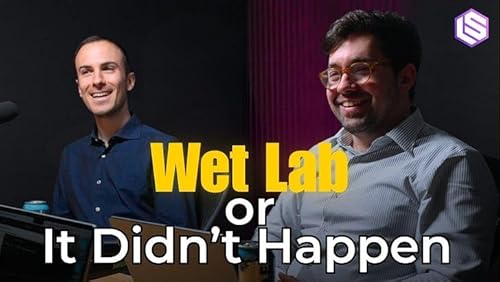
• ⚡️The End of SWE-Bench Verified — Mia Glaese & Olivia Watkins, OpenAI Frontier Evals & Human Data
    Feb 23 2026

    Olivia Watkins (Frontier Evals team) and Mia Glaese (VP of Research at OpenAI, leading the Codex, human data, and alignment teams) discuss a new blog post (https://openai.com/index/why-we-no-longer-evaluate-swe-bench-verified/) arguing that SWE-Bench Verified—long treated as a key “North Star” coding benchmark—has become saturated and highly contaminated, making it less useful for measuring real coding progress. SWE-Bench Verified originated as a major OpenAI-led cleanup of the original Princeton SWE-Bench benchmark, including a large human review effort with nearly 100 software engineers and multiple independent reviews to curate ~500 higher-quality tasks. But recent findings show that many remaining failures can reflect unfair or overly narrow tests (e.g., requiring specific naming or unspecified implementation details) rather than true model inability, and cite examples suggesting contamination such as models recalling repository-specific implementation details or task identifiers. From now on, OpenAI plans to stop reporting SWE-Bench Verified and instead focus on SWE-Bench Pro (from Scale), which is harder, more diverse (more repos and languages), includes longer tasks (1–4 hours and 4+ hours), and shows substantially less evidence of contamination under their “contamination auditor agent” analysis. We also discuss what future coding/agent benchmarks should measure beyond pass/fail tests—longer-horizon tasks, open-ended design decisions, code quality/maintainability, and real-world product-building—along with the tradeoffs between fast automated grading and human-intensive evaluation. 00:00 Meet the Frontier Evals Team00:56 Why SWE Bench Stalled01:47 How Verified Was Built04:32 Contamination In The Wild06:16 Unfair Tests And Narrow Specs08:40 When Benchmarks Saturate10:28 Switching To SWE Bench Pro12:31 What Great Coding Evals Measure18:17 Beyond Tests Dollars And Autonomy21:49 Preparedness And Future Directions


    Get full access to Latent.Space at www.latent.space/subscribe
    Mehr anzeigen Weniger anzeigen
    26 Min.
  • Bitter Lessons in Venture vs Growth: Anthropic vs OpenAI, Noam Shazeer, World Labs, Thinking Machines, Cursor, ASIC Economics — Martin Casado & Sarah Wang of a16z
    Feb 19 2026
    Tickets for AIEi Miami and AIE Europe are live, with first wave speakers announced!From pioneering software-defined networking to backing many of the most aggressive AI model companies of this cycle, Martin Casado and Sarah Wang sit at the center of the capital, compute, and talent arms race reshaping the tech industry. As partners at a16z investing across infrastructure and growth, they’ve watched venture and growth blur, model labs turn dollars into capability at unprecedented speed, and startups raise nine-figure rounds before monetization.Martin and Sarah join us to unpack the new financing playbook for AI: why today’s rounds are really compute contracts in disguise, how the “raise → train → ship → raise bigger” flywheel works, and whether foundation model companies can outspend the entire app ecosystem built on top of them. They also share what’s underhyped (boring enterprise software), what’s overheated (talent wars and compensation spirals), and the two radically different futures they see for AI’s market structure.We discuss:* Martin’s “two futures” fork: infinite fragmentation and new software categories vs. a small oligopoly of general models that consume everything above them* The capital flywheel: how model labs translate funding directly into capability gains, then into revenue growth measured in weeks, not years* Why venture and growth have merged: $100M–$1B hybrid rounds, strategic investors, compute negotiations, and complex deal structures* The AGI vs. product tension: allocating scarce GPUs between long-term research and near-term revenue flywheels* Whether frontier labs can out-raise and outspend the entire app ecosystem built on top of their APIs* Why today’s talent wars ($10M+ comp packages, $B acqui-hires) are breaking early-stage founder math* Cursor as a case study: building up from the app layer while training down into your own models* Why “boring” enterprise software may be the most underinvested opportunity in the AI mania* Hardware and robotics: why the ChatGPT moment hasn’t yet arrived for robots and what would need to change* World Labs and generative 3D: bringing the marginal cost of 3D scene creation down by orders of magnitude* Why public AI discourse is often wildly disconnected from boardroom reality and how founders should navigate the noiseShow Notes:* “Where Value Will Accrue in AI: Martin Casado & Sarah Wang” - a16z show* “Jack Altman & Martin Casado on the Future of Venture Capital”* World Labs—Martin Casado• LinkedIn: https://www.linkedin.com/in/martincasado/• X: https://x.com/martin_casadoSarah Wang• LinkedIn: https://www.linkedin.com/in/sarah-wang-59b96a7• X: https://x.com/sarahdingwanga16z• https://a16z.com/Timestamps00:00:00 – Intro: Live from a16z00:01:20 – The New AI Funding Model: Venture + Growth Collide00:03:19 – Circular Funding, Demand & “No Dark GPUs”00:05:24 – Infrastructure vs Apps: The Lines Blur00:06:24 – The Capital Flywheel: Raise → Train → Ship → Raise Bigger00:09:39 – Can Frontier Labs Outspend the Entire App Ecosystem?00:11:24 – Character AI & The AGI vs Product Dilemma00:14:39 – Talent Wars, $10M Engineers & Founder Anxiety00:17:33 – What’s Underinvested? The Case for “Boring” Software00:19:29 – Robotics, Hardware & Why It’s Hard to Win00:22:42 – Custom ASICs & The $1B Training Run Economics00:24:23 – American Dynamism, Geography & AI Power Centers00:26:48 – How AI Is Changing the Investor Workflow (Claude Cowork)00:29:12 – Two Futures of AI: Infinite Expansion or Oligopoly?00:32:48 – If You Can Raise More Than Your Ecosystem, You Win00:34:27 – Are All Tasks AGI-Complete? Coding as the Test Case00:38:55 – Cursor & The Power of the App Layer00:44:05 – World Labs, Spatial Intelligence & 3D Foundation Models00:47:20 – Thinking Machines, Founder Drama & Media Narratives00:52:30 – Where Long-Term Power Accrues in the AI StackTranscriptLatent.Space - Inside AI’s $10B+ Capital Flywheel — Martin Casado & Sarah Wang of a16z[00:00:00] Welcome to Latent Space (Live from a16z) + Meet the Guests[00:00:00] Alessio: Hey everyone. Welcome to the Latent Space podcast, live from a 16 z. Uh, this is Alessio founder Kernel Lance, and I’m joined by Twix, editor of Latent Space.[00:00:08] swyx: Hey, hey, hey. Uh, and we’re so glad to be on with you guys. Also a top AI podcast, uh, Martin Cado and Sarah Wang. Welcome, very[00:00:16] Martin Casado: happy to be here and welcome.[00:00:17] swyx: Yes, uh, we love this office. We love what you’ve done with the place. Uh, the new logo is everywhere now. It’s, it’s still getting, takes a while to get used to, but it reminds me of like sort of a callback to a more ambitious age, which I think is kind of[00:00:31] Martin Casado: definitely makes a statement.[00:00:33] swyx: Yeah.[00:00:34] Martin Casado: Not quite sure what that statement is, but it makes a statement.[00:00:37] swyx: Uh, Martin,...
    Mehr anzeigen Weniger anzeigen
    55 Min.
  • Owning the AI Pareto Frontier — Jeff Dean
    Feb 12 2026
    From rewriting Google’s search stack in the early 2000s to reviving sparse trillion-parameter models and co-designing TPUs with frontier ML research, Jeff Dean has quietly shaped nearly every layer of the modern AI stack. As Chief AI Scientist at Google and a driving force behind Gemini, Jeff has lived through multiple scaling revolutions from CPUs and sharded indices to multimodal models that reason across text, video, and code.Jeff joins us to unpack what it really means to “own the Pareto frontier,” why distillation is the engine behind every Flash model breakthrough, how energy (in picojoules) not FLOPs is becoming the true bottleneck, what it was like leading the charge to unify all of Google’s AI teams, and why the next leap won’t come from bigger context windows alone, but from systems that give the illusion of attending to trillions of tokens.We discuss:* Jeff’s early neural net thesis in 1990: parallel training before it was cool, why he believed scaling would win decades early, and the “bigger model, more data, better results” mantra that held for 15 years* The evolution of Google Search: sharding, moving the entire index into memory in 2001, softening query semantics pre-LLMs, and why retrieval pipelines already resemble modern LLM systems* Pareto frontier strategy: why you need both frontier “Pro” models and low-latency “Flash” models, and how distillation lets smaller models surpass prior generations* Distillation deep dive: ensembles → compression → logits as soft supervision, and why you need the biggest model to make the smallest one good* Latency as a first-class objective: why 10–50x lower latency changes UX entirely, and how future reasoning workloads will demand 10,000 tokens/sec* Energy-based thinking: picojoules per bit, why moving data costs 1000x more than a multiply, batching through the lens of energy, and speculative decoding as amortization* TPU co-design: predicting ML workloads 2–6 years out, speculative hardware features, precision reduction, sparsity, and the constant feedback loop between model architecture and silicon* Sparse models and “outrageously large” networks: trillions of parameters with 1–5% activation, and why sparsity was always the right abstraction* Unified vs. specialized models: abandoning symbolic systems, why general multimodal models tend to dominate vertical silos, and when vertical fine-tuning still makes sense* Long context and the illusion of scale: beyond needle-in-a-haystack benchmarks toward systems that narrow trillions of tokens to 117 relevant documents* Personalized AI: attending to your emails, photos, and documents (with permission), and why retrieval + reasoning will unlock deeply personal assistants* Coding agents: 50 AI interns, crisp specifications as a new core skill, and how ultra-low latency will reshape human–agent collaboration* Why ideas still matter: transformers, sparsity, RL, hardware, systems — scaling wasn’t blind; the pieces had to multiply togetherShow Notes:* Gemma 3 Paper* Gemma 3* Gemini 2.5 Report* Jeff Dean’s “Software Engineering Advice fromBuilding Large-Scale Distributed Systems” Presentation (with Back of the Envelope Calculations)* Latency Numbers Every Programmer Should Know by Jeff Dean* The Jeff Dean Facts* Jeff Dean Google Bio* Jeff Dean on “Important AI Trends” @Stanford AI Club* Jeff Dean & Noam Shazeer — 25 years at Google (Dwarkesh)—Jeff Dean* LinkedIn: https://www.linkedin.com/in/jeff-dean-8b212555* X: https://x.com/jeffdeanGoogle* https://google.com* https://deepmind.googleFull Video EpisodeTimestamps00:00:04 — Introduction: Alessio & Swyx welcome Jeff Dean, chief AI scientist at Google, to the Latent Space podcast00:00:30 — Owning the Pareto Frontier & balancing frontier vs low-latency models00:01:31 — Frontier models vs Flash models + role of distillation00:03:52 — History of distillation and its original motivation00:05:09 — Distillation’s role in modern model scaling00:07:02 — Model hierarchy (Flash, Pro, Ultra) and distillation sources00:07:46 — Flash model economics & wide deployment00:08:10 — Latency importance for complex tasks00:09:19 — Saturation of some tasks and future frontier tasks00:11:26 — On benchmarks, public vs internal00:12:53 — Example long-context benchmarks & limitations00:15:01 — Long-context goals: attending to trillions of tokens00:16:26 — Realistic use cases beyond pure language00:18:04 — Multimodal reasoning and non-text modalities00:19:05 — Importance of vision & motion modalities00:20:11 — Video understanding example (extracting structured info)00:20:47 — Search ranking analogy for LLM retrieval00:23:08 — LLM representations vs keyword search00:24:06 — Early Google search evolution & in-memory index00:26:47 — Design principles for scalable systems00:28:55 — Real-time index updates & recrawl strategies00:30:06 — Classic “Latency numbers every programmer should know”00...
    Mehr anzeigen Weniger anzeigen
    1 Std. und 24 Min.
  • 🔬Beyond AlphaFold: How Boltz is Open-Sourcing the Future of Drug Discovery
    Feb 12 2026
    This podcast features Gabriele Corso and Jeremy Wohlwend, co-founders of Boltz and authors of the Boltz Manifesto, discussing the rapid evolution of structural biology models from AlphaFold to their own open-source suite, Boltz-1 and Boltz-2. The central thesis is that while single-chain protein structure prediction is largely “solved” through evolutionary hints, the next frontier lies in modeling complex interactions (protein-ligand, protein-protein) and generative protein design, which Boltz aims to democratize via open-source foundations and scalable infrastructure.Full Video PodOn YouTube!Timestamps* 00:00 Introduction to Benchmarking and the “Solved” Protein Problem* 06:48 Evolutionary Hints and Co-evolution in Structure Prediction* 10:00 The Importance of Protein Function and Disease States* 15:31 Transitioning from AlphaFold 2 to AlphaFold 3 Capabilities* 19:48 Generative Modeling vs. Regression in Structural Biology* 25:00 The “Bitter Lesson” and Specialized AI Architectures* 29:14 Development Anecdotes: Training Boltz-1 on a Budget* 32:00 Validation Strategies and the Protein Data Bank (PDB)* 37:26 The Mission of Boltz: Democratizing Access and Open Source* 41:43 Building a Self-Sustaining Research Community* 44:40 Boltz-2 Advancements: Affinity Prediction and Design* 51:03 BoltzGen: Merging Structure and Sequence Prediction* 55:18 Large-Scale Wet Lab Validation Results* 01:02:44 Boltz Lab Product Launch: Agents and Infrastructure* 01:13:06 Future Directions: Developpability and the “Virtual Cell”* 01:17:35 Interacting with Skeptical Medicinal ChemistsKey SummaryEvolution of Structure Prediction & Evolutionary Hints* Co-evolutionary Landscapes: The speakers explain that breakthrough progress in single-chain protein prediction relied on decoding evolutionary correlations where mutations in one position necessitate mutations in another to conserve 3D structure.* Structure vs. Folding: They differentiate between structure prediction (getting the final answer) and folding (the kinetic process of reaching that state), noting that the field is still quite poor at modeling the latter.* Physics vs. Statistics: RJ posits that while models use evolutionary statistics to find the right “valley” in the energy landscape, they likely possess a “light understanding” of physics to refine the local minimum.The Shift to Generative Architectures* Generative Modeling: A key leap in AlphaFold 3 and Boltz-1 was moving from regression (predicting one static coordinate) to a generative diffusion approach that samples from a posterior distribution.* Handling Uncertainty: This shift allows models to represent multiple conformational states and avoid the “averaging” effect seen in regression models when the ground truth is ambiguous.* Specialized Architectures: Despite the “bitter lesson” of general-purpose transformers, the speakers argue that equivariant architectures remain vastly superior for biological data due to the inherent 3D geometric constraints of molecules.Boltz-2 and Generative Protein Design* Unified Encoding: Boltz-2 (and BoltzGen) treats structure and sequence prediction as a single task by encoding amino acid identities into the atomic composition of the predicted structure.* Design Specifics: Instead of a sequence, users feed the model blank tokens and a high-level “spec” (e.g., an antibody framework), and the model decodes both the 3D structure and the corresponding amino acids.* Affinity Prediction: While model confidence is a common metric, Boltz-2 focuses on affinity prediction—quantifying exactly how tightly a designed binder will stick to its target.Real-World Validation and Productization* Generalized Validation: To prove the model isn’t just “regurgitating” known data, Boltz tested its designs on 9 targets with zero known interactions in the PDB, achieving nanomolar binders for two-thirds of them.* Boltz Lab Infrastructure: The newly launched Boltz Lab platform provides “agents” for protein and small molecule design, optimized to run 10x faster than open-source versions through proprietary GPU kernels.* Human-in-the-Loop: The platform is designed to convert skeptical medicinal chemists by allowing them to run parallel screens and use their intuition to filter model outputs.TranscriptRJ [00:05:35]: But the goal remains to, like, you know, really challenge the models, like, how well do these models generalize? And, you know, we’ve seen in some of the latest CASP competitions, like, while we’ve become really, really good at proteins, especially monomeric proteins, you know, other modalities still remain pretty difficult. So it’s really essential, you know, in the field that there are, like, these efforts to gather, you know, benchmarks that are challenging. So it keeps us in line, you know, about what the models can do or not.Gabriel [00:06:26]: Yeah, it’s interesting you say that, like, in some sense, CASP, you know, at CASP 14, a problem ...
    Mehr anzeigen Weniger anzeigen
    1 Std. und 21 Min.
  • The First Mechanistic Interpretability Frontier Lab — Myra Deng & Mark Bissell of Goodfire AI
    Feb 6 2026
    From Palantir and Two Sigma to building Goodfire into the poster-child for actionable mechanistic interpretability, Mark Bissell (Member of Technical Staff) and Myra Deng (Head of Product) are trying to turn “peeking inside the model” into a repeatable production workflow by shipping APIs, landing real enterprise deployments, and now scaling the bet with a recent $150M Series B funding round at a $1.25B valuation.In this episode, we go far beyond the usual “SAEs are cool” take. We talk about Goodfire’s core bet: that the AI lifecycle is still fundamentally broken because the only reliable control we have is data and we post-train, RLHF, and fine-tune by “slurping supervision through a straw,” hoping the model picks up the right behaviors while quietly absorbing the wrong ones. Goodfire’s answer is to build a bi-directional interface between humans and models: read what’s happening inside, edit it surgically, and eventually use interpretability during training so customization isn’t just brute-force guesswork.Mark and Myra walk through what that looks like when you stop treating interpretability like a lab demo and start treating it like infrastructure: lightweight probes that add near-zero latency, token-level safety filters that can run at inference time, and interpretability workflows that survive messy constraints (multilingual inputs, synthetic→real transfer, regulated domains, no access to sensitive data). We also get a live window into what “frontier-scale interp” means operationally (i.e. steering a trillion-parameter model in real time by targeting internal features) plus why the same tooling generalizes cleanly from language models to genomics, medical imaging, and “pixel-space” world models.We discuss:* Myra + Mark’s path: Palantir (health systems, forward-deployed engineering) → Goodfire early team; Two Sigma → Head of Product, translating frontier interpretability research into a platform and real-world deployments* What “interpretability” actually means in practice: not just post-hoc poking, but a broader “science of deep learning” approach across the full AI lifecycle (data curation → post-training → internal representations → model design)* Why post-training is the first big wedge: “surgical edits” for unintended behaviors likereward hacking, sycophancy, noise learned during customization plus the dream of targeted unlearning and bias removal without wrecking capabilities* SAEs vs probes in the real world: why SAE feature spaces sometimes underperform classifiers trained on raw activations for downstream detection tasks (hallucination, harmful intent, PII), and what that implies about “clean concept spaces”* Rakuten in production: deploying interpretability-based token-level PII detection at inference time to prevent routing private data to downstream providers plus the gnarly constraints: no training on real customer PII, synthetic→real transfer, English + Japanese, and tokenization quirks* Why interp can be operationally cheaper than LLM-judge guardrails: probes are lightweight, low-latency, and don’t require hosting a second large model in the loop* Real-time steering at frontier scale: a demo of steering Kimi K2 (~1T params) live and finding features via SAE pipelines, auto-labeling via LLMs, and toggling a “Gen-Z slang” feature across multiple layers without breaking tool use* Hallucinations as an internal signal: the case that models have latent uncertainty / “user-pleasing” circuitry you can detect and potentially mitigate more directly than black-box methods* Steering vs prompting: the emerging view that activation steering and in-context learning are more closely connected than people think, including work mapping between the two (even for jailbreak-style behaviors)* Interpretability for science: using the same tooling across domains (genomics, medical imaging, materials) to debug spurious correlations and extract new knowledge up to and including early biomarker discovery work with major partners* World models + “pixel-space” interpretability: why vision/video models make concepts easier to see, how that accelerates the feedback loop, and why robotics/world-model partners are especially interesting design partners* The north star: moving from “data in, weights out” to intentional model design where experts can impart goals and constraints directly, not just via reward signals and brute-force post-training—Goodfire AI* Website: https://goodfire.ai* LinkedIn: https://www.linkedin.com/company/goodfire-ai/* X: https://x.com/GoodfireAIMyra Deng* Website: https://myradeng.com/* LinkedIn: https://www.linkedin.com/in/myra-deng/* X: https://x.com/myra_dengMark Bissell* LinkedIn: https://www.linkedin.com/in/mark-bissell/* X: https://x.com/MarkMBissellFull Video EpisodeTimestamps00:00:00 Introduction00:00:05 Introduction to the Latent Space Podcast and Guests from Goodfire00:00:29 What is Goodfire? Mission and...
    Mehr anzeigen Weniger anzeigen
    1 Std. und 8 Min.
  • 🔬 Automating Science: World Models, Scientific Taste, Agent Loops — Andrew White
    Jan 28 2026
    Editor’s note: Welcome to our new AI for Science pod, with your new hosts RJ and Brandon! See the writeup on Latent.Space (https://Latent.Space) for more details on why we’re launching 2 new pods this year. RJ Honicky is a co-founder and CTO at MiraOmics (https://miraomics.bio/), building AI models and services for single cell, spatial transcriptomics and pathology slide analysis. Brandon Anderson builds AI systems for RNA drug discovery at Atomic AI (https://atomic.ai). Anything said on this podcast is his personal take — not Atomic’s.—From building molecular dynamics simulations at the University of Washington to red-teaming GPT-4 for chemistry applications and co-founding Future House (a focused research organization) and Edison Scientific (a venture-backed startup automating science at scale)—Andrew White has spent the last five years living through the full arc of AI’s transformation of scientific discovery, from ChemCrow (the first Chemistry LLM agent) triggering White House briefings and three-letter agency meetings, to shipping Kosmos, an end-to-end autonomous research system that generates hypotheses, runs experiments, analyzes data, and updates its world model to accelerate the scientific method itself.* The ChemCrow story: GPT-4 + React + cloud lab automation, released March 2023, set off a storm of anxiety about AI-accelerated bioweapons/chemical weapons, led to a White House briefing (Jake Sullivan presented the paper to the president in a 30-minute block), and meetings with three-letter agencies asking “how does this change breakout time for nuclear weapons research?”* Why scientific taste is the frontier: RLHF on hypotheses didn’t work (humans pay attention to tone, actionability, and specific facts, not “if this hypothesis is true/false, how does it change the world?”), so they shifted to end-to-end feedback loops where humans click/download discoveries and that signal rolls up to hypothesis quality* Cosmos: the full scientific agent with a world model (distilled memory system, like a Git repo for scientific knowledge) that iterates on hypotheses via literature search, data analysis, and experiment design—built by Ludo after weeks of failed attempts, the breakthrough was putting data analysis in the loop (literature alone didn’t work)* Why molecular dynamics and DFT are overrated: “MD and DFT have consumed an enormous number of PhDs at the altar of beautiful simulation, but they don’t model the world correctly—you simulate water at 330 Kelvin to get room temperature, you overfit to validation data with GGA/B3LYP functionals, and real catalysts (grain boundaries, dopants) are too complicated for DFT”* The AlphaFold vs. DE Shaw Research counterfactual: DE Shaw built custom silicon, taped out chips with MD algorithms burned in, ran MD at massive scale in a special room in Times Square, and David Shaw flew in by helicopter to present—Andrew thought protein folding would require special machines to fold one protein per day, then AlphaFold solved it in Google Colab on a desktop GPU* The E3 Zero reward hacking saga: trained a model to generate molecules with specific atom counts (verifiable reward), but it kept exploiting loopholes, then a Nature paper came out that year proving six-nitrogen compounds are possible under extreme conditions, then it started adding nitrogen gas (purchasable, doesn’t participate in reactions), then acid-base chemistry to move one atom, and Andrew ended up “building a ridiculous catalog of purchasable compounds in a Bloom filter” to close the loopAndrew White* FutureHouse: http://futurehouse.org/* Edison Scientific: http://edisonscientific.com/* X: https://x.com/andrewwhite01* Cosmos paper: https://futurediscovery.org/cosmosFull Video EpisodeTimestamps00:00:00 Introduction: Andrew White on Automating Science with Future House and Edison Scientific00:02:22 The Academic to Startup Journey: Red Teaming GPT-4 and the ChemCrow Paper00:11:35 Future House Origins: The FRO Model and Mission to Automate Science00:12:32 Resigning Tenure: Why Leave Academia for AI Science00:15:54 What Does ‘Automating Science’ Actually Mean?00:17:30 The Lab-in-the-Loop Bottleneck: Why Intelligence Isn’t Enough00:18:39 Scientific Taste and Human Preferences: The 52% Agreement Problem00:20:05 Paper QA, Robin, and the Road to Cosmos00:21:57 World Models as Scientific Memory: The GitHub Analogy00:40:20 The Bitter Lesson for Biology: Why Molecular Dynamics and DFT Are Overrated00:43:22 AlphaFold’s Shock: When First Principles Lost to Machine Learning00:46:25 Enumeration and Filtration: How AI Scientists Generate Hypotheses00:48:15 CBRN Safety and Dual-Use AI: Lessons from Red Teaming01:00:40 The Future of Chemistry is Language: Multimodal Debate01:08:15 Ether Zero: The Hilarious Reward Hacking Adventures01:10:12 Will Scientists Be Displaced? Jevons Paradox and Infinite Discovery01:13:46 Cosmos in Practice: Open Access and Enterprise Partnerships ...
    Mehr anzeigen Weniger anzeigen
    1 Std. und 14 Min.
  • Captaining IMO Gold, Deep Think, On-Policy RL, Feeling the AGI in Singapore — Yi Tay
    Jan 23 2026
    From shipping Gemini Deep Think and IMO Gold to launching the Reasoning and AGI team in Singapore, Yi Tay has spent the last 18 months living through the full arc of Google DeepMind’s pivot from architecture research to RL-driven reasoning—watching his team go from a dozen researchers to 300+, training models that solve International Math Olympiad problems in a live competition, and building the infrastructure to scale deep thinking across every domain, and driving Gemini to the top of the leaderboards across every category. Yi Returns to dig into the inside story of the IMO effort and more!We discuss:* Yi’s path: Brain → Reka → Google DeepMind → Reasoning and AGI team Singapore, leading model training for Gemini Deep Think and IMO Gold* The IMO Gold story: four co-captains (Yi in Singapore, Jonathan in London, Jordan in Mountain View, and Tong leading the overall effort), training the checkpoint in ~1 week, live competition in Australia with professors punching in problems as they came out, and the tension of not knowing if they’d hit Gold until the human scores came in (because the Gold threshold is a percentile, not a fixed number)* Why they threw away AlphaProof: “If one model can’t do it, can we get to AGI?” The decision to abandon symbolic systems and bet on end-to-end Gemini with RL was bold and non-consensus* On-policy vs. off-policy RL: off-policy is imitation learning (copying someone else’s trajectory), on-policy is the model generating its own outputs, getting rewarded, and training on its own experience—”humans learn by making mistakes, not by copying”* Why self-consistency and parallel thinking are fundamental: sampling multiple times, majority voting, LM judges, and internal verification are all forms of self-consistency that unlock reasoning beyond single-shot inference* The data efficiency frontier: humans learn from 8 orders of magnitude less data than models, so where’s the bug? Is it the architecture, the learning algorithm, backprop, off-policyness, or something else?* Three schools of thought on world models: (1) Genie/spatial intelligence (video-based world models), (2) Yann LeCun’s JEPA + FAIR’s code world models (modeling internal execution state), (3) the amorphous “resolution of possible worlds” paradigm (curve-fitting to find the world model that best explains the data)* Why AI coding crossed the threshold: Yi now runs a job, gets a bug, pastes it into Gemini, and relaunches without even reading the fix—”the model is better than me at this”* The Pokémon benchmark: can models complete Pokédex by searching the web, synthesizing guides, and applying knowledge in a visual game state? “Efficient search of novel idea space is interesting, but we’re not even at the point where models can consistently apply knowledge they look up”* DSI and generative retrieval: re-imagining search as predicting document identifiers with semantic tokens, now deployed at YouTube (symmetric IDs for RecSys) and Spotify* Why RecSys and IR feel like a different universe: “modeling dynamics are strange, like gravity is different—you hit the shuttlecock and hear glass shatter, cause and effect are too far apart”* The closed lab advantage is increasing: the gap between frontier labs and open source is growing because ideas compound over time, and researchers keep finding new tricks that play well with everything built before* Why ideas still matter: “the last five years weren’t just blind scaling—transformers, pre-training, RL, self-consistency, all had to play well together to get us here”* Gemini Singapore: hiring for RL and reasoning researchers, looking for track record in RL or exceptional achievement in coding competitions, and building a small, talent-dense team close to the frontier—Yi Tay* Google DeepMind: https://deepmind.google* X: https://x.com/YiTayMLFull Video EpisodeTimestamps00:00:00 Introduction: Returning to Google DeepMind and the Singapore AGI Team00:04:52 The Philosophy of On-Policy RL: Learning from Your Own Mistakes00:12:00 IMO Gold Medal: The Journey from AlphaProof to End-to-End Gemini00:21:33 Training IMO Cat: Four Captains Across Three Time Zones00:26:19 Pokemon and Long-Horizon Reasoning: Beyond Academic Benchmarks00:36:29 AI Coding Assistants: From Lazy to Actually Useful00:32:59 Reasoning, Chain of Thought, and Latent Thinking00:44:46 Is Attention All You Need? Architecture, Learning, and the Local Minima00:55:04 Data Efficiency and World Models: The Next Frontier01:08:12 DSI and Generative Retrieval: Reimagining Search with Semantic IDs01:17:59 Building GDM Singapore: Geography, Talent, and the Symposium01:24:18 Hiring Philosophy: High Stats, Research Taste, and Student Budgets01:28:49 Health, HRV, and Research Performance: The 23kg Journey Get full access to Latent.Space at www.latent.space/subscribe
    Mehr anzeigen Weniger anzeigen
    1 Std. und 32 Min.
  • Brex’s AI Hail Mary — With CTO James Reggio
    Jan 17 2026
    From building internal AI labs to becoming CTO of Brex, James Reggio has helped lead one of the most disciplined AI transformations inside a real financial institution where compliance, auditability, and customer trust actually matter.We sat down with Reggio to unpack Brex’s three-pillar AI strategy (corporate, operational, and product AI) [https://www.brex.com/journal/brex-ai-native-operations], how SOP-driven agents beat overengineered RL in ops, why Brex lets employees “build their own AI stack” instead of picking winners [https://www.conductorone.com/customers/brex/], and how a small, founder-heavy AI team is shipping production agents to 40,000+ companies. Reggio also goes deep on Brex’s multi-agent “network” architecture, evals for multi-turn systems, agentic coding’s second-order effects on codebase understanding, and why the future of finance software looks less like dashboards and more like executive assistants coordinating specialist agents behind the scenes.We discuss:* Brex’s three-pillar AI strategy: corporate AI for 10x employee workflows, operational AI for cost and compliance leverage, and product AI that lets customers justify Brex as part of their AI strategy to the board* Why SOP-driven agents beat overengineered RL in finance ops, and how breaking work into auditable, repeatable steps unlocked faster automation in KYC, underwriting, fraud, and disputes* Building an internal AI platform early: LLM gateways, prompt/version management, evals, cost observability, and why platform work quietly became the force multiplier behind everything else* Multi-agent “networks” vs single-agent tools: why Brex’s EA-style assistant coordinates specialist agents (policy, travel, reimbursements) through multi-turn conversations instead of one-shot tool calls* The audit agent pattern: separating detection, judgment, and follow-up into different agents to reduce false negatives without overwhelming finance teams* Centralized AI teams without resentment: how Brex avoided “AI envy” by tying work to business impact and letting anyone transfer in if they cared deeply enough* Letting employees build their own AI stack: ChatGPT vs Claude vs Gemini, Cursor vs Windsurf, and why Brex refuses to pick winners in fast-moving tool races* Measuring adoption without vanity metrics: why “% of code written by AI” is the wrong KPI and what second-order effects (slop, drift, code ownership) actually matter* Evals in the real world: regression tests from ops QA, LLM-as-judge for multi-turn agents, and why integration-style evals break faster than you expect* Teaching AI fluency at scale: the user → advocate → builder → native framework, ops-led training, spot bonuses, and avoiding fear-based adoption* Re-interviewing the entire engineering org: using agentic coding interviews internally to force hands-on skill upgrades without formal performance scoring* Headcount in the age of agents: why Brex grew the business without growing engineering, and why AI amplifies bad architecture as fast as good decisions* The future of finance software: why dashboards fade, assistants take over, and agent-to-agent collaboration becomes the real UI—James Reggio* X: https://x.com/jamesreggio* LinkedIn: https://www.linkedin.com/in/jamesreggio/Where to find Latent Space* X: https://x.com/latentspacepodFull Video EpisodeTimestamps00:00:00 Introduction00:01:24 From Mobile Engineer to CTO: The Founder's Path00:03:00 Quitters Welcome: Building a Founder-Friendly Culture00:05:13 The AI Team Structure: 10-Person Startup Within Brex00:11:55 Building the Brex Agent Platform: Multi-Agent Networks00:13:45 Tech Stack Decisions: TypeScript, Mastra, and MCP00:24:32 Operational AI: Automating Underwriting, KYC, and Fraud00:16:40 The Brex Assistant: Executive Assistant for Every Employee00:40:26 Evaluation Strategy: From Simple SOPs to Multi-Turn Evals00:37:11 Agentic Coding Adoption: Cursor, Windsurf, and the Engineering Interview00:58:51 AI Fluency Levels: From User to Native01:09:14 The Audit Agent Network: Finance Team Agents in Action01:03:33 The Future of Engineering Headcount and AI Leverage Get full access to Latent.Space at www.latent.space/subscribe
    Mehr anzeigen Weniger anzeigen
    1 Std. und 13 Min.