

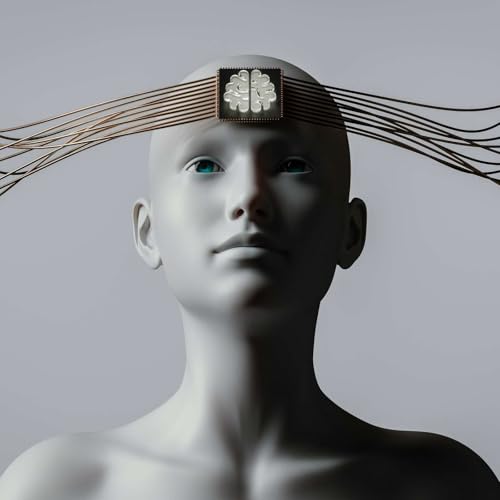
Inside Neuralink’s Technology Architecture: Hype or Near-Term Reality?
Artikel konnten nicht hinzugefügt werden
Der Titel konnte nicht zum Warenkorb hinzugefügt werden.
Der Titel konnte nicht zum Merkzettel hinzugefügt werden.
„Von Wunschzettel entfernen“ fehlgeschlagen.
„Podcast folgen“ fehlgeschlagen
„Podcast nicht mehr folgen“ fehlgeschlagen

Inside Neuralink’s Technology Architecture: Hype or Near-Term Reality?
-
Gesprochen von:
-
Von:
Über diesen Titel
This story was originally published on HackerNoon at: https://hackernoon.com/inside-neuralinks-technology-architecture-hype-or-near-term-reality.
Neuralink’s brain chip is real engineering, but scaling it safely in humans is a far harder problem than early demos suggest.
Check more stories related to tech-companies at: https://hackernoon.com/c/tech-companies. You can also check exclusive content about #neuralink, #brain-computer-interface, #biomedical-engineering, #neural-signal-processing, #neurotechnology, #human-brain-implants, #neural-data-acquisition, #bci-signal-processing, and more.
This story was written by: @eugene7773. Learn more about this writer by checking @eugene7773's about page, and for more stories, please visit hackernoon.com.
Neuralink isn’t sci-fi, but it’s far from solved. The company has built real, end-to-end engineering—high-channel neural implants, flexible electrode threads, custom silicon, a surgical robot, and a full software pipeline. The hard part isn’t reading brain signals; it’s doing so safely, reliably, and consistently over years in real humans. Early demos (like cursor control) prove feasibility, not scalability. The true challenges are long-term biocompatibility, signal drift, wireless power and bandwidth limits, and repeatable surgical placement. Near-term impact is realistic for paralysis and assistive device control with clear metrics and value. Claims about broad cognitive enhancement remain far-future speculation.