Folgen

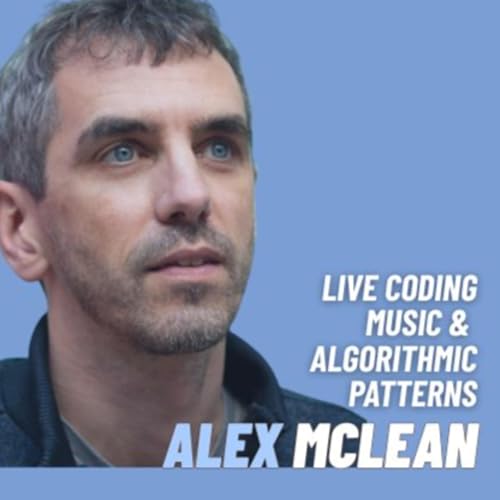
  • Live Coding Music & Algorithmic Patterns W/ Alex McLean
    Mar 22 2026

    What if you made music live — on stage, in front of an audience — entirely by writing code?


    Alex McLean (research fellow, Sheffield; co-founder of Tidal Cycles and Strudel live coding environments; co-curator of Algorave and Alpaca Festival) joins the podcast to explore algorithmic music, live coding performance, and a worldview where everyone is already a technologist.


    We discuss South Indian Carnatic konnakol rhythms, the deceptive complexity of counting to five, collaborating with Peruvian khipu scholar Paola Torres Núñez del Prado, and the thorny question of cultural appropriation when heritage algorithms meet modern code. Alex also shares how the first Alpaca Festival united jugglers, textile artists, paper vinyl records, and midnight Algoraves.


    🔗 Links & Resources:

    • Alex McLean website: https://slab.org
    • Tidal Cycles live coding environment: https://tidalcycles.org
    • Strudel live coding environment: https://strudel.cc
    • Alpaca Festival: https://2025.algorithmicpattern.org/sheffield/


    📩 melodicminds@gmail.com | 🎵 @MelodicMinds

    Mehr anzeigen Weniger anzeigen
    42 Min.
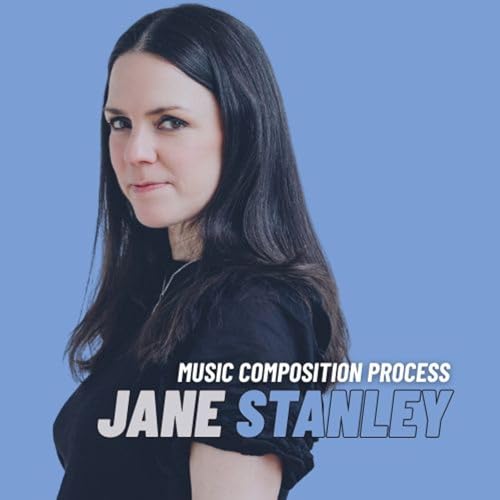
  • Music Composition Process & Creative Education W/ Jane Stanley
    Mar 22 2026

    How do you compose music that leaves room for the performers to bring themselves to it — and still sounds exactly right?


    Professor Jane Stanley (Professor of Composition, University of Glasgow; founding member of the Young Academy of Scotland) joins the podcast to talk about her music composition process — from fully-notated works to semi-improvised, indeterminate pieces tailored for specific performers and spaces.


    Jane also discusses an earlier project with a nutritionist exploring synesthesia and tasting music, and shares her vision for making composition genuinely accessible: a Coursera upskilling course for teachers and the public, and a future book for people who have never thought of themselves as composers.


    🔗 Links & Resources:

    • Jane Stanley on Spotify
    • Jane Stanley website: https://janestanley.com/
    • Jane Stanley YouTube channel: https://www.youtube.com/@janestanley495


    📩 melodicminds@gmail.com | 🎵 @MelodicMinds

    Mehr anzeigen Weniger anzeigen
    35 Min.
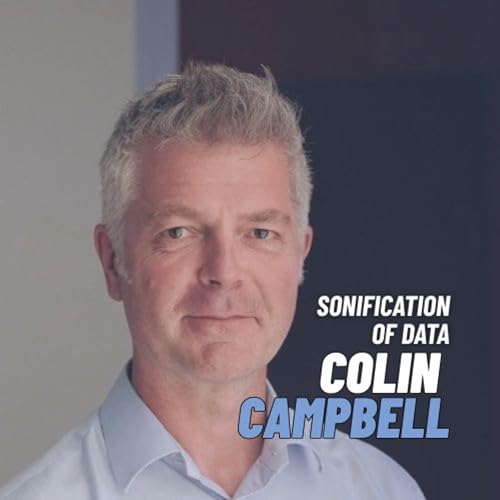
  • Sonification of Data: Turning Science into Music W/ Colin Campbell
    Mar 22 2026

    What if you could hear a molecule? Or encode the altitude profile of a Scottish hillside into a guitar line?


    Professor Colin Campbell — chemist, musician, and University of Edinburgh chair of medical and biological spectroscopy — has done both. In this episode, Colin charts his journey from a Fulbright sabbatical in Boulder, Colorado (where he spent months turning protein sequences into listenable music) to a Creative Scotland-funded album, West of Fjord.


    We discuss data sonification techniques, the Shortbread Tin Collective, the Viking history of Loch Bracadale, Joe Strummer's unexpected memorial on a Skye hillside, and why sonification of data is still a holy grail in scientific communication.


    🔗 Links & Resources:

    • West of Fjord album & Music About Science playlist (University of Edinburgh School of Chemistry YouTube): https://www.youtube.com/@UniversityofEdinburgh
    • Colin Campbell / University of Edinburgh profile: https://www.ed.ac.uk/chemistry


    📩 melodicminds@gmail.com | 🎵 @MelodicMinds

    Mehr anzeigen Weniger anzeigen
    39 Min.
  • What Does a Conductor Do? Orchestra Leadership W/ Hannah Baxter
    Mar 22 2026

    What does a conductor actually do — and what can their extraordinary blend of intellect, intuition, and management teach the rest of us?


    Dr. Hannah Baxter, conducting academic and founder of Notes from the Podium journal, pulls back the curtain on one of music's most misunderstood roles.


    From three years of score preparation to the split second a conductor walks onto the podium (and the orchestra decides how the whole week will go), Hannah reveals the depth of craft involved — part human mixing desk, part project manager, part psychologist.


    We also explore how Hannah's own PhD research pivoted from sign language to dance, a masterclass in following the evidence wherever it leads.


    🔗 Links & Resources:

    • Notes from the Podium journal: https://www.notesfromthepodium.co.uk

    📩 melodicminds@gmail.com | 🎵 @MelodicMinds

    Mehr anzeigen Weniger anzeigen
    49 Min.
  • Jazz Improvisation & Group Language W/ Mark Holub
    Mar 22 2026

    What can jazz improvisation teach us about leading a team, navigating failure, and staying true to yourself?


    Dr. Mark Holub — drummer, composer, band leader, and Mercury Music Prize-nominated leader of Leadbib (now with eight albums) — joins Lynn and Beth for a wide-ranging conversation about group language in jazz, the art of knowing when NOT to play, and what it really means to lead without performing a version of leadership that isn't you.


    Mark also unpacks the gap between academic and practising musicians, why arts funding cuts may accidentally build community, and how his ensemble Anthropods navigated recording improvised music while still needing to be physically in the same room.


    🔗 Links & Resources:

    • Mark Holub on Spotify: https://open.spotify.com/artist/6P5ax3kzV84qXxyxiI0t09?si=wMZ0uEc0Rkak-pf3jDELWA
    • Mark Holub website: https://markholub.com


    📩 melodicminds@gmail.com | 🎵 @MelodicMinds

    Mehr anzeigen Weniger anzeigen
    57 Min.
  • Music for Dementia: Musical Technologies W/ Jennifer MacRitchie
    Mar 15 2026

    What does it really mean to work across disciplines — and what happens when you put people with dementia in the driving seat of technology design?


    Dr. Jennifer McRitchie (UKRI Future Leaders Fellow, University of Sheffield) joins Lynn and Beth to explore musical technologies for dementia, participatory research, and cognitive science. Jennifer's work bridges electrical engineering, music psychology, and dementia care — and she shares how deep engagement with people living with dementia completely reshaped her project.


    We discuss the similarities between composing music and designing research, the role of compassion in collaborative teams, and how COVID forced a rethink of everything — including posting 60 keyboards to research participants.Jennifer also introduces the Bridges for Dementia Network Plus (EPSRC-funded, launching October 2025), which co-designs new technologies alongside people with lived experience of dementia — because music is a cultural right, not just cognitive training.


    Links & Resources:

    • Bridges for Dementia Network Plus — sign up for updates: https://bridgesfordementia.org/
    • Film: Living with Young Onset Dementia — Our Music, Our Voice: https://www.sheffield.ac.uk/music
    • Jennifer McRitchie project website: https://sheffield.ac.uk/research/co-designing-future-music-technology-dementia

    📩 melodicminds@gmail.com | 🎵 @MelodicMinds

    Mehr anzeigen Weniger anzeigen
    38 Min.