Aleksei Nikitin: In the Spirit of Tolstoy Titelbild

Aleksei Nikitin: In the Spirit of Tolstoy

Aleksei Nikitin: In the Spirit of Tolstoy

Jetzt kostenlos hören, ohne Abo

Details anzeigen

Über diesen Titel

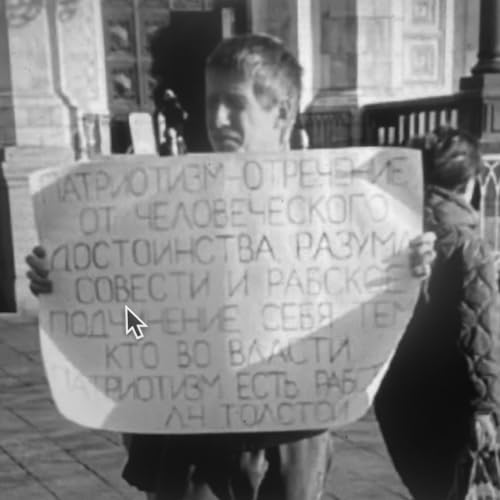
This project is approaching the final chapter of Book I, a critical juncture with Napoleon victorious and holding the greatest reputation man can bestow. Even after Napoleon suffered a string of defeats years later, his reputation was colossal when Tolstoy wrote War &Peace. Many readers coming to this book do not realize Napoleon is something of a dark force utilized to portray how to view those who send others to die for a ruler's vain ambitions. In this regard, it is important to recall how Tolstoy was influenced the Bible book of Ecclesiastes, which comments on vainglorious ambitions as well as the meaningless of everything without an appreciation of the Transcendent. Tolstoy is reaching to you from another age, highlighting how you can recognize War’s profane nature compared to what is above. Tolstoy recognizes how calls to war are a siren’s song as well as how easy it is to get young men to answer, usually via a small bounty or appeal to patriotism.Acknowledging the idiosyncratic pacifist Tolstoy became, his work still recognizes how a defensive war is more justified than the type of conflict at Austerlitz. Further, Tolstoy was exceptionally critical of his own government, which makes War & Peace so relevant in our times. In this spirit, I bring up the following story:Upon Russia’s mass invasion of Ukraine in early 2022, Aleksei Nikitin, a regular citizen from Moscow, tried to make a difference and stood up to power.Aleksei recognized crossing his neighbors’ border and unleashing the largest land invasion since the Second World War is the type of aggression Tolstoy condemned. Aleksei brought Tolstoy into his public protest by writing an excerpt on a poster-board from the 1894 essay “On Patriotism.” It read:“Patriotism is the abdication of human dignity, reason and conscience and a slavish submission to those in power. Patriotism is slavery.”It was a controversial sentiment then and remains so. This essay described Tolstoy’s conception of patriotism -- in that militaristic age -- as a vulgar sentiment used by governments to justify their war machines. He argued it is opposite to what he took out of the Bible, namely Christian brotherhood. Aleksei’s use of the essay speaks to what Tolstoy has Andrei grasp as Andrei views the senselessness of a red-haired Russian artilleryman squaring off against a French attacker – both Christians struggling over a mop as if it was the Holy Grail. Tolstoy was speaking to the baseness of what he witnessed, as a soldier on campaigns in Chechnya and being on the losing side of the Crimean War.Tolstoy points out that men mercilessly hacking one another have a great deal more in common with one other – than the men of supposedly higher status, who sent them to die. Tolstoy described, in another part of the essay:"It is even impossible to imagine, how and for what, Russian and German workmen, peacefully and conjointly working on the frontiers or in the capitals, should clash. And much less easily can one imagine animosity between some Kazan peasant who supplies Germans with wheat, and a German who supplies the peasant with scythes and machines. It is the same between French, German, and Italian workmen."Aleksei Nikitin was arrested and the Moscow police statement on the proceeding was carefully worded and likely came from their Intelligence Service:“This writer’s (Tolstoy’s) works and articles were harshly critical of the ruling (Czarist) regime, including justifying violence against the government. Therefore, the actions of Citizen Nikitin should be interpreted as a call to overthrow the existing authorities and also to follow the ideology of Tolstoy.”This was a revealing acknowledgement that the philosophy of Tolstoy is threat to a system throwing countless men into their War Machine. Nevertheless, the Russian government succeeded in stunting that portion of citizenry who were in line with the ideals of Tolstoy. Once the internal dissension was suppressed, the Russian leader found it prudent to create, a “Tolstoy Peace Prize.”Over his career, Tolstoy brought out how such aggression brings out an ever-lasting hatred by those affected. Some of such work involves Chechnya. One of Tolstoy’s first short stories, “The Raid,” from 1853, explored amidst the Chechen landscape -- what motivates man to kill his fellow. Further, one of final works, “Hadji Murad,” tells the story of brutal campaigns against Chechnya, which involved the burning of villages, fields, and livestock. Tolstoy took to heart how raids would leave the helpless crying in despair;He recognized, how such aggression promotes a natural resistance, like many Chechens have demonstrated for generations; and like the overwhelming majority of Ukrainians have capably demonstrated in our times.
Noch keine Rezensionen vorhanden