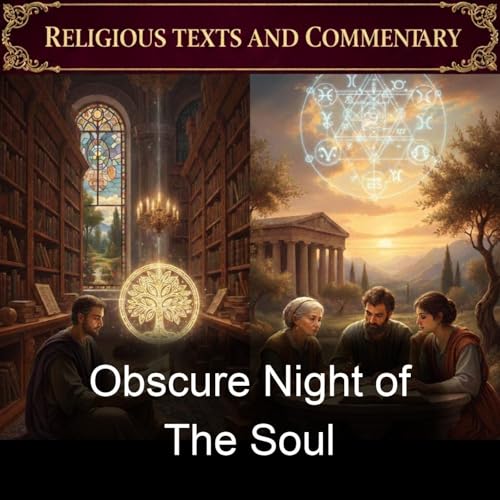
Obscure Night of The Soul Titelbild

Obscure Night of The Soul

Obscure Night of The Soul

Von: Saint John of the Cross
Jetzt kostenlos hören, ohne Abo

Über diesen Titel

The Obscure Night of the Soul, more commonly known today as The Dark Night of the Soul, encapsulates the profound teachings of St. John of the Cross, who transformed Christian contemplation in the 16th century. This timeless text continues to inspire seekers on their spiritual journeys. St. Johns approach, known as the Via Negativa, is a unique form of theological reflection that emphasizes understanding the Divine by exploring what cannot be said about Gods perfect goodness. As explained in Wikipedia, negative theology seeks to clarify religious experiences and language about the Divine through discernment, focusing on what God is not (apophasis) rather than attempting to define what God is. This apophatic tradition is often intertwined with mysticism, which emphasizes a personal, unmediated encounter with divine reality, transcending the confines of traditional organized religion and the conditioned behaviors of our outer selves. - Summary by Ed Humpal and WikipediaCopyright Religious Texts and Commentary
  • 040 - Conclusion
    Feb 19 2026
    The Obscure Night of the Soul, more commonly known today as The Dark Night of the Soul, encapsulates the profound teachings of St. John of the Cross, who transformed Christian contemplation in the 16th century. This timeless text continues to inspire seekers on their spiritual journeys. St. Johns approach, known as the Via Negativa, is a unique form of theological reflection that emphasizes understanding the Divine by exploring what cannot be said about Gods perfect goodness. As explained in Wikipedia, negative theology seeks to clarify religious experiences and language about the Divine through discernment, focusing on what God is not (apophasis) rather than attempting to define what God is. This apophatic tradition is often intertwined with mysticism, which emphasizes a personal, unmediated encounter with divine reality, transcending the confines of traditional organized religion and the conditioned behaviors of our outer selves. - Summary by Ed Humpal and Wikipedia
    Mehr anzeigen Weniger anzeigen
    3 Min.
  • 039 - Book II Chapter 24 The Last Line of the Second Stanza Explained
    Feb 18 2026
    The Obscure Night of the Soul, more commonly known today as The Dark Night of the Soul, encapsulates the profound teachings of St. John of the Cross, who transformed Christian contemplation in the 16th century. This timeless text continues to inspire seekers on their spiritual journeys. St. Johns approach, known as the Via Negativa, is a unique form of theological reflection that emphasizes understanding the Divine by exploring what cannot be said about Gods perfect goodness. As explained in Wikipedia, negative theology seeks to clarify religious experiences and language about the Divine through discernment, focusing on what God is not (apophasis) rather than attempting to define what God is. This apophatic tradition is often intertwined with mysticism, which emphasizes a personal, unmediated encounter with divine reality, transcending the confines of traditional organized religion and the conditioned behaviors of our outer selves. - Summary by Ed Humpal and Wikipedia
    Mehr anzeigen Weniger anzeigen
    4 Min.
  • 038 - Book II Chapter 23 The Wonderful Hiding Place of the Soul
    Feb 17 2026
    The Obscure Night of the Soul, more commonly known today as The Dark Night of the Soul, encapsulates the profound teachings of St. John of the Cross, who transformed Christian contemplation in the 16th century. This timeless text continues to inspire seekers on their spiritual journeys. St. Johns approach, known as the Via Negativa, is a unique form of theological reflection that emphasizes understanding the Divine by exploring what cannot be said about Gods perfect goodness. As explained in Wikipedia, negative theology seeks to clarify religious experiences and language about the Divine through discernment, focusing on what God is not (apophasis) rather than attempting to define what God is. This apophatic tradition is often intertwined with mysticism, which emphasizes a personal, unmediated encounter with divine reality, transcending the confines of traditional organized religion and the conditioned behaviors of our outer selves. - Summary by Ed Humpal and Wikipedia
    Mehr anzeigen Weniger anzeigen
    14 Min.
Noch keine Rezensionen vorhanden