Folgen

  • Is Physical Therapy Worth the Cost for Plantar Heel Pain? A 3-Year Answer
    Jan 22 2026

    In this episode of the Hands-On, Hands-Off Podcast, Dr. Trenton Rehman sits down with Dr. Shane McClinton to discuss plantar heel pain and the role of physical therapy in both clinical outcomes and healthcare costs.

    Dr. McClinton walks through a series of studies stemming from his doctoral research, including a randomized clinical trial, a detailed case series, and a three-year cost-effectiveness analysis. Together, they explore how adding physical therapy to usual podiatry care impacts pain, function, quality of life, and long-term costs.

    Key themes include manual therapy, impairment-based exercise, proximal contributions to heel pain, interdisciplinary collaboration, and why plantar heel pain may deserve the same clinical mindset as low back pain.

    Key Takeaways (Listener-Facing)

    Plantar heel pain is a multidimensional condition with local and proximal contributors.

    Adding physical therapy to usual podiatry care improved outcomes and reduced costs over three years.

    Manual therapy and exercise were delivered pragmatically and tailored to impairments.

    Strengthening may be underutilized in plantar heel pain management.

    Collaboration between physical therapists and podiatrists benefits patients and reduces downstream burden.

    ⏱️ TIMESTAMPED CHAPTERS (YouTube + Podcast)

    00:00 – Introduction to the episode and guest

    00:01 – Dr. Shane McClinton’s background and research focus

    00:03 – Why plantar heel pain referrals to PT are low

    00:07 – Rationale for studying cost-effectiveness

    00:10 – Study design overview (RCT + pragmatic approach)

    00:15 – Description of podiatry-only vs podiatry + PT care

    00:17 – Inclusion and exclusion criteria

    00:22 – Case series: why eight different heel pain presentations

    00:26 – Manual therapy strategies used in the study

    00:30 – Clinical practice guidelines and decision-making

    00:32 – Pain mechanisms, education, and chronicity

    00:35 – Proximal vs local treatment decisions

    00:38 – Three-year cost-effectiveness results explained

    00:44 – Implications for referrals and collaboration

    00:48 – Final take-home message from Dr. McClinton

    Mehr anzeigen Weniger anzeigen
    51 Min.
  • Low Back Pain Doesn’t Have to Be Confusing | Andreas Remis
    Jan 20 2026

    Andreas Remis joins the podcast to unpack low back pain in a way that finally makes sense — bridging APTA CPG classifications, real-world clinical diagnosis, and the confusing world of radiographic findings.

    As faculty across multiple fellowships and residencies within the Duke Health System — and an educator shaped by his own poor rehab experience as a patient — Andreas brings a thoughtful, grounded approach to one of PT’s most complex conditions.

    In this episode:

    • LBP classification: CPG vs imaging vs clinical reasoning

    • How expert clinicians simplify diagnosis

    • Why radiographs often mislead clinicians and patients

    • The turning point when PTs begin to feel “value-confident”

    • Teaching LBP across OMPT pipelines

    • Lessons Andreas learned from being a failed patient

    It’s a must-listen episode for clinicians, residents, and fellows treating low back pain.

    Mehr anzeigen Weniger anzeigen
    13 Min.
  • Directional Preference When Time Matters | Josh Kidd
    Jan 15 2026

    When the cost of delay is measured in millions of dollars and operational readiness, guesswork isn’t an option.

    In this episode, we sit down with Josh Kidd, physical therapist, researcher, residency director, and embedded clinician working with special operations personnel and fighter pilots. Josh shares how directional preference plays a central role in clinical decision-making when time, performance, and safety all matter.

    We explore what directional preference actually is (and what it isn’t), why it should be viewed as an assessment rather than an exercise, and how inconsistent definitions in the research have led many clinicians to misunderstand or abandon it altogether.

    Josh also walks through real-world data from a tactical setting, where his team has used directional preference to help service members return to duty 36% faster, while empowering patients to self-manage and reducing recurrence.

    This conversation connects research, clinical reasoning, and performance-based care—challenging clinicians to rethink not just what they do, but how they think.

    ???? In This Episode, You’ll Learn:
    • Why directional preference matters beyond the spine
    • The most common misconceptions clinicians have about directional preference
    • How inconsistent research definitions affect real-world practice
    • How directional preference can guide prognosis and return-to-duty decisions
    • What clinicians can learn from high-stakes military performance environments
    • One mindset shift that can immediately improve clinical reasoning
    Mehr anzeigen Weniger anzeigen
    23 Min.
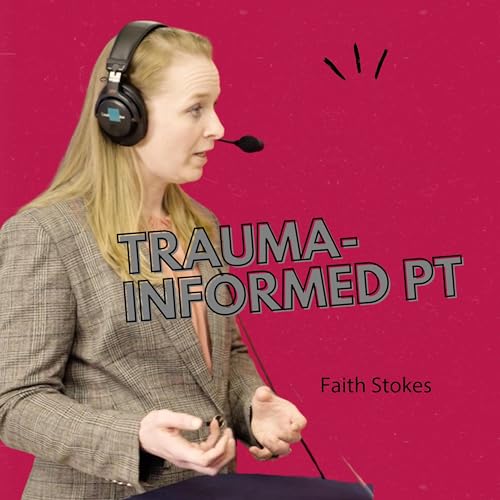
  • Trauma-Informed & Psychologically Informed Care in PT with Faith Stokes
    Jan 13 2026

    Faith Stokes joins the podcast to talk about treating the patients many clinicians feel least prepared for — those navigating trauma, addiction, suicidality, chronic pain, pelvic health conditions, and complex biopsychosocial presentations.

    Faith practices in rural North Georgia, where she blends manual therapy, psychologically informed care, and lifestyle medicine. As a residency coordinator and adjunct faculty across multiple programs, she’s passionate about helping clinicians develop clarity when treating patients whose stories involve trauma, fear, avoidance, social instability, or chronic stress.

    In this episode:

    • Simple vs. complex PTSD in clinical practice

    • Why trauma-informed care is essential in OMPT

    • Yellow flag screening and why it’s our responsibility

    • The PT’s role in addiction and suicidality

    • Integrating pelvic health with orthopedics and manual therapy

    • Using lifestyle medicine without shame or judgment

    • How experts reason through overwhelming complexity

    This is a deep, human, and incredibly practical conversation for every PT.

    Mehr anzeigen Weniger anzeigen
    20 Min.
  • OMPT vs MDT Is the Wrong Debate!
    Jan 8 2026

    Dr. Moyo Tillery sits down with Dr. Ron Shank to explore the evolving relationship between Orthopaedic Manual Physical Therapy (OMPT) and Mechanical Diagnosis & Therapy (MDT). Drawing from decades of clinical practice, mentorship, and research, Ron reframes the debate — arguing that integration, not ideology, leads to better patient outcomes.

    Together, they unpack directional preference, centralization, test–retest frameworks, patient empowerment, and the leadership principles that shape great clinicians. This is a must-listen for anyone navigating modern manual therapy practice.

    Key Topics Covered:

    • Directional preference vs centralization
    • End-range testing as common ground
    • Hands-on vs hands-off decision-making
    • Patient self-efficacy and dependency
    • Mentorship, leadership, and legacy in OMPT
    Mehr anzeigen Weniger anzeigen
    46 Min.
  • Treating TMJ Like Any Other Joint: Rehab After Total TMJ Replacement
    Jan 8 2026

    Most physical therapists will treat TMJ pain. Almost none will ever encounter a full bilateral TMJ replacement—paired with mandibular advancement and upper palate expansion. When that rare case appeared, there was no rehab playbook… so this clinician built one.

    What listeners will learn:

    • How TMJ replacement compares (and doesn’t) to hip and knee replacements
    • Why outcomes research exists—but rehab pathways don’t
    • How to apply total joint principles to a jaw joint
    • What to do when surgical restrictions limit “normal” movement
    • The role of nutrition, SLPs, and interdisciplinary care
    • How lived experience changes clinical decision-making

    Why it matters:

    This episode isn’t really about TMJ—it’s about how clinicians think when evidence is thin and responsibility is high.

    Guest:

    Katie Berry — sports & orthopedic clinician, adjunct professor, and OMPT fellow-in-training.

    Mehr anzeigen Weniger anzeigen
    41 Min.
  • Does Residency & Fellowship Training Improve Outcomes? | Cody Mansfield
    Jan 6 2026

    Cody Mansfield joins the show to unpack the real value of residency and fellowship training — and to share insights from his new Cardon Research Award–funded study examining outcomes in non-operative knee pain.

    Cody serves as Director of the Ohio State OMPT Fellowship, research associate, physical therapist, associate editor for JOSPT Cases, and instructor in the OSU DPT program. His mixed-methods research evaluates whether post-professional training changes outcomes related to quality, service, and cost — and what patients themselves value about receiving care from fellowship-trained clinicians.

    In this conversation:

    • Why this research matters for the future of OMPT

    • Early insights from comparing trained vs. non-trained clinicians

    • Patient perspectives on fellowship-trained PTs

    • Residency vs. fellowship — how they actually differ

    • Cody’s educational sessions on LE referral patterns and spinal decision-making

    • His journey through a PhD while raising two young boys

    Whether you’re a student, clinician, educator, or program director, this episode gives you a grounded look at what advanced training really does for patient care.

    Mehr anzeigen Weniger anzeigen
    12 Min.
  • Can Games Make You a Better Manual Therapist? | Hollis Bixby
    Dec 30 2025

    Hollis Bixby sits down with us to explore how gamification is reshaping PT education — from DPT programs to hybrid residencies to post-professional training.

    Hollis has spent seven years as a sports physical therapist, is wrapping up her manual therapy fellowship through Regis University, and is beginning a new chapter as Assistant Professor at Campbell University. Through her work with Duke’s Orthopedic Hybrid Residency, she’s helping design gamified learning experiences that boost engagement, motivation, and clinical skill development.

    In this episode:

    • What gamification really is — and what it’s not

    • How game elements improve learning and retention

    • Strategies educators can implement tomorrow

    • How fellowship and residency training benefit from playful design

    • Why PT education needs to evolve for today’s learners

    • Hollis’s journey from sports PT → educator → innovator

    This episode is all about teaching smarter, not harder — and making learning fun again.

    Mehr anzeigen Weniger anzeigen
    19 Min.