Event Everything by Eventastic Titelbild

Event Everything by Eventastic

Event Everything by Eventastic

Von: Guru Media Hub
Jetzt kostenlos hören, ohne Abo

Über diesen Titel

Event Everything by Eventastic is a quick, question-driven podcast for event marketers and organizers. Each episode answers one real event question from the community—then caps it with one ridiculous question for a little chaos. Get practical tips on follow-up, engagement, surveys, and more from the people who run events every day. Subscribe and learn more at eventastic.com.Copyright 2026 Guru Media Hub Management & Leadership Marketing & Vertrieb Ökonomie
  • STOP Memorizing Your Presentation Script (with Courtney Stanley) | Ep. 17
    Apr 29 2026
    EVENTASTIC Conference registration is now OPEN! The world's largest event about EVENTS!Free + Virtual! Save your spot! https://www.eventastic.com/ㅤMASSIVE thank you to our Sponsor, Cvent!!Cvent is an event marketing and management platform designed to help you plan, promote, and measure your events all in one place - whether they’re virtual, in-person, or hybrid.Regardless of your size, check out Cvent today to get the tools you need to run smarter, more effective events.Check out more at cvent.com/Jayㅤ🔗 Links / Resources MentionedCourtney Stanley's website: courtney-stanley.comCourtney on social: @courtneyonstageDare to Interrupt podcast (search on your platform of choice)ㅤIf you've ever been asked to host a panel or present at a conference for the first time and immediately felt the dread set in, this episode is for you. Kristin Nagle sits down with Courtney Stanley, global keynote speaker and executive presence coach, to answer the question first-time moderators wrestle with most: what's the one thing you need to know before you take the stage?ㅤCourtney's answer covers why nerves are completely normal (and what happens to them once you're actually up there), why memorizing every line is working against you, and how the best speakers think about their role before they ever open their mouths. It's part mental game, part preparation strategy, and part mindset shift.ㅤ👤 Guest BioCourtney Stanley is a global keynote speaker, executive presence coach, and the creator and host of Dare to Interrupt, a podcast featuring influential women in the events, hospitality, and tourism industry. She is the youngest person ever elected to Meeting Professionals International's (MPI) International Board of Directors and co-founded #MeetingsToo, the industry movement to prevent sexual misconduct at events. As CEO of Courtney Stanley Consulting, LLC, she has spent over 15 years helping professionals lead more authentically and speak with genuine confidence from the stage.ㅤ✅ The Event QuestionAsked by: Kristin Nagle, HostThe question: With all of your experience, what's one tip that you'd give anyone hosting or moderating their first session?ㅤ📌 What You'll LearnThe time leading up to taking the stage is the hardest part. Once you're in flow and in conversation, you'll fall into a cadence that feels more natural than you expected. Know that going in.ㅤPublic speaking is a mental game. Breathing through the nerves and staying as present as possible is the single best thing you can do, not just for yourself but for the people you're there to serve.ㅤKnow your material at about 80%. If your slides went down and your notes disappeared, you should be able to carry yourself through. That remaining 20% isn't a gap: it's what lets you ebb and flow, handle the unexpected, and actually be with your audience instead of just delivering at them.ㅤOver-scripting is a trap. Spending weeks memorizing line by line, slide by slide, puts the priority on getting content out rather than being truly present in the room. Audiences can feel that difference, and they tune out.ㅤMake the whole experience about the audience. Use situational awareness, social awareness, and emotional intelligence to pulse-check the room in real time. Are they excited? Zoning out? Distracted? The answer to that question should be shaping what you do next.ㅤPublic speaking is about resilience and the comeback. Things will happen that you cannot predict or plan for. Your ability to roll with it, change directions, and keep going is what separates a good speaker from an excellent one.ㅤStart with an engagement activity. Get the audience talking to each other, laughing, or sharing before you get into the content. You're there to facilitate an experience, not deliver a monologue.ㅤ🎭 The Ridiculous QuestionKristin asks: What's your most hype walkout song if you could choose one every time you take the stage?ㅤCourtney's answer, without hesitation: "Countdown" by Beyoncé. It has a built-in countdown at the top that gets people pumped, and she loves it so much she also builds music cues into her sessions throughout. Her position: music changes everything in a live experience.
    Mehr anzeigen Weniger anzeigen
    13 Min.
  • STOP Surveying the People Who Came Back (with Ken Holsinger from Freeman) | Ep. 16
    Apr 22 2026
    EVENTASTIC Conference registration is now OPEN! The world's largest event about EVENTS!Free + Virtual! Save your spot! https://www.eventastic.com/ㅤMASSIVE thank you to our Sponsor, Cvent!!Cvent is an event marketing and management platform designed to help you plan, promote, and measure your events all in one place - whether they’re virtual, in-person, or hybrid.Regardless of your size, check out Cvent today to get the tools you need to run smarter, more effective events.Check out more at cvent.com/Jayㅤ🔗 Links & Resources MentionedKen Holsinger on LinkedInFreeman research reports: freeman.com/researchㅤKristin Nagle sent her guest three different event questions before this episode. He said it didn't matter which one she asked, because they all have the same answer. That answer is attendee retention.ㅤKen Holsinger, SVP of Industry Research & Insights at Freeman, breaks down what the data actually shows: the average year-over-year attendee retention rate across hundreds of events is 27%. Even on a three-year rolling cycle, it barely reaches the mid-thirties. Ken walks through exactly what that costs event organizers in customer acquisition dollars, why most teams don't even have retention on their dashboard, and why your post-event survey will never tell you the answer you need.ㅤ👤 About Ken HolsingerKen Holsinger is the SVP of Industry Research & Insights at Freeman, the global event services and production company. He leads the teams behind the Freeman Trends Report, one of the most widely referenced research publications in the events industry. Ken sold his previous tech company to Freeman about 10 years ago, holds multiple hardware, software, and process patents, and is a frequent keynote speaker at major industry events including ECEF and PCMA Educon.ㅤ✅ The Event QuestionKristin sent Ken three questions before recording. He said they all have the same answer. The questions: What separates events that grow consistently from the ones that plateau? What's one data point event organizers are ignoring that would completely change their strategy? How should event marketers actually be measuring success today?ㅤ📌 What You'll LearnThe average year-over-year attendee retention rate across hundreds of events is 27%. Even when you extend to a three-year cycle, it only reaches the mid-thirties. Most organizers don't know this number because it's not on their dashboard.Customer acquisition costs to market to event attendees run between $100 and $300 per person. For a 1,000-person event, replacing churned attendees costs between $70,000 and $250,000 a year. Even attendees on a three-year cycle carry ongoing marketing costs to keep them warm.When Freeman researchers went to hundreds of events and asked what their attendee retention rates were, the organizers couldn't tell them. Retention isn't a standard metric most teams track. That has to change.Your post-event survey only captures people who came back. The people who didn't return won't fill it out. You have to actively go after the ones who left and ask them why.Attendees come to events to learn, network, have fun, and do business. Loyalty isn't built in general sessions or classrooms. It's built through the connections people make with each other, which means event design needs to create space for that.Millennials and Gen Z are now the largest group of event attendees and the growth engine the industry needs. They trust events as a channel, but loyalty takes time and they haven't built it yet. Member-driven organizations especially need to understand what retains them.Events that grow vs. events that plateau: the difference is retention. When retention is higher, organizers can put resources toward improving the event instead of constantly churning the attendee list.ㅤ🎭 The Ridiculous QuestionWould you rather have to dance every time you hear music, or sing everything you say? Ken picked singing without hesitation. Nobody wants to see him dance. What most people don't know: he was in bands in college and sang opera.
    Mehr anzeigen Weniger anzeigen
    14 Min.
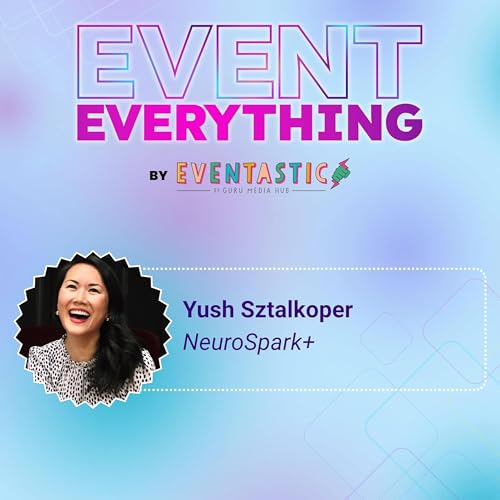
  • Overstimulated Attendees and Anticipatory Event Design (with Yush Sztalkoper, CMP) | Ep. 15
    Apr 15 2026

    EVENTASTIC Conference registration is now OPEN! The world's largest event about EVENTS!

    Free + Virtual! Save your spot! https://www.eventastic.com/

    MASSIVE thank you to our Sponsor, Cvent!!

    Cvent is an event marketing and management platform designed to help you plan, promote, and measure your events all in one place - whether they’re virtual, in-person, or hybrid.

    Regardless of your size, check out Cvent today to get the tools you need to run smarter, more effective events.

    Check out more at cvent.com/Jay

    🔗 Links / Resources Mentioned

    • Guest LinkedIn: https://www.linkedin.com/in/yushsztalkoper/
    • Company Website: www.neurosparkplus.com
    • Capacity Reflection™: www.neurosparkplus.com/capacity-reflection
    • Cvent: cvent.com/jay
    • Eventastic: eventastic.com
    • Know Your Audience (design lens for events): https://www.neurosparkplus.com/knowyouraudience

    Events are traditionally designed around content delivery and expected outcomes. But what happens to the actual human experience when attendees arrive stressed, overstimulated, and carrying the weight of their daily lives?

    Host Kristin Nagle tackles this exact disconnect with Yush Sztalkoper, CMP. Yush explains why attendees never arrive at an event as a blank slate.

    Listeners will hear how to shift their planning focus upstream. Yush details the high demands events place on nervous systems, from constant social interaction to context switching. By understanding the formula of demand plus capacity, event professionals can build gatherings that actually fit their audience.

    👤 Guest Bio

    Yush Sztalkoper, CMP, spent 20 years directing global corporate events for Fortune 500 organizations. She recently left that career to found NeuroSpark+. Through Human Capacity Design™, Yush helps organizations recognize the invisible conditions that affect how people show up. She builds frameworks and tools, like Capacity Reflection™, that allow planners to see attendee strain clearly before making event decisions.

    ✅ The Event Question

    Kristin Nagle asks: "Events are often designed for content and outcomes. What gets missed about how people actually experience them?"

    📌 What You'll Learn

    • Assess what attendees carry with them before they even step foot in the venue.
    • Recognize the hidden demands of your event, including energy requirements, social interaction, and context switching.
    • Design upstream by mapping the pressure your environment places on human capacity.
    • Apply the core equation of event success: Demand plus capacity equals fit.
    • Provide quiet spaces and built-in pacing so attendees can regulate their nervous systems.

    🎭 The Ridiculous Question

    Kristin asks: "Would you rather give up your favorite app or your favorite snack?"

    Yush chooses to give up her favorite snack. She prefers keeping apps that enhance her life, specifically her own free tool, Capacity Reflection™, which helps users see their environmental demands and capacity levels.

    Mehr anzeigen Weniger anzeigen
    12 Min.
Noch keine Rezensionen vorhanden