65 – Fighting Stigma: Overcoming Stereotypes in the Workplace Titelbild

65 – Fighting Stigma: Overcoming Stereotypes in the Workplace

65 – Fighting Stigma: Overcoming Stereotypes in the Workplace

Jetzt kostenlos hören, ohne Abo

Details anzeigen

Über diesen Titel

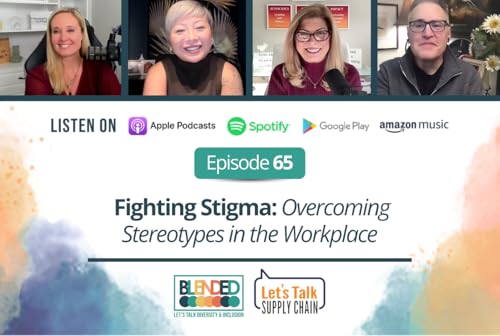
Welcome back to Blended! Today, we're taking on a big topic – stigma and stereotypes. As laws and recommendations continue to evolve at both federal and state levels, employers face an increasingly complex landscape. According to reports, some of the top challenges for employers in 2026 range from navigating compliance and whistleblowing, to dealing with issues around immigration and mental health and wellbeing. But, below all of this complexity, many employees find themselves dealing with versions of the same old problems. Stereotypes, stigma, and bias are still felt deeply by women, people of color, the LGBTQIA+ and disability communities, and more. So, whilst the big battles are happening at federal and state level, what can the rest of us do to address what it all means for employees on a day-to-day basis? Our guests are going to be diving into all of that today, and exploring addressing stigma and overcoming stereotypes in your organization. IN THIS EPISODE: [01.12] Introductions to our Blended panelists. · Jenny – Chief Executive Officer at Catalais Consulting · Tedi – President and CEO at MI Diversity Center · Robbin – Founder and CEO at Women Igniting Change [04.58] The group share their personal experiences, and discuss what stereotypes and stigma really mean, how they show up in the workplace, and their impacts. · Gender-based stereotypes, eg. Emotion or working mothers · Credibility · Belonging · Negative perceptions · Unfounded truths · Assumptions · Judgement · Blame · Inherited beliefs and values · Influence of family, society and culture · Identity · Language – words have power · Dehumanization · Lived experience · Fear/self-protection · Privilege · Jenny's experience of immigration and assimilation · Limiting potential · Racism · Top down examples/leadership · Sources of information/disinformation · Asking questions · Doing due diligence · Control · Us vs them narrative · Challenges of multigenerational workplaces · Right and wrong, true and false · Physical and mental impact · Intersectionality · Active listening · Robbin's experience of reverse agism and stereotyping around her personality type · Misogyny · Tedi's experience of identity stereotyping · Bias – implicit and explicit, conscious and unconscious · Stereotyping and labels within individual communities "Someone who expresses passion and empathy in the workplace is often framed as too emotional, rather than that being seen as a leadership strength. To me, that's a stereotype… The stigma is when we start to internalize that." Robbin "There's no such thing as a true stereotype!" Tedi "Stereotypes are assumptions, shortcuts we take to understand others quickly. Stigma is what happens when those assumptions get loaded with judgement or consequence." Jenny "Our own unexamined beliefs and values tend to ooze out onto other people, either intentionally or unintentionally." Robbin "Privilege is not the issue – what we do with it is... Blind spots are the not issue – refusing to look at them, acknowledge them, and then learn and grow from them IS." Jenny [55.39] The panel explore how to tackle issues around stereotyping and stigma in the workplace. · DEI mapping/auditing · Examining attitudes of leadership team and employees · Examining policies and practices · Tracking, meeting and celebrating goals/milestones · Awareness · Responsibility · Communication · Safety/culture · Authenticity · Separation between work self and personal self · Accountability · Respect · Equality · Impact of current political climate · Transparency · Vulnerability · Value systems "It takes culture to create a safe container for those conversations. When I was in corporate, part of the management style was fear and intimidation. There was no way it was safe enough to have this kind of dialogue." Robbin "It comes down to our core values. If our core values, as human beings, are aligned, it's OK if we have different beliefs. As long as those ...
Noch keine Rezensionen vorhanden