Chief Influencer® Titelbild

Chief Influencer®

Chief Influencer®

Von: Social Driver
Jetzt kostenlos hören, ohne Abo

Über diesen Titel

Washington is the Center of Influence - in the U.S. and arguably the world. Chief Influencer® spotlights leaders who have figured out how to break through in today’s fragmented and noisy world. Social Driver teamed up with The George Washington University College of Professional Studies and The Communications Board to recognize these leaders as Chief Influencers and highlight how they inspire and influence others.© 2026 Social Driver Management & Leadership Marketing & Vertrieb Ökonomie
  • Rethinking Influence in Washington with Brody Mullins
    Feb 25 2026

    Anthony Shop sits down with Pulitzer Prize–winning investigative journalist Brody Mullins to explore how corporate America transformed Washington — and how influence itself is being redefined yet again. Drawing from his book The Wolves of K Street, Brody explains how corporations had surprisingly little sway in Washington prior to the 1970s. Economic turmoil during the Carter era triggered a turning point, prompting companies to build sophisticated lobbying operations, invest heavily in campaign contributions, and shift from relationship-based “inside influence” to broad, public-facing “outside influence” campaigns designed to shape constituent opinion.

    But the rules are changing again. Brody argues that under President Donald Trump, power has reconcentrated in the White House, creating what he calls an “audience of one” environment. Traditional committee-by-committee lobbying has given way to direct executive access, while media fragmentation and the collapse of traditional gatekeepers have transformed how influence campaigns operate. From Google’s successful grassroots mobilization to TikTok’s failed imitation, Brody unpacks why some influence efforts break through, and others backfire, and why authenticity, especially from real constituents, still matters most in a noisy, AI-driven world.

    Takeaways:

    • Start with where power actually sits. Influence strategies must adapt to the current power structure — whether that’s 535 lawmakers or one decision-maker. Before launching any campaign, leaders should map the true centers of authority and align their tactics to the individuals who actually control outcomes.
    • Access is not the same as persuasion. Writing a check may get you in the room, but it doesn’t guarantee policy outcomes. Influence ultimately depends on the strength of your argument and how well it aligns with the decision-maker’s incentives and priorities.
    • Don’t ignore Congress long-term. Executive power may be concentrated now, but political cycles shift — and institutional relationships still matter. Savvy leaders build durable bipartisan relationships that will outlast any single administration.
    • Narrowcast strategically. Reaching the right 535 people can be more impactful than reaching 5 million. Precision targeting often delivers a higher return on investment than broad awareness campaigns that lack a clear policy objective.
    • Mobilize authentic voices. Real constituents with real stories carry more weight than automated campaigns or paid advocates. Lawmakers are far more responsive to credible, human experiences from voters in their districts than to mass-produced messages.
    • Understand media incentives. In today’s fragmented environment, outlets often reward amplification over accuracy — tailor your strategy accordingly. Effective communicators recognize how business models shape editorial priorities and craft messages that break through without compromising credibility.
    • Own your distribution channels. As traditional media declines, building your own content platforms can ensure your message reaches key audiences. Leaders who invest in direct communication channels reduce their reliance on gatekeepers and maintain greater control over narrative and reach.


    Quote of the Show:
    "Maybe part of lobbying and influence, though, is just being able to have the conversation... Access gets you the conversation... You need that access to have the argument. And sometimes you win, and sometimes you lose."

    Links:

    • LinkedIn: https://www.linkedin.com/in/brody-mullins/
    • Website: https://www.brodymullins.co/
    • Podcast: https://www.thewolvesofkstreet.com/podcast
    Mehr anzeigen Weniger anzeigen
    46 Min.
  • Influence Through Action: How Wade Foster Built Zapier and a Movement
    Feb 18 2026

    Wade Foster, Co-Founder and CEO of Zapier, explores what real, lasting influence looks like in a world driven by algorithms, automation, and AI. From his early days growing up in Jefferson City, Missouri, to building one of the most influential workflow automation platforms in the world, Wade reflects on how influence is created not through visibility alone, but through action that meaningfully changes how people work and live. At the heart of Zapier’s success is a simple but powerful idea: helping people connect systems, eliminate friction, and unlock potential that already exists.


    Throughout the conversation, Wade shares candid lessons on entrepreneurship, leadership, and trust—from why “default to action” matters more than over-planning, to how leaders can responsibly use AI without eroding authenticity. He explains how Zapier learns from its customers, builds influence internally before externally, and uses transparency to scale a remote-first culture. Ultimately, Wade redefines influence as something far more enduring than attention: the ability to shape behavior, empower others, and build systems that help people show up differently long after the moment has passed.


    Takeaways:

    • Redefine Influence as Behavior Change: Real influence isn’t about likes or visibility—it’s about changing how people act, work, or think long after the interaction is over.
    • Default to Action, Not Perfection: Learning happens fastest through doing. Act, observe the results, and iterate—momentum beats waiting until everything feels “ready.”
    • Build Influence From the Inside Out: You can’t create advocates externally without first empowering and aligning your internal team. Culture is your first audience.
    • Use Technology to Create Connection, Not Distance: Automation and AI should free people to focus on higher-value work and relationships—not replace human judgment or responsibility.
    • Delegate the Work, Not the Responsibility: AI can execute tasks, but leaders must remain accountable for the outcomes. Trust is built when humans stay in the loop.
    • Create Space for Learning to Overcome Apathy: Workshops, shared problem-solving, and community learning moments help people break out of the status quo and adopt new tools.
    • Tell Stories, Not Just Strategies: Data informs, but stories inspire. Leaders who can translate complex ideas into relatable narratives are far more likely to mobilize others.


    Quote of the Show:

    • “Default to action. You learn more by doing than by planning.”


    Links:

    • LinkedIn: https://www.linkedin.com/in/wadefoster/
    • Website: https://zapier.com/


    Mehr anzeigen Weniger anzeigen
    47 Min.
  • Healthcare Leaders on the ROI of LinkedIn (Re-Air)
    Feb 11 2026

    As LinkedIn continues to solidify its role as the front line for executive visibility, institutional trust, and digital leadership, we’re re-airing one of the most timely conversations in the Chief Influencer archive. Recorded at the National Health Council’s Health Leadership Conference last year, this discussion has only grown more relevant as leaders across sectors rethink how influence is built and measured online.


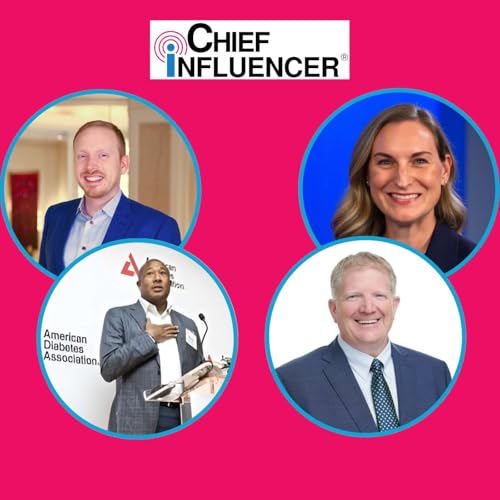
    The National Health Council (NHC) Leadership Conference brings together leaders from top patient organizations and nonprofits to foster connections, discuss leadership topics, and share best practices in nonprofit management. At the event, host Anthony Shop moderated a powerful panel of CEOs who discussed their roles as Chief Influencers on LinkedIn. The panel features Chuck Henderson, CEO of the American Diabetes Association; Katie Schubert, President and CEO of the Society for Women's Health Research; and Steve Taylor, President & CEO of the Arthritis Foundation. They shared insights into their success on LinkedIn, focusing on how they have built trust, maximized engagement, and fostered personal connections through the platform.


    The CEOs offer practical tips on content strategy, posting frequency, and how to engage with comments and tags. They highlight the impact of their social media presence in achieving meaningful outcomes such as talent recruitment and securing major funding. The discussion highlights the importance of utilizing LinkedIn to reach a broader audience and the value of commenting, liking, and reposting relevant content to amplify organizational messages effectively.

    Takeaways:

    • CEOs see ROI from LinkedIn: Make it a habit to regularly connect with peers, industry leaders, and your audience. For instance, the speaker encourages everyone to connect with him on LinkedIn as a first step toward meaningful engagement.
    • Faces Are the New Logos: Personal presence is key to building trust. Share your personal experiences and stories to create a deeper connection with your audience. Remember, trust is built through people, not just organizational logos.
    • Share the Stage: Celebrate and promote others. Instead of focusing solely on your own achievements, highlight the successes and contributions of colleagues and partners. This not only amplifies your message but also uplifts others.
    • Build Internal Champions: Cultivate a strong internal network within your organization. True external support begins with advocacy and engagement from within your own team.
    • Embrace the Gray: Blend your professional and personal brand by showing up authentically. While different contexts may call for varying levels of personal sharing, authenticity should always be at the core.
    • Engage with Content: Actively like, comment, and share relevant posts. This increases visibility and sparks conversations, making networking just as important as posting your own content.
    • Schedule and Be Consistent: Use scheduling tools to ensure regular content posting at optimal times. Reposting or sharing valuable content with your own insights can further boost engagement. Repurposing content from other platforms, like Instagram, can also be effective on LinkedIn.


    Links:

    • Chuck Henderson
      • LinkedIn: https://www.linkedin.com/in/charlesdhenderson/
      • Website: https://diabetes.org/
    • Kathryn Godburn Schubert
      • LinkedIn: https://www.linkedin.com/in/kathryn-godburn-schubert-07352a7/
      • Website: https://swhr.org/
    • Steven Taylor
      • LinkedIn: https://www.linkedin.com/in/steven-taylor-a18b9b2/
      • Website: https://www.arthritis.org/


    Shout Outs:

    • Eric Racine: https://www.linkedin.com/in/ericracine/
    • Jean Wright: https://www.linkedin.com/in/jeanwrightmdmba/
    • Randall Rutta: https://www.linkedin.com/in/randall-rutta-1622952/
    • National Health Council: https://www.linkedin.com/company/national-health-council/
    Mehr anzeigen Weniger anzeigen
    49 Min.
Noch keine Rezensionen vorhanden