• The Gospel of Matthew #15
    Feb 23 2026

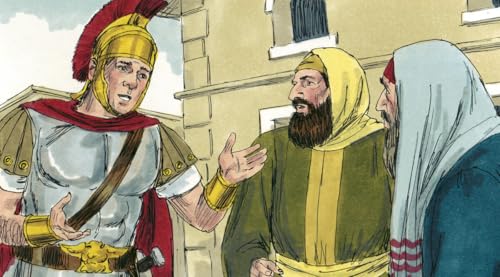
    It is hard for me to imagine Jesus being surprised at anything. After all, Jesus knows the thoughts and intents of the heart, doesn’t he? Isn’t he able to know what we would think before we think it; to know what we are going to say before we say it? Well, on one occasion a Roman centurion came to Jesus and requested healing for his servant. This is surprising enough all by itself. But when Jesus says to him, I will come and heal him:

    The centurion answered and said, Lord, I am not worthy that you should come under my roof: but speak the word only, and my servant shall be healed. For I am a man under authority, having soldiers under me: and I say to this man, Go, and he goes; and to another, Come, and he comes; and to my servant, Do this, and he does it. When Jesus heard it, he marveled, and said to them that followed, Verily I say unto you, I have not found so great faith, no, not in Israel.

    Matthew 8:8–10 KJ2000

    Matthew tells us that Jesus marveled at the man’s faith. He seems to have been genuinely impressed. Jesus seems to have been surprised more than once about this question of faith. For example, he seems surprised at the fact that he does not find in Israel the kind of faith that he often finds among Gentiles. Also, when it comes right down to it, he doesn’t find an awful lot of faith in his own disciples. He seems disappointed in them; he seems distressed in them; he rebukes them for their lack of faith. He expected more of them than he got. Now, why do you think that would be? Why do you think that greater faith would come from someone further away from the center of things than from someone right next door to what you could call the source of faith—Jesus himself?

    Mehr anzeigen Weniger anzeigen
    28 Min.
  • The Gospel of Matthew #14
    Feb 19 2026

    I don’t want to be misunderstood; I agree entirely with Paul when he says:

    For by grace are you saved through faith; and that not of yourselves: it is the gift of God: Not of works, lest any man should boast.

    Ephesians 2:8–9 KJ2000

    So salvation is by grace through faith. We can’t achieve it by ourselves, we cannot do it by law-keeping, we cannot in any way get rid of our past guilt, we cannot create a circumstance in which God owes us salvation—none of that. But having come to Christ, through faith, how should we then lives our lives? Is there a way of life for a Christian after one has come to the faith? Is there a way we should go and a way we should not go? Is there a way of obedience to Christ and a way of disobedience to Christ? Does it make any difference which one of those ways we walk? Well, Jesus, in his Sermon on the Mount, said this:

    Enter in at the narrow gate: for wide is the gate, and broad is the way, that leads to destruction, and many there be who go in there: Because narrow is the gate, and narrow is the way, which leads unto life, and few there be that find it.

    Matthew 7:13–14 KJ2000
    Mehr anzeigen Weniger anzeigen
    28 Min.
  • The Gospel of Matthew #13
    Feb 18 2026

    One day when I was praying forgive us of our debts as we forgive our debtors it dawned on me that I was praying in the first-person plural. I was not merely asking God to forgive me, but you as well—us. I think there must be a kind of communion among all of us who know God, and when I ask him to forgive us then it would be very foolish of me not to forgive at the same time. How can I pray to God and say, Lord, forgive Bob and I of our sins, but I want you to understand that I’m not going to forgive Bob. I’m going to hold a grudge against Bob, but I expect you to forgive him. It doesn’t really work that way.

    Then came Peter to him, and said, Lord, how often shall my brother sin against me, and I forgive him? till seven times? Jesus said unto him, I say not unto you, Until seven times: but, Until seventy times seven. Therefore is the kingdom of heaven likened unto a certain king, who would take account of his servants.

    Matthew 18:21–23 KJ2000

    Then follows a short parable of Jesus’ that, I think, is very revealing along this line. Let’s continue in Matthew, chapter 18.

    Mehr anzeigen Weniger anzeigen
    28 Min.
  • The Gospel of Matthew #12
    Feb 17 2026

    Have you ever wondered why some people refuse to swear in court? So when swearing in witnesses and jurors, the court often asks someone to swear or affirm. Well, it grows out of this statement in Matthew, chapter five:

    Again, ye have heard that it hath been said by them of old time, Thou shalt not forswear thyself, but shalt perform unto the Lord thine oaths: But I say unto you, Swear not at all; neither by heaven; for it is God’s throne: Nor by the earth; for it is his footstool: neither by Jerusalem; for it is the city of the great King. Neither shalt thou swear by thy head, because thou canst not make one hair white or black. But let your communication be, Yea, yea; Nay, nay: for whatsoever is more than these cometh of evil.

    Matthew 5:33–37 KJV

    Now, the whole idea of an oath—as to solemnly swear to tell the truth, the whole truth, and nothing but the truth—is to make it possible to prosecute you if you lie. In other words, it is to distinguish between an official statement under the law and a mere assertion you make that has not been bound under the law. The truth is that there is no substantive difference between affirming and swearing—it is only a matter of the words involved. The essential nature of the statements are identical. What principle is Jesus declaring here in his Sermon on the Mount?

    Mehr anzeigen Weniger anzeigen
    28 Min.
  • The Gospel of Matthew #11
    Feb 16 2026

    When Jesus said, Don’t think I am come to destroy the law. I am not come to destroy, but to fulfill it, I don’t really think Jesus’ disciples thought that was a strange thing to say at all. In fact, I think they might have wondered why he was telling them that. When he said, Verily I say unto you, not one jot nor tittle shall pass from the law ’til heaven and earth shall pass, I don’t think that was especially surprising to men who believed in the law. So what was Jesus driving at? Why was the emphasis here? Why was he bringing this up? Well, he ended this short section of the Sermon on the Mount by saying this:

    For I say unto you, That except your righteousness shall exceed the righteousness of the scribes and Pharisees, you shall in no case enter into the kingdom of heaven.

    Matthew 5:20 KJ2000

    In other words, there are two standards here. There is the standard that the scribes and Pharisees would adhere to, but I am going to suggest that there is another standard which may be even higher than that.

    What I think is often overlooked by people reading through this is the significance of Jesus saying not one jot nor tittle—that is, not one dotting of the i or crossing of the t—shall pass from the law. He is talking about the written law—as it is only in writing that we dot is and cross ts. What’s the big deal about that, you ask? Well, it is well understood by Jews—but not so well known by Christians—that there were two sets of law recognized among Jesus’ listeners. Knowing the differences between them is crucial to understanding Jesus’ words.

    Mehr anzeigen Weniger anzeigen
    28 Min.
  • Understanding the Fall
    Feb 12 2026

    If there is one concept that is central to Christian teaching along with creation and redemption, it is the fall of man. The concept may be integral to the Christian faith, but it often isn’t really understood. From this all-too-brief story in Genesis (and some later comments in the Bible) a surprising number of beliefs have arisen to resolve some of its unanswered questions.

    Was it inevitable? Did God know it was going to happen? What were the real consequences of these first human sins—for men, women, and the entire Earth? All of this is very simple, of course, until you start trying to explain the details and depends in large measure on the philosophy you’ve developed from reconciling other questions about life.

    Now, there are three ways of looking at the fall of man. So open up your Bibles to Genesis and let’s take another look at this essential story.

    Mehr anzeigen Weniger anzeigen
    28 Min.
  • The Gospel of Matthew #10
    Feb 12 2026

    You know, I think Christianity was a lot simpler before the first theologians came along. The early Christian evangelists, for example, going from town to town preaching the good news of Jesus Christ, did not carry various translations of the Bible. They did not even have the four Gospel accounts to reconcile, or the Epistles of Paul with the questions that they raised. What did they have? Well, they had a memorized version of the gospel of Jesus Christ—his message, that’s all. No wonder Christianity swept the world like wildfire—it was simple, it made sense, it was not some gigantic struggle with theology. God is, he has sent his son, his son died in our place to forgive us of our sins, glory be to God.

    But then came the theologians (and they came early enough). By the time Paul wrote his letter to the Corinthians, he had encountered a couple of dandies. He had one man there, for example, who had studied the scripture and concluded that the resurrection has already passed. Another was worried about what kind of body he would have when he came up in the resurrection. The theologians are always getting into this kind of thing.

    One of the areas we have trouble with (yes, as theologians) is the law of God. There is nothing in the Bible designed to make us more uncomfortable than the law of God. Man is designed to be free; man wants to be free. One of the most fundamental things in human nature is the desire to be free from any kind of external restraint. So what is man to think we encounters what Jesus says here in Matthew, chapter 5.

    Mehr anzeigen Weniger anzeigen
    28 Min.
  • The Gospel of Matthew #9
    Feb 11 2026

    I believe that most people in the world want to be right. I certainly don’t know a soul who wants to be wrong, plans so that he is wrong, works so that he is wrong. Do you? I don’t think so. It may be true that a lot of us want to do as we please and call it right, or what feels good and assume that it is right, but we don’t really want to be wrong. Being wrong somehow suggests that something bad is going to happen as a result of what we have done. That’s generally the idea about right and wrong: you do good and good things will happen; you do wrong and bad things are going to happen. So along comes Jesus in his Sermon on the Mount saying:

    Blessed are they who do hunger and thirst after righteousness: for they shall be filled.

    Matthew 5:6 KJ2000

    Highly favored are those who are hungry to be right. Now, I do think there is a difference between what Jesus calls a hunger and a thirst for righteousness and the habit a lot of us have for simply wanting to be right. David, when he was speaking along these lines said:

    My tongue shall speak of your word: for all your commandments are righteousness.

    Psalm 119:172 KJ2000

    So if I’m hungering and thirsting after righteousness then I am hungering and thirsting after God’s commandments. That a little bit of a funny way to put it, don’t you think? When salvation is by grace (and it is by grace, let’s make no mistake about that) why should a Christian go hungering and thirsting after the commandments of God? After you have salvation, what else is there?

    Mehr anzeigen Weniger anzeigen
    28 Min.