Folgen

  • From poffertjes to perad and pepper water
    Jan 22 2026
    "I used to be very possessive of my recipes. I didn't want to give them away until a senior chef told me, "Listen, even if you give the recipe, everybody's hand is different; it will not be the same." Then, as time went on, I said, actually, some of these recipes should be preserved and if my children are not going to carry it on then at least other people in the community should know about them. Some of the things that I ate as a child have been totally forgotten. That's when I decided to start writing this book" - Crescentia Scolt Fernandes, author, Tale of Two Kitchens, Talks to Manjula Narayan about the similarities between the Cochin Anglo Indian food of her family and the Goan food of her husband's, the Dutch, Portuguese and, of course, Malayali influences on the food she ate as a child, memories of Vypin island in the mid-20th century, the lost Creole that her parents spoke, and how she and her husband ran the highly successful Bernardo's, the only authentic Goan restaurant in the National Capital Region. Learn more about your ad choices. Visit megaphone.fm/adchoices
    Mehr anzeigen Weniger anzeigen
    1 Std. und 2 Min.
  • Reading, writing, rocking
    Jan 15 2026
    "The thing about being a writer is that we write from a sensitive, empathetic place but we are also ruthless in that when we are grieving, we take notes of our grief. Ruskin Bond told me that the best way to write about people is just to live long enough that they all die before you. It succeeded with him; hopefully, it will succeed with me!"- Twinkle Khanna, author, Mrs. Funny bones Returns, talks to Manjula Narayan on the Books & Authors podcast about everything from her father's eclectic reading habits and her own love of sci-fi to her dissertation on Alice Munro, how she sometimes wishes she were right wing, and why she doesn't care too much about what people think of her. Learn more about your ad choices. Visit megaphone.fm/adchoices
    Mehr anzeigen Weniger anzeigen
    48 Min.
  • On journeying through life
    Jan 9 2026
    "To be alive is, in many ways, to travel; it's to journey through time. We tend to think of travelling as something that involves space or place or geography; moving from one place to another. But the other aspect of travel is just journeying through time; every human being alive journeys through it. I write about journeying through language, grief, parenting...These are universal milestones. I look at them like I look at travel. Trying to be a good traveller can be applied to these other kinds of inner landscapes too. I've travelled so much and I've lived repeatedly in different cities So developing different lenses and multiple perspectives through which to view things just happens unconsciously. As you go to more and more places, you develop more implicit norms. It's an agglomerative, expansive process where you are becoming more and more capacious and more and more able to see things from an insider-outsider perspective; but it's not just one insider and one outsider but multiple insiders and multiple outsiders" - Pallavi Aiyar, author, Travels in the Other Place talks to Manjula Narayan on the Books & Authors podcast about everything from the Japanese idea of mono no aware and attempting to be a Tiger Mom to the parallels between pregnancy and cancer, the power of hair, and the brevity and beauty of life. Learn more about your ad choices. Visit megaphone.fm/adchoices
    Mehr anzeigen Weniger anzeigen
    1 Std. und 3 Min.
  • Space operas, dystopias, and the perfect worlds of the far future
    Jan 6 2026
    "Science and speculative fiction has always been about responding to the preoccupations of the time. I was attracted to the genre by the imaginative possibilities it offers by allowing the creation of a different world that then lets you shine a light back onto our world. While putting this anthology together we were looking for anything that could broadly fall under the category of spec fic. If could be sci-fi, magical realism, even horror. Indian readers and writers are in a dystopic frame of mind right now. There are specific forms of caste and patriarchy that show up in Indian speculative fiction that makes it different from what's written in the West. Anthologies create a culture where there is space for both readers and writers to explore the genre. It's also a great way of platforming new writers"- Gautam Bhatia, editor, Between Worlds; The IF Anthology of New Indian SFF Vol 1 Learn more about your ad choices. Visit megaphone.fm/adchoices
    Mehr anzeigen Weniger anzeigen
    50 Min.
  • Train through India
    Dec 11 2025
    "Trains in India are public sites and they are sites for social exchange and its a collective identity but what the smartphone has introduced is not only the private sphere into the public one, but also a flagrant abuse of the public sphere by making it totally private! This includes the watching of shows at a loud volume and having conversations like that too."- Amitava Kumar, author, The Social Life of Indian Trains, talks to me on the Books & Authors podcast about how train travel has changed, the people he met on his journey from Kashmir to Kanyakumari on the Himsagar Express, memories of earlier train journeys in childhood, lost loves, how caste plays out in our lax attitude to the disposal of waste, the famous train scene in Satyajit Rai's Pather Panchali, and how the vast mass of Indians who are not affluent are subdising luxury train travel for the few. Learn more about your ad choices. Visit megaphone.fm/adchoices
    Mehr anzeigen Weniger anzeigen
    46 Min.
  • Irony, 'influenza', and Internet mythology in contemporary India
    Dec 4 2025
    "I don't take the usual dystopian view of the Internet. I see it as a unit of society and use it to understand the self, the nation and politics. So, I didn't want to look at caste from the usual Dalit-Savarna perspective - a different kind of system is playing out on the Internet. Many middle castes are anxious to move up the ladder. No one can become a Brahmin but the Kshatriya space is open so many communities can claim they are Kshatriyas -- that is happening all over north India. And it's amazing how they are doing it by creating their own digital mythologies through songs and reels."- Anurag Minus Verma, author, The Great Indian Brain Rot, talks to Manjula Narayan about everything from the profitable conspiracy theory industry that grew around the Sushant Singh Rathod episode, the weird seduction of cringe content and Puneet Superstar to Emraanism, the ineffable charm of Rakhi Sawant, influencers and mental health, and his own enduring interest in "misfits, lovers and losers". Learn more about your ad choices. Visit megaphone.fm/adchoices
    Mehr anzeigen Weniger anzeigen
    1 Std. und 4 Min.
  • Jagat Murari & the FTII: art, argument and institution building in young India
    Nov 28 2025
    "In my father's view, the making of a filmmaker wasn't just about teaching the art, craft, and science [of filmmaking], but also about allowing the filmmaker to find their own unique voice and have the confidence to be their authentic self." - Radha Chadha, author, The Maker of Filmmakers talks to Manjula Narayan about Jagat Murari, who played a key role in the emergence of the FTII, the conflicts that effected the DNA of the institution, Indian New Wave cinema of the 1970s, the tussles between proponents of arthouse and commercial films, and the many debates about the kind of films that India needed to make in the post-independence period. Learn more about your ad choices. Visit megaphone.fm/adchoices
    Mehr anzeigen Weniger anzeigen
    1 Std. und 3 Min.
  • On the multi-storeyed tower with no staircase and no entrance
    Nov 20 2025
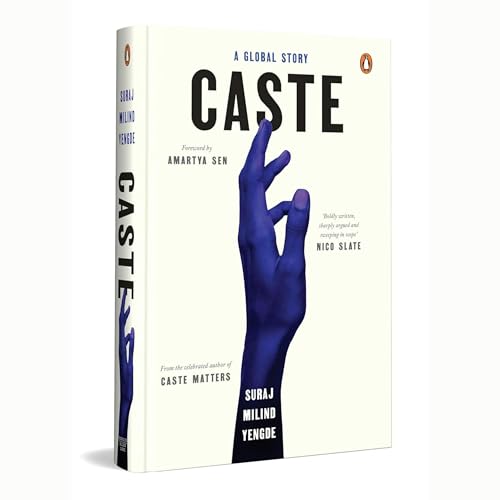
    "What I wanted to say about the global dimension of caste was to look at it from the subjectivity of its victim. So Dalit as a subject takes a central place in this text, and this Dalit subjectivity travels to nearly 15 countries with us [the diaspora]. These constituents are similar but the geographical,political and local [elements] that interact with it give a new dimension to caste. Though it is a global story, it is also a very particularly localised form of caste that we see operating in different parts of the world. So, there's no blanket statement that caste the way it operates in India operates the same way in Trinidad, US, UK... Every situation is different." - Suraj Milind Yengde, author, Caste; A Global Story talks to Manjula Narayan about Dalit activism abroad, how the first celebration of Ambedkar Jayanti in the US was held at the historically Black college of Howard, the Punjabi Buddhists of UK, the idea of 'Brahmin by boat' among Indians in the Caribbean, the othering of Dalits within Indian organisations even at elite universities in the US, the triple diasporas of Fijian Dalits, and more. Learn more about your ad choices. Visit megaphone.fm/adchoices
    Mehr anzeigen Weniger anzeigen
    1 Std. und 5 Min.