Folgen

  • Frankenstein | Part 3
    Feb 10 2026

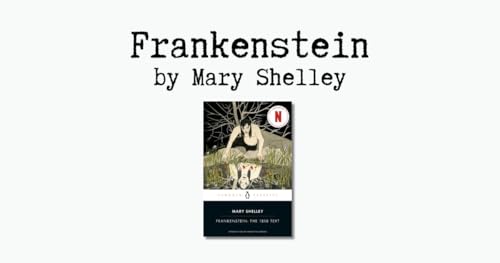
    Welcome to our final episode of Frankenstein. In this episode, Shari and Rhea revisit the nesting narrative, also called framing. They examine each frame through the lens of several different themes and motifs. They ask what ideas they see repeatedly, and how the characters express the various themes. They talk about Shelley’s exploration of love through the pairing of different characters together, and how Victor and the Creature combine in such a way that desecrates love as well as one another. They discuss the significance of names in Frankenstein, and the extra-significance of the De Lacey family at the center of the story. And they circle back around on earlier discussions about creators and creations, not taking responsibility for what we make, not “killing our darlings” when we should, and the ways we end up with monsters of our own making.

    Journal Prompts for Frankenstein:

    Rhea had some excellent reflective questions we didn’t have time to discuss. I (Shari) would like to offer them here as journal prompts in case you’d like to do some final noodling over Frankenstein.

    * On Creation: What does Shelley want me to notice about creation? About my relationship with creation? My responsibility to creation? My responsibility to what I create?

    * On Companionship: What does Shelley want me to notice about companionship? About my expectations about companionship? My responsibilities within companionship?

    * On Love: What does Shelley want me to notice about love?

    We’d love to hear your thoughts or discoveries on any of the above. And if Frankenstein spurred you on to consider other big ideas, please share these, too!

    Our next slow read is Crossing to Safety, by Wallace Stegner. We will be reading it over four weeks. Our first episode will drop March 10th. No new episodes will air between now and then. Great time to catch up on your Middlemarch reading!

    If you need a refresher of our 2026 reading list, you can find it here:

    Thanks for listening to this episode of The Reader & the Writer! If you liked this post, give it some ❤️ and share it with a friend, enemy, or frenemy.We’re not picky.

    The Reader & the Writer is a reader-supported publication. To receive new posts and support the literary work we’re doing, consider becoming a free or paid subscriber.


    Get full access to The Reader & the Writer at thereaderandthewriter.substack.com/subscribe
    Mehr anzeigen Weniger anzeigen
    1 Std. und 7 Min.
  • Middlemarch | Book 1
    Feb 6 2026

    Welcome to Middlemarch, Book One.

    In this first “reading” episode of Middlemarch, Rhea and Shari dive headlong into the world of early-1800’s provencial England. They spend a great amount of time discussing the story’s witty, critical, big-hearted narrator. They examine the text for understanding how they are meant to feel about Casaubon, though they already know exactly how they feel about Casaubon. They talk about Dorthea as viewed from various points of view—especially her sister, Celia’s. They look at where the narrator offers us a critical eye, a wide lens, and always a quick witt. Rhea wonders if she’ll even be able to find a character she’ll love to hate. Shari declares Celia is her hero.

    If you haven’t seen it yet, be sure to read through R&W’s Middlemarch page. It’s full of great stuff:

    Thanks for reading The Reader & the Writer! If you liked this post, please show it some ❤️ and share it around.

    The Reader & the Writer is a reader-supported publication. To receive new posts and support the literary work we’re doing, consider becoming a free or paid subscriber.


    Get full access to The Reader & the Writer at thereaderandthewriter.substack.com/subscribe
    Mehr anzeigen Weniger anzeigen
    1 Std. und 10 Min.
  • Frankenstein | Part 2
    Feb 3 2026

    Welcome to R&W’s second episode of Frankenstein, by Mary Shelley. In this episode, Shari and Rhea dive deeper into the complexities and questions begged by the nested narrative style of the story, Shelley’s use of nature as a metaphor and motif, the use of counterpoints in every character as they relate to Victor, the many Great Conversations embedded in Volume 2, a continued study of humans’ duties toward the works of our hands, and their severe discomfort at the Creature’s lack of a name.

    The final Frankenstein episode will air Tuesday, February 10th. (This is one week off the original reading schedule, due to inclement weather.)

    Here is a link to Rhea’s Frankenstein Reading Guide:

    Thanks for listening to The Reader & the Writer! If you liked this episode, show it some ❤️ and share it with a friend.

    The Reader & the Writer is a reader-supported publication. To receive new posts and support the literary work we do, consider becoming a free or paid subscriber.


    Get full access to The Reader & the Writer at thereaderandthewriter.substack.com/subscribe
    Mehr anzeigen Weniger anzeigen
    1 Std. und 6 Min.
  • Frankenstein | Part 1
    Jan 20 2026

    “Learn from me, if not by my precepts, at least by my example, how dangerous is the acquirement of knowledge, and how much happier that man is who believes his native town to be the world, that he who aspires to become greater than his nature will allow.”

    —Victor Frankenstein to Capt. Walton (p 41, 1818 version)

    Welcome to Mary Shelley’s Frankenstein, R&W’s first deep read for 2026. In this episode, Shari and Rhea do a brief introduction to Mary Shelley herself, and those aspects of her life they can see informing aspects of the Frankenstein tale They talk about their experience reading the 1818 and 1831 versions side-by-side. They discuss the epistolary style of the narrative, the motifs they see, and the horrible moment of Victor Frankenstein’s creation coming to life. They talk about our own making and ask what responsibility we hold to that which we make: from marriage, home and children, to careers, inventions, and those physical works of our hands.

    All this, and they barely scratched the surface.

    Make sure to look at Rhea’s Reading Guide for Frankenstein:

    It's full of great resources, the reading schedule, Middlemarch connections, and bookmarks, of course! :)

    Thanks for listening to The Reader & the Writer! If you liked this episode, ❤️ it and share it around.

    The Reader & the Writer is a reader-supported publication. To receive new posts and support the literary work we’re doing, consider becoming a free or paid subscriber.


    Get full access to The Reader & the Writer at thereaderandthewriter.substack.com/subscribe
    Mehr anzeigen Weniger anzeigen
    1 Std. und 5 Min.
  • Welcome to Middlemarch
    Jan 13 2026

    Welcome to Middlemarch! In this episode, Shari and Rhea lay the groundwork for R&W’s first yearish-long read. They discuss the author, George Eliot, the origin story of Middlemarch, and all the things they will be looking for while they read. Oh, and they try and figure out exactly what “provincial” means.

    To find the reading schedule, bookmarks, and other resources mentioned in the podcast, visit R&W’s Middlemarch page:

    For a list of R&W’s entire 2026 year of reading click here:

    Thanks for listening to this episode of The Reader & the Writer! If you liked this episode, ❤️ it and share it with a friend.

    The Reader & the Writer is a reader-supported publication. To receive new posts and support our literary work, consider becoming a free or paid subscriber.


    Get full access to The Reader & the Writer at thereaderandthewriter.substack.com/subscribe
    Mehr anzeigen Weniger anzeigen
    1 Std. und 1 Min.
  • War and Peace | Final Episode
    Jan 6 2026

    Welcome to the final episode of R&W’s 2025 year-long read of War and Peace. It really is hard to believe it’s over (Except, if you’re Shari, it’s not. Six more Epilogue essays to go!)

    In this episode, Shari and Rhea discuss the way Tolstoy takes the characters off the stage in the end, and sets them squarely in the beautiful mundane of every day life. They talk about characters they wish they’d heard more from, characters they kept thinking might pop back up and play more of a role, the character Rhea loved to hate in the end. They talked about their favorite scenes and sections, as well as those places they could have done without. They talked about what part of spending an entire year with War and Peace they will miss. Oh, and what they’re looking forward to with their next (not quite) year-long read, Middlemarch, by George Eliot.

    Speaking of, if you haven’t seen The Reader and the Writer’s 2026 reading list in order with dates, to include our year-long reads: Middlemarch and the Harry Potter series (going into 2027), you can find it here:

    To follow my annotations, personal notes, and War and Peace story connections on Tolstoy’s Epilogue essays (12 essays in 12 days), start here:

    Thank you so much for reading along with us in 2025! And cheers to many more years of happy slow reading together. 🥂

    Thanks for listening to this episode of The Reader & the Writer! If you liked what you heard, give it some ❤️ and share it with a fellow War and Peace lover like you.

    The Reader & the Writer is a reader-supported publication. To receive new posts and support the literary work we’re doing, consider becoming a free or paid subscriber.


    Get full access to The Reader & the Writer at thereaderandthewriter.substack.com/subscribe
    Mehr anzeigen Weniger anzeigen
    52 Min.
  • R&W 2025 End of Year Episode
    Dec 31 2025

    It’s hard to believe, but it’s time for the last episode of 2025.

    In this episode, Rhea and Shari ask each other questions about all things R&W and books this 2025. They talk about those most memorable scenes, where they found the Great Conversation most compelling in the books they read, what story most convicted them, reminded them of who they are, and surprised them by its beauty. They discussed Shari’s MFA work and how it’s informed her labors with novel writing and R&W. They talked about what they thought they did well this first full year of R&W’s existence, and what they hope to do better in 2026. And, of course, Rhea got bonus points for the best question ever: Which two characters from any of the books we read this year would you like to see married? Oh wow… What would you say??

    On a personal note:Rhea and I are beyond grateful for all of you who’ve journeyed along with us this 2025. We began doing this thing a year and a half ago out of our shared love for literature and the sheer fun we have when we’re together talking about the books we’re reading. Your own love of literature and participation with us here spurs us on to continue nurturing and growing the literary work we’ve begun.

    2026 is already shaping up to be our best year yet (not so hard considering we’re not even two full years old)! If you haven’t seen the R&W 2026 Reading list in order, be sure to check it out:

    R&W’s first book is Frankenstein, by Mary Shelley. Below are the dates and reading schedule:

    * January 20: Frankenstein - Volume I

    * January 27: Frankenstein - Volume II

    * February 3: Frankenstein - Volume III

    The first year-long|background read is Middlemarch, by George Eliot. Below are the first few episodes related to that book:

    * January 13: Welcome to Middlemarch

    * February 6: Middlemarch - Book 1

    * March 6: Middlemarch - Book 2

    See you next year! Until then, read wide, read well, and live always in witness to the Great Story.

    The Reader & the Writer is a reader-supported publication. To receive new posts and support the literary work we’re doing, consider becoming a free or paid subscriber.


    Get full access to The Reader & the Writer at thereaderandthewriter.substack.com/subscribe
    Mehr anzeigen Weniger anzeigen
    1 Std. und 15 Min.
  • Klara and the Sun | Part 3
    Dec 30 2025

    “Hope,” he said. “Damn thing never leaves you alone.” —Paul, p. 219

    Welcome to the final episode of Klara and the Sun. In this episode, Shari and Rhea discuss all the motifs and how they bring to life the central question of this novel: What does it mean to be human? They talk about Klara and faith, Klara and friendship, Klara and the human heart, and what Jesus and C. S. Lewis have to say on all these matters. They discuss all the ways in which Klara, disturbingly, seemed throughout the story more human than the humans did. They discuss their own troubled reactions to the story’s ending. They talk about the difference between companionship and friendship. They talk about integration and disintegration, and how every effort at human-like connection with A.I. leads to the later, and never the former. They re-visit the Advent aspect of this story, and what Advent looks like with no Incarnation (God becoming human for us) in the end.

    And, Shari reads some poetry by Wendell Berry at the end.

    Resources cited in this episode:

    * The Four Loves, by C. S. Lewis

    * The Gospel of John, Chapter 15

    * Klara and the Sun in the Year of ubiquitous A.I. (from Substack MBH4H)

    * The Friend Necklace (Oct. 2025 review from Business Insider)

    Poetry Rhea was inspired to find and cite after finishing Klara and the Sun:

    * The Peace of Wild Things by Wendell Berry

    * [i carry your heart with me (i carry it in] by e. e. cummings

    * The Sun by Mary Oliver

    If you haven’t seen it yet, here is R&W’s 2026 Reading List in order with (penciled in) dates:

    Thanks for listening to this episode of The Reader & the Writer! If you liked this episode, please give it some ❤️ and pass it along.

    The Reader & the Writer is a reader-supported publication. To receive new posts and support the literary work we’re doing, consider becoming a free or paid subscriber.


    Get full access to The Reader & the Writer at thereaderandthewriter.substack.com/subscribe
    Mehr anzeigen Weniger anzeigen
    1 Std. und 12 Min.