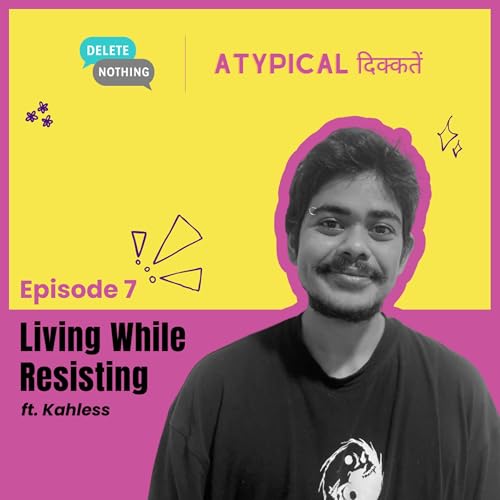
• Living While Resisting
    Oct 27 2025

    Trans healthcare is treated like an optional extra. But it is life-saving.

    In this episode, we speak with Kahless Jaden Hameed, a trans writer and activist based in Colombo, about what it means to navigate healthcare systems that choose not to see trans and disabled people as fully human.

    From being denied hormones, to being misgendered and dismissed, to walking city after city just to find essential medication, this is not an accident. It is systemic. It is violence.

    You can check out the podcast transcript ⁠here⁠.

    Follow Atypical Dikkatein on ⁠⁠⁠⁠⁠⁠social media⁠⁠⁠⁠⁠⁠.

    ⁠⁠⁠⁠⁠⁠Say hi⁠⁠⁠⁠⁠⁠ to me, your host Soumya.

    Graphic by: ⁠⁠⁠⁠⁠⁠Harshvardhan Bhaskar⁠⁠⁠⁠⁠⁠ and ⁠⁠⁠⁠⁠⁠Khushi (Kay) Solanki⁠⁠⁠⁠⁠⁠

    Transcript by: ⁠⁠⁠⁠⁠⁠Khushi (Kay) Solanki⁠⁠⁠⁠⁠⁠

    Sound editing and production by: ⁠⁠⁠⁠⁠⁠Pranjal Pathak

    Mehr anzeigen Weniger anzeigen
    47 Min.
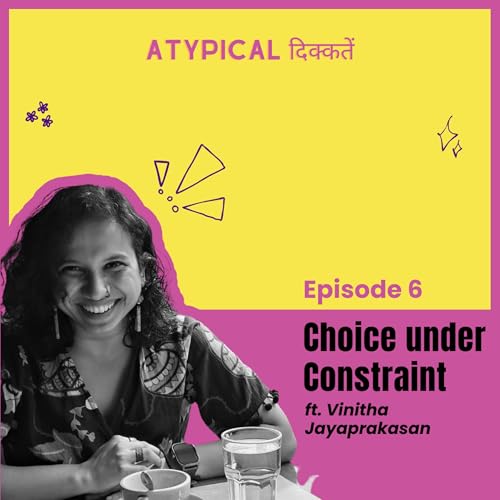
  • Choice under Constraint
    Sep 18 2025

    Abortion isn’t going anywhere.

    In Episode 6 of Atypical Dikkatein Season 2, we speak with Vinitha, a Bahujan queer feminist researcher, about why abortion rights must be seen as central to bodily autonomy and reproductive justice.

    From the gaps in India’s SRHR movement to the rise of anti-choice narratives, this episode unpacks how abortion continues to be stigmatized, even within feminist spaces, and why stronger, intersectional movements are urgently needed.

    You can check out the podcast transcript here.

    Some Data Points and Helpful Links:

    1. A Foundation for Reproductive Health Services study found 32% of respondents were unaware of abortion as a legal right, and that 95.5% of Indian women were uninformed of the existence of the MTP (Amendment) Act, 2021.

    2. According to the Rural Health Statistics (2019-20), released by the Ministry of Health and Family Welfare in May 2021, there was a shortfall of almost 70% for obstetricians and gynaecologists, which severely limits women’s access to safe abortion services

    3. 2 million adolescents lack access to contemporary abortion services, 78% abortions performed for adolescents were unsafe, 190,000 adolescents don’t receive post-abortion care.

    4. Every day, at least 8 women in the country die as a result of unsafe abortion-related causes, making it the third leading cause of maternal death (https://www.guttmacher.org/report/abortion-unintended-pregnancy-six-states-india)

    5. Population, Eugenics and Reproductive Rights: Legalising Abortion in India (by Mytheli Sreenivas): https://www.tandfonline.com/doi/full/10.1080/00856401.2024.2412468


    Follow Atypical Dikkatein on ⁠⁠⁠⁠⁠social media⁠⁠⁠⁠⁠.

    ⁠⁠⁠⁠⁠Say hi⁠⁠⁠⁠⁠ to me, your host Soumya.

    Graphic by: ⁠⁠⁠⁠⁠Harshvardhan Bhaskar⁠⁠⁠⁠⁠ and ⁠⁠⁠⁠⁠Khushi (Kay) Solanki⁠⁠⁠⁠⁠

    Transcript by: ⁠⁠⁠⁠⁠Khushi (Kay) Solanki⁠⁠⁠⁠⁠

    Sound editing and production by: ⁠⁠⁠⁠⁠Pranjal Pathak

    Mehr anzeigen Weniger anzeigen
    44 Min.
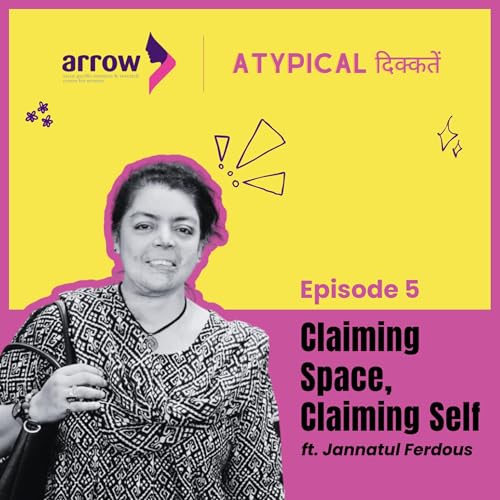
  • Claiming Space, Claiming Self
    Aug 11 2025

    Content Warning: Mention of abuse and harassment.


    We’re taught to fear our bodies, never to understand them.

    In Episode 5 of Atypical Dikkatein Season 2, Jannatul Ferdous, burn survivor, feminist, and disability rights advocate, reflects on how conversations around sexual and reproductive health are shrouded in shame, silence, and misinformation.

    Puberty, pregnancy, hormones, nutrition, these are not just biological facts, they’re deeply social experiences. But when the only focus is on morality, our health, dignity, and choices get lost.

    You can check out the podcast transcript here.

    Some Helpful Links

    1. Building a New Support Ecosystem for Women Burn Survivors of Domestic Violence - https://www.pcvconline.org/images/BEYOND-BURNS-RESEARCH-REPORT.pdf
    2. Acid Violence in South Asia: A Structural Analysis toward Transformative Justice - https://journals.sagepub.com/doi/10.1177/2455632717708717
    3. Justice a Distant Dream for Acid Attack Survivors in South Asia - https://thediplomat.com/2023/12/justice-a-distant-dream-for-acid-attack-survivors-in-south-asia/


    Follow Atypical Dikkatein on ⁠⁠⁠⁠social media⁠⁠⁠⁠.

    ⁠⁠⁠⁠Say hi⁠⁠⁠⁠ to me, your host Soumya.

    Graphic by: ⁠⁠⁠⁠Harshvardhan Bhaskar⁠⁠⁠⁠ and ⁠⁠⁠⁠Khushi (Kay) Solanki⁠⁠⁠⁠

    Transcript by: ⁠⁠⁠⁠Khushi (Kay) Solanki⁠⁠⁠⁠

    Sound editing and production by: ⁠⁠⁠⁠Pranjal Pathak

    Mehr anzeigen Weniger anzeigen
    42 Min.
  • Bodies, Belief & Becoming
    Jul 7 2025
    You can’t compartmentalise liberation.In Episode 4 of Atypical Dikkatein Season 2, we speak with Kinza Jamal, a Queer Pasmanda Muslim feminist and SRHR-J practitioner, about what it means to show up for justice that’s truly intersectional. Because you can’t talk about SRHR without talking about caste, Islamophobia, fascism, or capitalism. Because queer people aren’t just queer, they’re impacted by economic policies, domestic violence laws, family planning, and more.Tune in to listen to Kinza, who reminds us: we're not just service receivers, we’re political beings with lived knowledge. And if our movements don’t center these experiences, they’re not working.You can check out the podcast transcript here.Some Helpful LinksQueerTWENTY | Navigating the Complexities of Being a Queer Muslim in Today's India | Kinza Jamal: https://www.youtube.com/watch?v=0KxCGPMuJjkFollow-up Article - Navigating the Complexities of Being a Queer Muslim in Today's India (by Kinza Jamal): https://www.linkedin.com/pulse/navigating-complexities-being-queer-muslim-todays-india-egomonk-8zisc/Allah Is Queer (by Kinza Jamal): https://medium.com/@revivaldisabilitymag_35751/allah-is-queer-218ddd8a0567 How The Practice Of Ghusl Affected My Life As A Muslim Woman (by Kinza Jamal): https://feminisminindia.com/2021/02/03/how-the-practice-of-ghusl-affected-my-life-as-a-muslim-woman/ Sitting in Difference: Queering the Study of Islam (by Fatima Seedat): https://www.jstor.org/stable/10.2979/jfemistudreli.34.1.23Islam, Feminism, and Islamic Feminism: Between Inadequacy and Inevitability (by Fatima Seedat): https://dx.doi.org/10.2979/jfemistudreli.29.2.25Reconciling Islam and Feminism (by Iman Hashim): http://www.jstor.org/stable/4030365Muslim Feminism: A Case Study of Amina Wadud’s ‘Qur’an and Woman’ (by Haifaa Jawad): http://www.jstor.org/stable/20837253Review of ‘Gender and Nation’ by Nira Yuval Davis (by Uri Davis): http://www.jstor.org/stable/3993489Taking Sexuality and Gender Seriously in Qur'anic Studies (by Aayah Musa): https://dx.doi.org/10.2979/jfemistudreli.37.2.22Beyond the Text: Between Islam and Feminism (by Fatima Seedat): https://dx.doi.org/10.2979/jfemistudreli.32.2.23The Politics of Feminism in Islam (by Anouar Majid): http://www.jstor.org/stable/3175093Islamic Feminism and Muslim Women’s Rights Activism in India: From Transnational Discourse to Local Movement - or Vice Versa? (by Nadja-Christina Schneider): https://vc.bridgew.edu/jiws/vol11/iss1/5/Ijtihad: Reinterpreting Islamic Principles for the Twenty-First Century (by David Smock): http://www.jstor.org/stable/resrep12312Feminism in Islam | Aabiya Baqai: https://www.youtube.com/watch?v=5JPpfdbbs8QFollow Atypical Dikkatein on ⁠⁠⁠social media⁠⁠⁠.⁠⁠⁠Say hi⁠⁠⁠ to me, your host Soumya.Graphic by: ⁠⁠⁠Harshvardhan Bhaskar⁠⁠⁠ and ⁠⁠⁠Khushi (Kay) Solanki⁠⁠⁠Transcript by: ⁠⁠⁠Khushi (Kay) Solanki⁠⁠⁠Sound editing and production by: ⁠⁠⁠Pranjal Pathak
    Mehr anzeigen Weniger anzeigen
    51 Min.
  • Margins within Margins
    May 20 2025

    If you're not urban, male, or from a dominant caste, disability leadership rarely sees you.

    In Episode 3 of Atypical Dikkatein Season 2, we’re in conversation with Dipika Lama, a youth leader and disability rights advocate from Madhesh, Nepal, whose work centers on indigenous, Dalit, Madheshi, and Muslim women and girls with disabilities.

    Tune in to listen to Dipika unpack how even progressive movements can erase disabled voices. From policies that assume everyone reads English or Nepali to clinics that are not accessible to women with disabilities, this episode asks: Who gets left behind when inclusion is an afterthought?

    You can check out the podcast transcript ⁠⁠here⁠⁠.

    Some Helpful Links

    1. National Indigenous Disabled Women Association, represented by Dipika, delivered the CSO Forum collective statement on the demands of South Asian civil society at the Asia-Pacific Ministerial Conference on the Beijing+30 Review: https://www.instagram.com/reel/DClT5jtS_-l/?igsh=MjFyenp4N25lN3J3

    2. Dipika at the 58th Session of the Human Rights Council: https://webtv.un.org/en/asset/k1h/k1hw3c8f5n?kalturaStartTime=10383

    Follow Atypical Dikkatein on ⁠⁠social media⁠⁠.

    ⁠⁠Say hi⁠⁠ to me, your host Soumya.

    Graphic by: ⁠⁠Harshvardhan Bhaskar⁠⁠ and ⁠⁠Khushi (Kay) Solanki⁠⁠

    Transcript by: ⁠⁠Khushi (Kay) Solanki⁠⁠

    Sound editing and production by: ⁠⁠Pranjal Pathak

    Mehr anzeigen Weniger anzeigen
    48 Min.
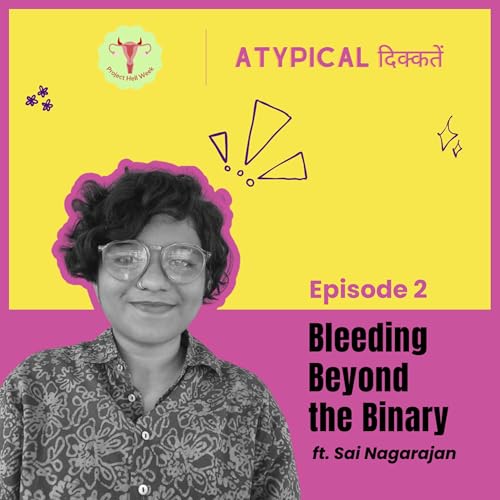
  • Bleeding Beyond the Binary
    Apr 28 2025

    Pain is not normal. And we need to stop pretending it is. In Episode 2 of Atypical Dikkatein Season 2, we speak with Sai Nagarajan, queer rights advocate, and PMD peer supporter, about what it means to navigate menstruation, chronic illness, and medical neglect as a queer, non-binary person in India.

    This episode is a deeply personal, powerful unpacking of gender, health, and access. Tune in to hear how Sai is building community and care through Project Hell Week and beyond.

    You can check out the podcast transcript ⁠here⁠.

    Some Helpful Links

    1. What is PMDD: https://www.hopkinsmedicine.org/health/conditions-and-diseases/premenstrual-dysphoric-disorder-pmdd

    2. Me v PMDD (referenced in the episode): https://mevpmdd.com/

    3. International Association for Premenstrual Disorders (referenced in the episode): https://www.iapmd.org/

    4. What a journey of PMDD could look like: https://www.healthline.com/health/mental-health/this-is-how-i-manage-pmdds-impact-on-my-mental-health#my-experience

    5. A video on the experiences of women with PMDD in England by the BBC: https://www.bbc.com/news/health-53559904

    6. PMDD through a gendered lens: https://www.progressivetherapeutic.com.au/pmdd-menstrual-gynaecological-health/the-intersection-of-pmdd-and-gender-identity

    7. Personal narratives of living with PMDD (Women only; specific to Canada): https://www.tandfonline.com/doi/full/10.1080/23293691.2024.2436925#d1e206

    8. Highly recommended to understand the varied experiences of folks with PMDD (and PME): https://www.reddit.com/r/PMDD/

    Follow Atypical Dikkatein on ⁠social media⁠.

    ⁠Say hi⁠ to me, your host Soumya.

    Graphic by: ⁠Harshvardhan Bhaskar⁠ and ⁠Khushi (Kay) Solanki⁠

    Transcript by: ⁠Khushi (Kay) Solanki⁠

    Sound editing and production by: ⁠Pranjal Pathak

    Mehr anzeigen Weniger anzeigen
    50 Min.
  • My Body, Their Rules
    Mar 31 2025

    Who decides what a "perfect" body is? And what happens when our bodies don’t fit that mould? In the first episode of Season 2 of Atypical Dikkatein, we sit down with Hameeda Syed, freelance journalist & co-founder of Dignity in Difference, to unpack the unrealistic expectations placed on our bodies, from ableism to gendered labour and SRHR.

    Tune in now for a powerful conversation around gender, bodily autonomy, ableism, and the deeply ingrained pressures we carry.

    You can check out the podcast transcript here.

    Follow Atypical Dikkatein on social media.

    Say hi to me, your host Soumya.

    Graphic by: Harshvardhan Bhaskar and Khushi (Kay) Solanki

    Transcript by: Khushi (Kay) Solanki

    Sound editing and production by: Pranjal Pathak

    Mehr anzeigen Weniger anzeigen
    46 Min.
  • Trailer - Season 2
    Mar 24 2025

    Trailer Transcript: Hello, aur namaste! Welcome to Atypical Dikkatein - a conversation podcast. I am your host Soumya, and in this podcast, I talk to fellow queer, neurodivergent and disabled folx. We are back with the podcast's second season, which we are co-creating with ARROW and Niluka Gunawardena.

    In this season, we will talk about sexual and reproductive health and rights issues from a disability and queer feminist lens with folx from the community working in the Asia-Pacific region. The conversations will explore oft-overlooked intersectional experiences, especially around sexual and reproductive health and rights, and issues like climate change, disability justice and gender rights.

    So come along and join us!

    You can listen to Atypical Dikkatein on Spotify. And if you wanna reach out to me—your host, Soumya, check out the Linktree link in the description. See ya!

    Say hi!


    Graphic by: Harshvardhan Bhaskar

    Mehr anzeigen Weniger anzeigen
    1 Min.