Folgen

  • The Cognitive Woods-Season 2 Episode 10: Assess Weighing the Lantern
    Feb 22 2026

    Send a text

    Episode 10: Assess — Weighing the Lantern

    After noticing and naming our questions, something subtle — and powerful — must happen next.

    We must choose.

    In Episode 10 of The Cognitive Woods: The Lantern’s Trail, we step into one of the most overlooked stages of the Attention Literacy Framework: Assess.

    Not every question deserves equal energy.

    Not every curiosity leads somewhere nourishing.

    And not every flicker of urgency should become your guiding flame.

    Through story, metaphor, classroom examples, leadership scenarios, and learning science, this episode explores how assessment protects attention. We examine how weighing a question — instead of chasing them all — strengthens clarity, deepens thinking, and prevents overwhelm.

    You’ll hear:

    • Why too many “lanterns” create cognitive noise

    • How assessment reduces cognitive load

    • What it means to align attention instead of scatter it

    • Three gentle moves to evaluate whether a question deserves your time

    • How teachers, teams, and leaders sharpen inquiry through discernment


    Because attention is finite.


    And wisdom is not found in holding every lantern —

    but in choosing which one to carry forward.


    🌿 Whether you are an educator, leader, parent, or lifelong learner, this episode will help you:

    • Protect your focus

    • Refine your inquiry

    • Strengthen your agency

    • Travel lighter and shine wiser


    🔔 Subscribe for new episodes releasing all this week as we continue the Lantern’s Trail arc — then returning to our regular weekly rhythm.

    🎧 Listen on Buzzsprout, YouTube, or wherever you stream.

    🌲 Explore more at www.alderbranch.org

    Where attention becomes literacy — and questions become pathways.


    Support the show

    Mehr anzeigen Weniger anzeigen
    7 Min.
  • The Cognitive Woods-Season 2 Episode 9: The Collective Curiosity
    Feb 16 2026

    Send a text

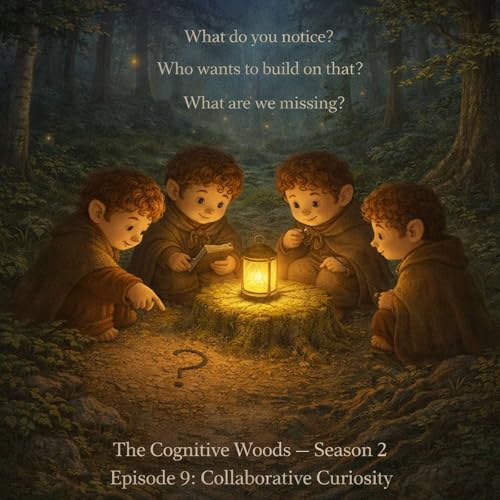
    Collaborative Curiosity — Designing Questioning Cultures.

    In Episode 1, a single lantern lit the path.

    In Episode 9, many lanterns gather.


    Because here’s the truth:

    Curiosity scales.


    One thoughtful question deepens a mind.

    A shared questioning culture transforms a classroom, a team, a family.


    This episode explores:

    • How to design environments where questions multiply

    • Why dialogic classrooms outperform answer-driven ones

    • Practical moves like Wonder Walls and Question Clinics

    • How collective curiosity sustains attention and belonging


    When multiple voices lean in — something shifts.

    Belonging strengthens.

    Thinking deepens.

    Energy compounds.


    If you lead people — students, staff, teams, children — this episode is for you.


    🎧 Listen on Buzzsprout

    📺 Watch on YouTube

    🌿 Explore more at alderbranch.org


    New episodes continue this week before we shift into weekly rotation. Now is the perfect time to subscribe.


    Many lanterns.

    One forest.

    Let’s keep wandering.

    Support the show

    Mehr anzeigen Weniger anzeigen
    6 Min.
  • The Cognitive Woods-Season 2 Episode 8 The Art of the Follow-Up
    Feb 15 2026

    Send a text

    The Art of Follow-Up — Layering Questions for Deeper Inquiry.

    Here’s something we don’t talk about enough:

    It’s rarely the first question that changes everything.

    It’s the second.

    And the third.

    And the quiet pause before the fourth.

    This episode explores the power of follow-up — the difference between surface curiosity and sustained inquiry.


    We talk about:

    • Laddering questions that deepen thinking

    • Wait time that actually expands attention

    • Why “What makes you say that?” is a culture-shaping move

    • How follow-up builds metacognition, not just answers

    • And why thoughtful persistence is a form of care


    In classrooms, teams, and families, follow-up is relational. It says:

    “I’m not done listening.”

    “Your thinking matters.”

    “There’s more here.”

    And in a world addicted to fast responses, that kind of attention is rare.


    🎧 Listen on Buzzsprout

    📺 Watch on YouTube

    🌱 Explore more at alderbranch.org


    If you’ve ever felt like conversations end too quickly…

    If you’ve watched students stop at the first answer…

    If you want learning to have roots, not just leaves…

    This episode is for you.

    We’re still releasing Season 2 episodes this week before moving into our weekly rhythm — now’s a great time to subscribe and walk the trail with us.

    Wander deeper.

    Ask again.

    And then… ask once more.

    Support the show

    Mehr anzeigen Weniger anzeigen
    7 Min.
  • The Cognitive Woods-Season 2 Episode 7 Meet Alder Branch, A.L.F., and Alfie
    Feb 8 2026

    Send a text

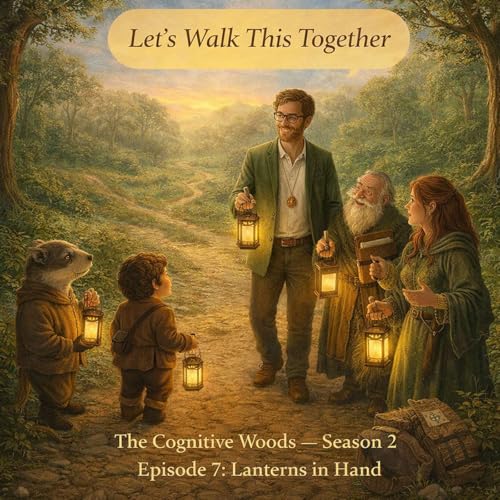
    The Cognitive Woods — Season 2, Episode 7

    Lanterns in Hand: How to Walk with Alfie and the ALF

    What if the practices of attention, inquiry, and care didn’t live only in reflection—but showed up right when you needed them?

    In this special bonus episode of The Cognitive Woods: Season 2 – The Lantern’s Trail, we step out of metaphor just long enough to show how attention literacy can become an everyday practice. This episode introduces Alfie, the AI Attention Literacy Pathfinder, and explores how the Attention Literacy Framework (ALF) comes alive in real classrooms, families, meetings, and moments of daily overwhelm.

    Rather than offering answers or shortcuts, Alfie acts as a gentle guide—helping learners, educators, leaders, and families pause, notice what matters, and shape their questions with intention. This episode blends story, research, and behind-the-scenes portraits to show what it actually feels like to work with an attention-first companion that centers human dignity and care.

    In this episode, you’ll explore:

    • What attention literacy looks like in real life, not theory
    • How Alfie supports noticing, naming, and reducing cognitive overload
    • Ways ALF practices show up in classrooms, homes, and leadership spaces
    • Why technology should support attention—not replace it
    • How inquiry can become a daily habit instead of a rare moment


    This episode is for:

    Educators and leaders looking for humane, research-grounded tools

    Families supporting learning without pressure or compliance

    Anyone curious about AI that strengthens reflection rather than distraction

    Listeners wondering how The Lantern’s Trail meets real life


    🎧 Listen to the full season on Buzzsprout

    📺 Watch the video episodes here on YouTube

    🌱 Meet Alfie and explore the Attention Literacy Framework at alderbranch.org


    Lanterns don’t replace the traveler.

    They help us see where we already stand.

    Support the show

    Mehr anzeigen Weniger anzeigen
    7 Min.
  • The Cognitive Woods-Season 2 Episode 6 Reflect & Transfer
    Feb 7 2026

    Send a text

    The Cognitive Woods — Season 2, Episode 6

    Reflect & Transfer: Mapping Home

    Every journey needs a pause—not to stop learning, but to let it settle, connect, and travel with us.

    In Episode 6 of The Cognitive Woods: Season 2 – The Lantern’s Trail, we arrive at a sunlit clearing to explore the final step of the Attention Literacy Framework: Reflect & Transfer. This episode invites listeners to slow down, look back with intention, and gather what has changed through the journey of noticing, naming, assessing, designing, and practicing with questions.

    Drawing on research from visible learning, cognitive load theory, and change science, this episode explores why reflection is not an add-on to learning, but the mechanism that makes understanding durable and transferable. Reflection helps insight stick. Transfer ensures curiosity and questioning don’t remain trapped in one context, but move with us into classrooms, meetings, families, and daily life.

    Through gentle stories, concrete reflection rituals, and everyday examples, this episode shows how to turn lived experience into lasting habits of attention—mapping learning home so it can guide future journeys.

    In this episode, you’ll explore:

    • Why reflection consolidates learning and protects attention
    • How to make learning visible through simple reflection routines
    • What research says about reflection, memory, and cognitive load
    • How transfer turns inquiry into a lifelong habit
    • Practical ways to carry questioning into new contexts
    • Why unresolved questions are often signs of deep growth


    This episode is for:

    Educators closing inquiry cycles with intention

    Leaders supporting reflection and learning transfer

    Parents nurturing curiosity beyond the moment

    Anyone who wants learning to travel beyond a single experience


    🎧 Listen to the new season on Buzzsprout

    📺 Watch the video episodes on YouTube

    🌱 Explore the Attention Literacy Framework and Alder Branch resources at alderbranch.org


    Pause. Reflect.

    Then carry the lantern home—and onward.

    Support the show

    Mehr anzeigen Weniger anzeigen
    7 Min.
  • The Cognitive Woods-Season 2 Episode 5 Practice
    Feb 7 2026

    Send a text

    The Cognitive Woods — Season 2, Episode 5

    Practice: Walking With Questions

    Designing a path is only the beginning. Learning changes when you actually start walking.

    In Episode 5 of The Cognitive Woods: Season 2 – The Lantern’s Trail, we step into the Practice phase of the Attention Literacy Framework. This episode explores what happens when carefully designed questions meet the unpredictability of real learning—messy moments, friction, false starts, and unexpected insight.

    Building from Episode 4’s focus on intentional design, this episode centers on lived experience: how inquiry becomes habit, how attention is sustained over time, and how learners develop stamina, flexibility, and metacognitive awareness by practicing with questions rather than rushing toward answers.

    Drawing on classroom stories, everyday examples, and research on habits of mind and cognitive load, this episode reframes struggle as information, detours as learning, and persistence as something built through supported practice—not willpower alone.

    In this episode, you’ll explore:

    • Why inquiry only becomes durable through practice
    • How walking with questions builds metacognition and resilience
    • What research says about practice, attention, and cognitive load
    • How to use friction and confusion as fuel rather than failure
    • Practical ways to sustain curiosity in classrooms, teams, and daily life
    • Why practice prepares learners for reflection and transfer


    This episode is for:

    Educators guiding inquiry-based learning

    Leaders navigating complex, evolving challenges

    Parents supporting curiosity beyond quick answers

    Anyone learning how to stay with meaningful questions over time


    🎧 Listen to the new season on Buzzsprout

    📺 Watch the video episodes on YouTube

    🌱 Explore the Attention Literacy Framework and Alder Branch resources at alderbranch.org


    Good design points the way.

    Practice is how the path is made real.

    Support the show

    Mehr anzeigen Weniger anzeigen
    6 Min.
  • The Cognitive Woods-Season 2 Episode 4 Design
    Feb 6 2026

    Send a text

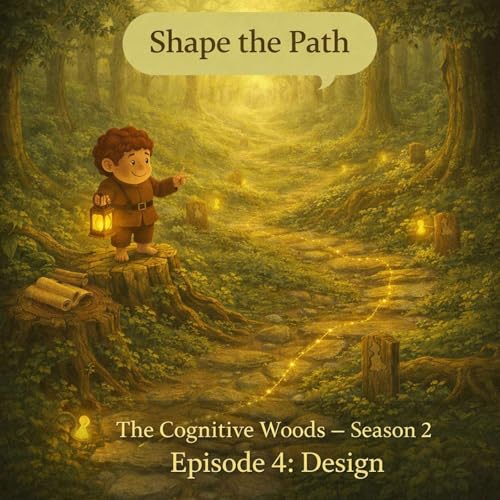
    The Cognitive Woods — Season 2, Episode 4

    Design: Crafting Illuminated Pathways

    A strong question is only the beginning. What matters next is how you design the journey it takes you on.

    In Episode 4 of The Cognitive Woods: Season 2 – The Lantern’s Trail, we step into the Design phase of the Attention Literacy Framework. This episode explores how intentional question design transforms curiosity from aimless wandering into purposeful exploration—guiding attention, protecting cognitive load, and making learning visible and shared.

    Building directly from Episode 3’s work of assessing which questions are worth following, this episode focuses on what comes next: how to connect, sequence, and scaffold questions so learners don’t get lost in overgrowth or overwhelmed by choice. Using forest metaphors, classroom stories, and research-backed insights, we explore how questions become pathways, maps, and return routes for others to travel.

    Drawing on inquiry research, visible thinking routines, and Cognitive Load Theory, this episode shows why well-designed inquiry isn’t about control—it’s about care. Design creates structure without rigidity, direction without dictation, and space for curiosity to deepen rather than fragment.

    In this episode, you’ll explore:

    • Why strong questions still need intentional design
    • How sequencing and scaffolding protect attention and motivation
    • What research says about inquiry, structure, and cognitive load
    • How to design “question pathways” instead of isolated prompts
    • Practical design moves for classrooms, teams, and self-directed learning
    • Why design is the bridge between discernment and practice


    This episode is for:

    Educators designing inquiry-driven lessons and units

    Leaders structuring conversations and collaborative work

    Facilitators, coaches, and designers of learning experiences

    Anyone trying to turn curiosity into meaningful, sustained exploration


    🎧 Listen to the new season on Buzzsprout

    📺 Watch the video episodes on YouTube

    🌱 Explore the Attention Literacy Framework and Alder Branch resources at alderbranch.org


    Good questions invite us forward.

    Good design shows us how to walk.

    Support the show

    Mehr anzeigen Weniger anzeigen
    6 Min.
  • The Cognitive Woods-Season 2 Episode 3 Assess
    Feb 5 2026

    Send a text

    The Cognitive Woods — Season 2, Episode 3

    Assess: Testing the Roots

    You’ve noticed a question.

    You’ve named it.

    Now comes the quiet work of deciding whether it’s worth following.

    In Episode 3 of The Cognitive Woods: Season 2 – The Lantern’s Trail, we explore the third step of the Attention Literacy Framework: Assess. This episode invites you to slow down and examine the foundations of your questions before investing your time, energy, and attention.

    Not every question leads to deep learning. Some collapse into quick definitions. Others circle familiar ground. And a few—when tested—reach deep enough to support transfer, persistence, and meaningful understanding. Using the forest metaphor of roots and saplings, this episode explores how assessing questions protects cognitive resources and turns curiosity into sustained inquiry.

    Drawing on research from Ron Ritchhart on visible thinking, John Sweller’s work on cognitive load, and the Attention Literacy Framework, this episode explains why “juicy questions” matter—and how to recognize them. You’ll hear stories from classrooms, everyday decision-making, and collaborative spaces that show how pausing to assess questions improves focus, engagement, and learning outcomes.

    In this episode, you’ll explore:

    • Why not all questions deserve equal attention
    • How assessing questions reduces cognitive overload
    • What makes a question “juicy” enough to sustain learning
    • How to distinguish shallow curiosity from deep inquiry
    • Practical ways individuals and groups can assess questions together
    • Why discernment comes before design in meaningful learning


    This episode is for:

    Educators designing inquiry-driven learning experiences

    Leaders guiding teams through complex decisions

    Students learning how to focus their attention intentionally

    Anyone navigating information overload and wanting to think more deeply


    🎧 Listen to the new season on Buzzsprout

    📺 Watch the video episodes on YouTube

    🌱 Explore the Attention Literacy Framework and Alder Branch resources at alderbranch.org


    Before you follow the trail, test the roots.

    Support the show

    Mehr anzeigen Weniger anzeigen
    8 Min.