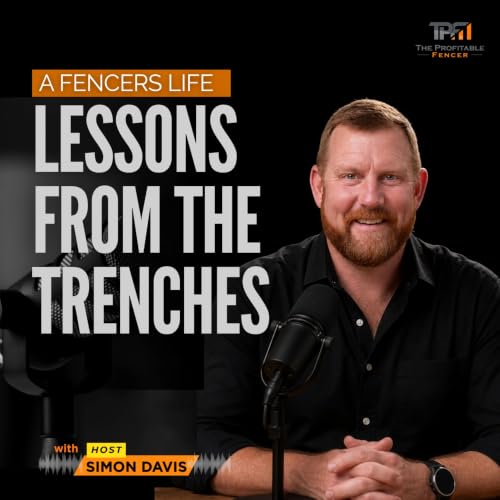
A Fencers Life- Lessons from the Trenches Titelbild

A Fencers Life- Lessons from the Trenches

A Fencers Life- Lessons from the Trenches

Von: Simon Davis
Jetzt kostenlos hören, ohne Abo

Small bite size lessons from Simon Davis - Fencing Business owner , installer, contractor- Business builder, entrepreneur. Simon shares lessons from the trenches on how he built a fencing business - endured the pain & suffering of loss & built a new fencing business model better than ever, all whilst on the tools , on the ground & in the office . Some are life lessons- some are practical , logical steps every fencer needs to know about , both on the front end of business and in the installation phase and the back end of business.Simon Davis Management & Leadership Ökonomie
  • Episode 54: Why You're Underpriced
    Aug 10 2026

    Most fencing operators don’t have a competition problem. They have a pricing problem.

    In this episode, Simon Davis explains why fear, poor pricing decisions, and targeting the wrong clients can keep fencing businesses busy without making them profitable.

    You’ll learn how to:

    • Stop comparing your prices to the cheapest operator.
    • Identify your ideal client and price for the value they want.
    • Use the “cast net vs line fishing” approach to win better work.
    • Understand the fears and expectations driving your best clients.
    • Stop discounting when customers push back on price.
    • Know when walking away from a job is the right decision.
    • Use your quote win rate to identify when you’re undercharging.

    Simon also shares a real example of walking away from approximately $230,000 in commercial work because the payment terms did not fit the business.

    The takeaway is simple:

    Know who you’re for. Charge what you’re worth. Let the rest walk.


    TIMESTAMPS

    00:00 Intro: Why this episode is about pricing, not competition
    00:37 A fencing operator’s mistake: blaming cheap competitors
    01:54 Fear as the real pricing killer
    02:53 Cause one: not knowing your numbers
    03:23 Cause two: comparing to the wrong competitors
    04:20 Cause three: not knowing your ideal client
    05:47 Why “anyone who needs a fence” is not a target market
    06:27 What an ideal client really looks like
    07:27 Demographics: age, income, location, property type
    09:04 Psychographics: values, attitudes, and buying behaviour
    11:42 The 10 fears and 10 wants exercise
    12:37 Common client fears around trades, quotes, and reliability
    14:08 Common client wants: communication, clarity, and peace of mind
    16:05 Why low pricing can signal low confidence or low quality
    17:03 Nightmare stories and dream stories that shape buying decisions
    18:33 Why the right client won’t necessarily flinch at your price
    20:00 The pricing confidence formula
    21:28 Walking away from commercial work that did not fit
    24:57 What discounting communicates to a client
    25:28 How to respond when a client says your price is too high
    26:42 Raise your prices now, not later
    27:12 The quote win-rate test
    28:09 Why a 15% increase can add $48,000 in profit
    29:25 Cast net vs. line fishing as a business model choice
    29:54 Action step: complete the ideal client worksheet and review your last three quotes

    ACTION ITEMS

    After listening, take these steps:

    1. Review your last 10 quotes and calculate your win rate.
    2. Identify your true ideal client by looking at your best jobs, not just the jobs you won.
    3. Write down 10 fears and frustrations your ideal client has.
    4. Write down 10 wants and aspirations they have.
    5. Review whether your current pricing reflects the value of solving those problems.
    6. Raise your prices by 10% to 15% on your next few quotes and track the results.
    7. Stop discounting unless the scope of work changes.

    The goal is not to win every quote.

    The goal is to win the right work at a price that makes the business profitable.

    Mehr anzeigen Weniger anzeigen
    28 Min.
  • Episode 53: The Three Money Buckets. The Numbers Worth Gold
    Aug 3 2026

    Most fencing contractors think they're pricing jobs correctly. Materials, labour, add a bit for overheads, then send the quote.

    The problem is that this approach leaves money on the table.

    In this episode, Simon Davis breaks down the three money buckets that every profitable fencing business must recover on every single job. Miss one bucket and your profit disappears. Miss two and you're working for free.

    You'll learn:

    • Why labour should never be priced from wage rates alone.
    • How to calculate your true install recovery rate.
    • The difference between markup and margin, and why confusing the two can cost your business thousands every year.
    • Why every material you supply should earn a margin.
    • How to calculate overhead recovery so every job contributes to your business costs.
    • How to work out your weekly break-even before the first post goes in.
    • Why meter rates and gut-feel pricing often destroy profit.
    • How a simple cost analysis system removes guesswork from quoting.
    • Why successful contractors confidently say "no" to unprofitable work.

    Simon also shares real examples from North Coast Fencing to show how small pricing changes can add tens of thousands of dollars to your annual profit without winning more work.

    If you've ever wondered where the money disappears after completing a job, this episode will change the way you quote forever.


    Resources mentioned:
    Get the free Cost Analysis Template at https://theprofitablefencer.com/resources


    Connect with The Profitable Fencer:


    If you found this episode valuable, share it with another fencing contractor. One pricing improvement can change the future of a business.

    Mehr anzeigen Weniger anzeigen
    33 Min.
  • Episode 52 : The Wake Up Call
    Jul 30 2026

    Most fencing business owners measure success by turnover. Bigger jobs. More crews. A full schedule.

    But what if you're working harder than ever and still not taking home the income you expected?

    In this episode of Fencer's Life Lessons from the Trenches, Simon Davis shares the reality many contractors face. You can build a business that turns over hundreds of thousands of dollars and still struggle with cash flow, profit, and long hours.

    Drawing on more than 30 years in the fencing industry, Simon explains why the real problem isn't a lack of work. It's the decisions being made every day inside the business.

    In this episode, you'll learn:

    • Why turnover is vanity and profit is what really matters.• The difference between being busy and building a profitable business.• The three stages every fencing business goes through.• Why many operators own a job instead of owning a business.• The systems every profitable fencing business needs.• How better decisions lead to better profits and more freedom.


    Key Takeaway

    You don't have a work problem. You have a decision problem.

    The good news is that better decisions can completely change the future of your business.


    Action Step

    Download the free Profit Leak Audit to identify where money is slipping through the cracks in your business. It takes about 10 minutes and gives you a clear starting point for improving your profitability.


    Resources

    • Free Profit Leak Audit: https://theprofitablefencer.com• Learn more about The Profitable Fencer coaching programs.


    If you found this episode valuable, subscribe to the podcast and share it with another fencing business owner who needs to hear it. Next episode, Simon dives into the numbers that actually run your business.

    Mehr anzeigen Weniger anzeigen
    13 Min.
adbl_web_anon_alc_button_suppression_t1
Noch keine Rezensionen vorhanden