40s Forward Titelbild

40s Forward

40s Forward

Von: Dr. Betsy Greenleaf
Jetzt kostenlos hören, ohne Abo

Über diesen Titel

40s Forward Podcast Life after 40 isn't about slowing down—it's about leveling up 40s Forward is the podcast for high-achieving men and women who want more energy, sharper focus, stronger bodies, better sex, and longer healthspan. Hosted by Dr. Betsy Greenleaf, board-certified physician and founder of the International Pause Institute, each episode blends cutting-edge medical insight with real-world strategies for optimizing midlife performance. From hormones, metabolism, and longevity to biohacking, peptides, sexual wellness, and mindset, this show delivers science without hype for people who invest in their health the same way they invest in their success. This isn't anti-aging. It's forward living.2025 Alternative & Komplementäre Medizin Hygiene & gesundes Leben
  • S1E10 Snap Crackle Pop, Oh My! Why Aches and Pains in Midlife
    Feb 25 2026
    In this episode of 40s Forward, Dr. Betsy Greenleaf breaks down why aches, stiffness, joint noise, and unexplained soreness become so common in midlife — even when you haven't had an injury. If you've ever woken up feeling stiff, crunchy, or suddenly betrayed by your knees, shoulders, or back, this episode explains what's actually happening beneath the surface. This isn't "just aging." It's tissue remodeling in a new hormonal environment. Dr. Greenleaf explains how collagen changes, muscle loss, hormonal shifts, inflammation, and stress alter how your body rebuilds itself after 40 — and why pain often shows up before classic menopause or andropause symptoms. Key Topics Covered: • Why "it's just aging" is not a diagnosis • Wear and tear vs. tissue remodeling • Why joint noise doesn't automatically mean damage • The role of collagen decline after 40 • Muscle loss and sarcopenia • Hormonal changes in menopause and andropause • Inflammation and pain amplification • Why stretching alone isn't the answer Collagen & Connective Tissue Changes: • Collagen is the structural protein that holds joints together • Estrogen stimulates collagen production • Collagen fibers become thinner and less organized after 40 • Connective tissue loses hydration and elasticity • Tendons and ligaments become less tolerant to sudden load • Movement may feel "crunchy" due to reduced adaptability Muscle Loss & Joint Stress: • Muscle mass declines approximately 1% per year starting in the 30s • Sarcopenia increases joint strain and micro-irritation • Less muscle means more force directly absorbed by joints • Pain leads to less movement • Less movement accelerates muscle loss • This creates a midlife pain cycle Menopause & Andropause as Pain Multipliers: In Menopause: • Estrogen decline affects collagen and joint lubrication • Inflammatory signaling increases • Morning stiffness becomes more common • Symmetrical joint pain may appear before hot flashes In Andropause: • Testosterone decline reduces muscle support • Tendons take on more mechanical load • Recovery slows • Men often report feeling "beat up" without injury Inflammation & Nervous System Sensitivity: • Hormonal shifts increase inflammatory signaling • Poor sleep and chronic stress elevate cortisol • The nervous system amplifies pain perception • Same tissue — louder signal • Pain becomes more noticeable even without structural damage What Doesn't Work: • Accepting it as inevitable • Prolonged rest without rebuilding • Stretching irritated tendons aggressively • Masking symptoms with pain medication alone • Assuming normal labs mean nothing is happening What Actually Helps After 40: Progressive Strength Training • Signals collagen remodeling • Builds tendon resilience • Rebuilds muscle mass • Improves joint stability Adequate Protein Intake • Amino acids are required for tissue repair • Aim for approximately 1 gram of protein per pound of ideal body weight • Focus on whole-food sources (swam, flew, walked, or grew) Sleep Optimization • Growth hormone is released during deep sleep • Darkness supports hormonal repair cycles • Late-night screen exposure disrupts recovery Stress Regulation • Elevated cortisol impairs tissue healing • Chronic stress worsens inflammation • Lifestyle stressors directly impact pain perception Conservative Therapies • Physical therapy • Osteopathic manipulative therapy • Massage • Acupuncture • Targeted hormone evaluation when appropriate How to Talk to Your Doctor: Instead of saying "everything hurts," document: • When the pain started • What makes it better or worse • Sleep changes • Energy shifts • Recovery patterns • Dietary triggers (including possible gluten sensitivity) Helpful language: "I've had progressive soft tissue and joint pain alongside sleep and recovery changes." Key Takeaways: • Midlife pain is not random failure • Aging is a timeline — not a mechanism • Collagen, muscle, and hormones all shift after 40 • Muscle is your shock absorber • Pain is often the first sign of hormonal transition • Your body isn't breaking — it's renegotiating Who This Episode Is For: • Adults over 40 noticing stiffness or joint noise • Women in perimenopause or menopause • Men experiencing slower recovery • Individuals frustrated by "normal labs" but persistent pain • Anyone wanting to move intelligently through midlife Resources & Next Steps: Learn more about midlife hormone optimization and integrative care at PauseInstitute.com Explore supportive tools at the Pelvic Floor Store Discover integrative supplements through Greenleaf Nutraceuticals Key Quote: "Midlife pain isn't wear and tear — it's tissue remodeling in a new hormonal environment." If your body has gotten louder after 40, don't ignore it — decode it. Follow 40s Forward and visit PauseInstitute.com to learn how to rebuild strength, ...
    Mehr anzeigen Weniger anzeigen
    22 Min.
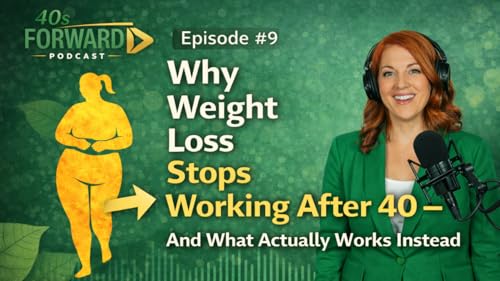
  • S1E9 Why Weight Loss Stops Working After 40 — And What Actually Works Instead
    Feb 17 2026

    In this episode of 40s Forward, Dr. Betsy Greenleaf breaks down why weight gain and weight loss resistance become so common after the age of 40. Despite eating less and exercising more, many people find their bodies no longer respond the way they used to. This episode explains why that happens and what truly works for sustainable fat loss and metabolic health in midlife.

    Dr. Greenleaf discusses the hormonal, metabolic, and muscle-related changes that drive weight gain, why under-eating and over-exercising sabotage progress, and how modern tools like weight loss medications and peptides fit into a comprehensive strategy.

    Key Topics Covered:
    • Why "eat less, move more" fails after 40
    • Hormonal shifts that drive fat storage
    • Muscle loss and metabolic slowdown
    • Insulin resistance and stress hormones
    • Weight loss plateaus and metabolic adaptation
    • Why under-eating backfires
    • The role of strength training in fat loss

    Weight Loss Medications Discussed:
    • Semaglutide
    • Tirzepatide
    • Retatrutide

    Key Points on Weight Loss Medications:
    • These medications can reduce appetite and food noise
    • They improve insulin sensitivity
    • They do not build muscle
    • Without muscle protection, metabolism can slow
    • They are tools, not cures

    Peptides & Muscle Building:
    • Introduction to peptides used for muscle preservation and recovery
    • Why muscle is critical for long-term weight loss
    • Deeper discussion planned in future episodes

    Why Plateaus Happen:
    • Metabolic adaptation
    • Loss of muscle mass
    • Chronic stress and elevated cortisol
    • Inadequate recovery
    • Repetitive exercise patterns

    What Actually Works After 40:
    • Strength training as a foundation
    • Adequate protein intake
    • Eating enough calories to feel safe
    • Hormone optimization
    • Stress and sleep regulation
    • Personalized, precision-based care

    Key Takeaways:
    • Weight gain after 40 is not a willpower issue
    • Weight loss resistance is biological, not personal failure
    • Muscle is the metabolic key
    • Under-eating and over-exercising worsen results
    • Sustainable weight loss requires strategy, not suffering

    Who This Episode Is For:
    • Adults over 40 struggling with weight gain
    • Individuals experiencing weight loss plateaus
    • Women in perimenopause or menopause
    • Men with declining metabolism or muscle mass
    • Anyone confused about weight loss medications

    Resources & Next Steps:
    Learn more about personalized weight loss, hormone optimization, and metabolic health at PauseInstitute.com
    Explore pelvic and sexual wellness tools at the Pelvic Floor Store
    Discover integrative products from Greenleaf Nutraceuticals

    Key Quote:
    "Weight loss after 40 isn't about trying harder — it's about getting smarter."

    If you're struggling with weight loss resistance or plateaus, follow 40s Forward on social media and visit PauseInstitute.com to learn how working with your biology—not against it—can change everything.

    Mehr anzeigen Weniger anzeigen
    20 Min.
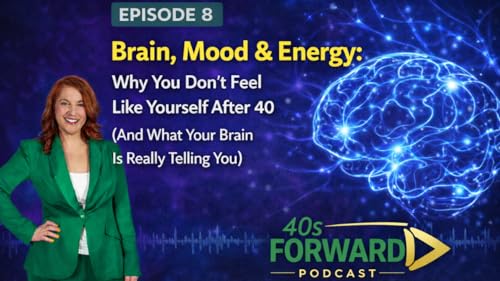
  • S1E8 Brain, Mood & Energy: Why You Don't Feel Like Yourself After 40 (And What Your Brain Is Really Telling You)
    Feb 10 2026

    In this episode of 40s Forward, Dr. Betsy Greenleaf explores why brain fog, word-finding difficulty, anxiety, low motivation, and emotional flatness often appear after 40. These symptoms are not signs of dementia or inevitable aging, but signals from a brain undergoing hormonal, metabolic, and nervous system recalibration.

    This episode explains how estrogen, dopamine, cortisol, sleep disruption, and chronic stress impact cognition and mood in midlife—especially for high-achieving women. Listeners gain reassurance, clarity, and a new framework for understanding burnout, brain fog, and the midlife identity shift.

    Common Questions Addressed:
    • Why am I forgetting words or names?
    • Is this brain fog or early dementia?
    • Why do I feel unmotivated or emotionally flat?
    • Why is my anxiety worse now than in my 20s?

    Key Topics Covered:
    • Brain fog vs. cognitive decline
    • Hormonal influence on memory and mood
    • Dopamine and motivation changes
    • Anxiety and nervous system sensitivity
    • Burnout masked as depression
    • The midlife identity shift no one talks about
    • Why brain fog is a signal—not aging

    Key Takeaways:
    • Most midlife cognitive changes are reversible
    • Brain fog is not early dementia for most people
    • Motivation loss reflects nervous system fatigue
    • Anxiety increases with hormonal fluctuation
    • Burnout is feedback, not failure
    • Midlife is a recalibration, not a decline

    Who This Episode Is For:
    • High-achieving women over 40
    • Anyone concerned about cognitive decline
    • Individuals experiencing burnout or brain fog
    • Those struggling with anxiety or low motivation

    Resources & Next Steps:
    Learn more about whole-person hormone and brain health optimization at PauseInstitute.com
    Explore pelvic and sexual wellness tools at the Pelvic Floor Store
    Discover integrative products from Greenleaf Nutraceuticals

    Key Quote:
    "Brain fog isn't aging — it's a signal."

    Mehr anzeigen Weniger anzeigen
    20 Min.
Noch keine Rezensionen vorhanden