• Palaces and Partnerships: The Carnegie Library
    Feb 19 2026

    Learn about the remarkable partnerships that produced more than 2,500 Carnegie‑funded libraries across the United States and the complex, negotiated process that made these institutions enduring pillars of public knowledge. Drawing on contemporary scholarship, the conversation illuminates how local communities, librarians, and decision makers harnessed Andrew Carnegie’s philanthropic energy to shape America’s public library system.

    00:30 Intro

    03:00 Andrew Carnegie: Immigrant to Titan of American Industry

    11:30 Carnegie Libraries Spread Across the Country

    24:40 Library Design and Enduring Legacy

    30:00 Carnegie’s Vision of Citizenship & the Gospel of Wealth

    39:45 What We Learned This Week

    For a full list of episode sources and resources, visit our website.

    Mehr anzeigen Weniger anzeigen
    45 Min.
  • Writing the Textbook for Emergency Care
    Feb 5 2026
    Writing the Textbook for Emergency Care

    What does it look like when a community builds critical infrastructure before established institutions recognize the need? In this episode, we examine a short-lived but transformative ambulance program that helped define modern emergency medical response at a time when most U.S. emergency calls were handled by minimally trained personnel. At the intersection of medical research, workforce development, and community trust, this effort, known as the Freedom House Ambulance Service, reframed first responders as field clinicians and demonstrated how on-the-job education can function as public health infrastructure. Learn about the researchers and educators who helped shape early resuscitation science, the culture of embedded learning that accelerated community care, and the institutional shifts that rippled across the country in the wake of the program’s success.

    00:30 Intro + Ohio’s changing kindergarten enrollment cutoffs; school & family impact

    06:00 Freedom House Ambulance Service: Community-driven transformation in Pittsburgh’s Hill District

    13:20 Learning under fire: education and training in the field

    17:05 Writing the textbook for emergency medical care

    18:30 Building effective learning community in a crisis context

    23:20 Rules, restrictions, and mavericks; pushing boundaries to further medical research

    25:50 Education as public infrastructure, not credentialing pipeline; the relative value of expertise

    27:00 The structure of schools & workplaces for community empowerment

    For a full list of episode sources and resources, visit our website.

    Sources & Further Reading:

    Freedom House Ambulance Service - Wikipedia

    Nancy Caroline - Wikipedia

    Peter Safar - Wikipedia

    Emergency Medical Services - Wikipedia

    America's First Paramedics Were Black. Their Achievements Were Overlooked for Decades

    Freedom House Ambulance: The FIRST Responders | America's First EMT Service

    How to see Dublin’s secret painting | The Doyle Collection

    Freedom House Ambulance Service – EMS Museum

    About Us - Freedom House Doc

    These Trailblazing Black Paramedics Are the Reason You Don't Have to Ride a Hearse or a Police Van to the Hospital

    Send Freedom House! | Pitt Med | University of Pittsburgh

    Nancy Caroline Award | Safar Center for Resuscitation Research

    The Jewish Woman who Revolutionized Emergency Medicine | Aish

    Hellelil and Hildebrand, the Meeting on the Turret Stairs by Frederic William Burton | National Gallery of Ireland

    'There's no telescope this large ever built. It's not like we have a precedent for how to do these things,' Giant Magellan Telescope engineers on why they used the Unreal Engine to build an unprecedented telescope simulator | TechRadar

    Mehr anzeigen Weniger anzeigen
    36 Min.
  • Voices in Teaching: Tina Heinecke-Kurtz
    Jan 22 2026

    We’re back to kick off our “third” season (and sixth year!) with learning strategist, National Board certified science educator, and special education teacher Tina Heineke-Kurtz. Tina is a delightful and adventurous human being with a strong passion for inclusive education, and her career in teaching and advocacy has touched the lives of countless students. We spoke with Tina about life in Oconomowoc, co-teaching in an inclusive classroom, and the challenges of meeting the needs of all learners. Welcome back, listeners, and enjoy the chaos of a gaggle of Midwesterners.

    00:00 Ice Fishing with the Stomach Bomb

    08:40 Teaching Journey and Career Path

    13:20 Middle School and Mentorship

    21:00 Co-Teaching In Inclusive Classrooms

    27:40 COVID and Social/Emotional Displacement

    34:40 Making Chicken Soup

    37:20 Inclusive Practices and Stakeholder Perspectives

    47:00 Professional Development and Personal Growth

    49:20 MARBLES, MARBLES, MARBLES!

    56:50 The One Who Cared

    1:00:00 What We Learned

    For a full list of episode sources and resources, visit our website.

    Mehr anzeigen Weniger anzeigen
    1 Std. und 4 Min.
  • Voices in Teaching: Dr. Brandi De La Cruz, TN Teacher of the Year 2025-26
    Dec 11 2025

    In the final episode of this season of 16:1, special guest Dr. Brandi De La Cruz, 2025–2026 Tennessee Teacher of the Year, joins us for an honest, grounded look at the teaching profession. Dr. De La Cruz’s nonlinear path into mathematics education has become a core part of her teaching identity, and she speaks candidly about trying new things, building community, and deepening connections between classroom learning and community impact. We also discuss graduation pressures, funding incentives, local workforce expectations, teacher retention, professional development, and the evolving realities of AI in the high school classroom.

    16:1 returns January 2026 with a new season. Happy holidays!

    00:30 Wrap up thoughts on teaching 1984

    06:40 Dr. Brandi De La Cruz: An indirect path to the math classroom

    11:20 Learning to connect with students through lived experience

    20:00 Local industry and applied learning connections

    24:00 Why teaching is worth choosing

    27:30 Metrics, misaligned incentives, and honest accountability

    36:30 Finding your people in your school

    43:15 What makes for meaningful professional development?

    For a full list of episode sources and resources, visit our website.

    Mehr anzeigen Weniger anzeigen
    53 Min.
  • Mother of the Movement
    Nov 13 2025

    This week, we’re looking through our history to ground ourselves in a turbulent present. Tune in for our discussion of Septima Poinsette Clark, the Charleston-born educator and activist Martin Luther King Jr. once called “the mother of the movement.” Her story bridges the segregated classrooms of the early 20th century and the civil rights movement’s front lines. Through the establishment of hundreds of citizenship schools across the U.S., she helped thousands of Black Americans gain the literacy skills necessary to vote, transforming communities. We also consider her complex legacy as a woman who challenged not only racism but also sexism within social movements that she helped to shape.


    02:24 Septima Poinsette Clark: Family History & Educational Empowerment

    06:00 Teaching in segregated South Carolina and the fight for equal pay

    09:00 Adult Literacy & Citizenship

    12:20 Poll Taxes, Literacy Tests, and the Politics of Reconstruction

    14:00 Workshops at the Highlander Folk School

    16:00 Citizenship Schools and the Southern Christian Leadership Conference

    21:40 Septima Poinsette’s Civil Rights Activism: Legacy and Lessons

    For a full list of episode sources and resources, visit our website.

    Mehr anzeigen Weniger anzeigen
    29 Min.
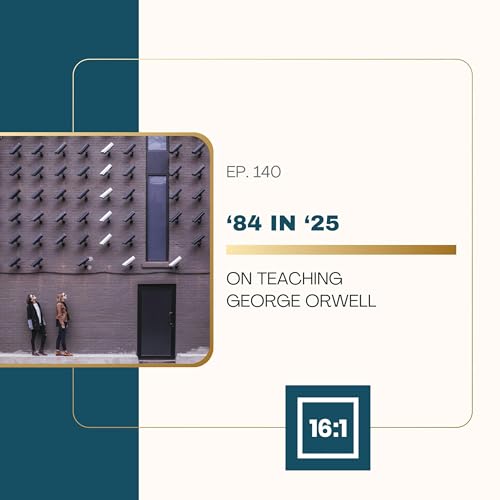
  • '84 in '25
    Oct 30 2025

    Two English teachers and a technologist come together for a lively discussion on George Orwell’s 1984 and teaching the text to high school students in the U.S. in 2025. Tackles complex topics (propaganda, surveillance, freedom of expression). Good for educators who are thinking of teaching the novel in their classrooms.

    02:00 Framing & historical context, George Orwell

    06:50 Making sense of Winston Smith

    10:00 Misogyny and modernity

    13:00 Memory, individuality, and the alteration of history

    18:55 What is war in Oceania?

    24:45 Newspeak, language, and narrative control

    33:00 Art and entertainment in totalitarian Oceania

    40:45 Student engagement with 1984

    For a full list of episode sources and resources, visit our website.

    Mehr anzeigen Weniger anzeigen
    50 Min.
  • When Books Are Battlegrounds
    Oct 16 2025

    This week, we’re covering one of the most explosive education controversies in American history, the 1974 Kanawha County, WV “Textbook Wars.” What began as a school board vote over new reading materials in West Virginia eventually escalated into boycotts, firebombings, and a national debate over who decides what children learn. From the cultural divides rooted in West Virginia’s founding to echoes of the Scopes “Monkey” Trial and the rise of outside agitators, this episode traces how faith and identity can collide in America’s public school classrooms.

    02:10 Setting the stage: The Civil War and West Virginia’s history of division

    04:15 The Scopes trial: How America’s first classroom media circus reshaped public discourse

    08:44 Labor and identity: Kanawha County’s legacy of protest and class tension

    09:40 Alice Moore & the textbook controversy

    23:30 Outside influence: How extremist groups amplified local outrage

    25:55 Aftermath & legacy: What this fight tells us about freedom, pluralism, and fear in public education

    For a full list of episode sources and resources, visit our website.

    Mehr anzeigen Weniger anzeigen
    44 Min.
  • The Stories Our Students Carry
    Oct 2 2025
    The Stories Our Students CarryCulturally Responsive Pedagogy

    Culturally responsive teaching begins with the recognition that learning doesn't happen in a vacuum. Teachers must carefully navigate curricular needs while building a foundation of trust and respect with students, each of whom carries unique stories and experiences into the classroom. In this episode, we explore the work of scholars who study those intersections: between school and family, the individual and their culture, classroom lessons and the many other concerns crowding a young learner’s mind.

    00:00 Intro + Announcements

    03:30 The US Education System: A Pressure Cooker

    05:00 Revisiting Social Learning Theory; Lev Vygotsky, Albert Bandura

    06:30 Dr Luis C Moll & Funds of Knowledge

    08:30 Research Contributions from Dr. Gloria Ladson-Billings, Dr. Geneva Gay; culturally relevant and responsive pedagogy

    11:20 Culturally responsive pedagogy and practical applications in rural classrooms

    18:20 Culturally responsive teaching with varied student populations

    21:30 Discussion Questions

    31:10 What we learned

    For a full list of episode sources and resources, visit our website.

    Mehr anzeigen Weniger anzeigen
    36 Min.