

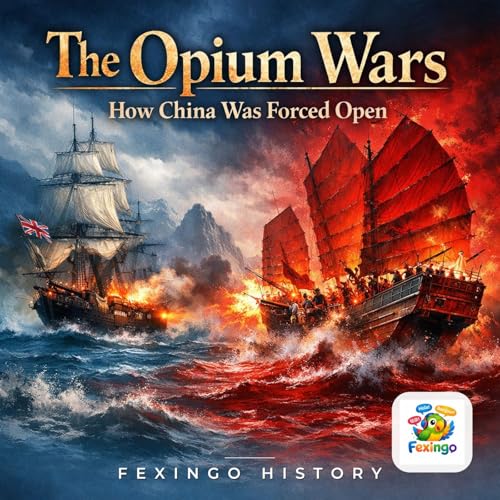
The Opium Wars' Aftermath: Tributary Trade and the Collapse of the Tribute System — Fexingo History
Artikel konnten nicht hinzugefügt werden
Leider können wir den Artikel nicht hinzufügen, da Ihr Warenkorb bereits seine Kapazität erreicht hat.
Der Titel konnte nicht zum Warenkorb hinzugefügt werden.
Bitte versuchen Sie es später noch einmal
Der Titel konnte nicht zum Merkzettel hinzugefügt werden.
Bitte versuchen Sie es später noch einmal
„Von Wunschzettel entfernen“ fehlgeschlagen.
Bitte versuchen Sie es später noch einmal
„Podcast folgen“ fehlgeschlagen
„Podcast nicht mehr folgen“ fehlgeschlagen

The Opium Wars' Aftermath: Tributary Trade and the Collapse of the Tribute System — Fexingo History
-
Gesprochen von:
-
Von:
Über diesen Titel
#OpiumWars #TributeSystem #TreatyOfNanking #TreatyOfTientsin #CoHong #CantonSystem #QingDynasty #CenturyOfHumiliation #MacartneyEmbassy #LordMacartney #EastIndiaCompany #UnequalTreaties #TradeHistory #ChineseHistory #ImperialHistory #19thCenturyHistory #FexingoHistory #History #BritishEmpire #LinZexu
Become a supporter of this podcast: https://www.spreaker.com/podcast/the-opium-wars-how-china-was-forced-open-fexingo-history--6985310/support.
Noch keine Rezensionen vorhanden