

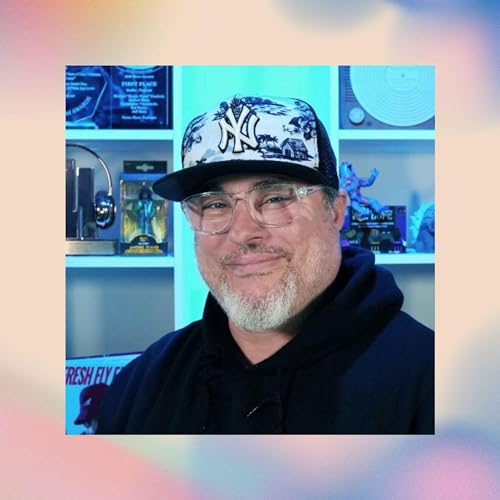
From Beats to Bridges: The Transformative Power of Hip Hop in Today's Society
Artikel konnten nicht hinzugefügt werden
Der Titel konnte nicht zum Warenkorb hinzugefügt werden.
Der Titel konnte nicht zum Merkzettel hinzugefügt werden.
„Von Wunschzettel entfernen“ fehlgeschlagen.
„Podcast folgen“ fehlgeschlagen
„Podcast nicht mehr folgen“ fehlgeschlagen

From Beats to Bridges: The Transformative Power of Hip Hop in Today's Society
-
Gesprochen von:
-
Von:
Über diesen Titel
Manny Faces joins us to explore how hip hop can be a powerful catalyst for change in various sectors, including education, health, and social justice. As an award-winning journalist and cultural strategist, Manny shares his journey of using hip hop to unlock innovation and drive progress within marginalized communities. He discusses the often-overlooked potential of hip hop to address trauma and facilitate meaningful dialogue among youth, particularly in environments where traditional communication methods may fall short. Through engaging anecdotes and insightful reflections, Manny illustrates how hip hop not only serves as an artistic expression but also as a bridge for connecting diverse experiences and fostering understanding across generations. Join us as we delve into this transformative art form that has the potential to reshape culture and ignite positive change in our society.
Exploring the transformative power of hip hop, Manny Faces, an award-winning journalist and cultural strategist, joins Keith Haney on this episode of Becoming Bridge Builders to unravel how the genre can serve as a catalyst for social change. The discussion delves deep into Manny's journey, from his early days as a wannabe rapper to his evolution into a prominent voice in hip hop journalism. He shares insights from his acclaimed podcast, 'Hip Hop Can Save America,' highlighting how hip hop culture can redefine education, health, and social justice. Manny's personal anecdotes provide a rich tapestry of experiences that showcase the resilience and creativity embedded in hip hop, illustrating its potential to uplift marginalized communities. Throughout the conversation, listeners are encouraged to consider the impact of hip hop not just as a musical genre, but as a vital tool for cultural expression and communal healing, challenging the often negative perceptions surrounding it.
The episode also touches on the nuances of hip hop's evolution, especially how it has been perceived across generations. Manny argues that while older generations may lament the state of contemporary rap, there exists a wealth of talent and meaningful expression still thriving within the culture. He emphasizes the importance of understanding the socio-economic contexts that shape these narratives and the role of storytelling in fostering empathy and connection among diverse audiences. By bridging the gap between hip hop enthusiasts and skeptics, Manny advocates for a more inclusive dialogue that recognizes the genre's ability to articulate the struggles and dreams of a generation. This episode serves as an invitation to engage with hip hop as a living, breathing force for good, urging listeners to explore how they can harness its power to create positive change in their own communities.
In a thought-provoking dialogue, Manny Faces discusses the intersection of hip hop and social change with Keith Haney, revealing the profound ways in which rap music can influence education, mental health, and community engagement. Drawing from his extensive background in journalism and cultural strategy, Manny reflects on his personal connection to hip hop, recounting stories from his youth that shaped his understanding of the genre's significance. He argues that hip hop is not just music; it's a cultural movement that speaks to the heart of societal issues, offering a voice to those often unheard. Their conversation highlights key initiatives where hip hop has been utilized in educational settings, demonstrating its effectiveness as a medium for self-expression and personal development among youth.
Listeners are treated to an engaging exploration of how hip hop can serve to address systemic issues faced by marginalized communities. Manny shares examples of programs that leverage rap to foster healing and empowerment, illustrating that hip hop can be a bridge to understanding and addressing complex social problems. As the discussion unfolds, it becomes clear...
