We're Only Human okładka

We're Only Human

We're Only Human

Autor: WRKdefined Podcast Network
Słuchaj bezpłatnie, bez subskrypcji

Das größte Angebot der Saison | 0,99 € pro Monat für die ersten 3 Monate + 15 € Audible-Guthaben

Danach 6,99 €/Monat. Bedingungen gelten. Monatlich kündbar.
An HR podcast focusing on the intersection of people and technology at work, We’re Only Human examines research, technology, and practical strategies for creating better outcomes for employers and the workforce. It’s a wealth of insight for anyone looking to create a high-performing organization.All rights reserved by WRKdefined Ekonomia Sukces osobisty Zarządzanie i przywództwo
  • How HR Builds Credibility With Finance Leaders
    Oct 28 2026
    How do you prove the value of HR in terms finance leaders trust? In this episode, recorded on-site at People Analytics World in San Francisco as part of our series on measuring the human impact of work, Ben Eubanks talks with Shane Noe of Astranis Space Technologies. Shane calls himself a recovering finance guy. He moved from finance roles at Apple, Google, and Box into data-driven HR leadership. He explains why measuring productivity is still so hard, why AI surveillance is not the answer, how HR can build credibility with the CFO, how to calculate the cost of a vacancy, how to approach L&D ROI, and the one metric every CHRO should start tracking tomorrow. Thank you to People Analytics World and Ikona Analytics for supporting the show. Key Takeaways Productivity is easy to measure in sales and hard in most other roles, and every method still relies on layers of subjective judgment. AI could estimate productivity by capturing email, calendar, chat, and conversations, but that creates a surveillance culture and still trains on subjective performance ratings. Today, the best productivity measure is often the manager, so training managers to assess talent well matters more than ever. HR faces a credibility barrier because everyone thinks they can do HR and recruiting better, and understanding your business and your data is how you break through. Accurate capacity planning and hiring forecasts earn instant credibility with finance because headcount is usually the largest expense line. Reverse funnel analysis shows hiring managers how many applicants and how much lead time it takes to fill roles, turning conflict into alignment. Estimate the cost of a vacancy by dividing company revenue by headcount, then adjusting by level or salary, and walk leaders through each step. Focus limited L&D budgets on first-time managers and AI adoption, and measure outcomes like adoption, use cases, and hours saved. Retention by performance grade is the metric to track first: keep top performers and either improve or manage out low performers. Org shape analysis by level and tenure reveals people stuck in roles and can expose structural blockers in competency frameworks and career paths. Timestamps 00:00 Why measuring employee productivity is so hard 02:00 AI productivity tracking and surveillance concerns 06:00 From finance to HR: Shane’s career path 08:00 Balancing people focus with data and numbers 12:50 Overcoming HR’s credibility barrier with finance 14:30 Capacity planning and hiring forecast accuracy 16:00 Reverse funnel analysis for hiring managers 19:00 How to calculate the cost of a vacancy 21:30 Measuring training and L&D ROI 24:30 Retention by performance grade and org shape analysis Keywords people analytics, HR metrics, measuring productivity, HR and finance partnership, cost of vacancy, capacity planning, recruiting forecast, L&D ROI, retention by performance, org design Connect with Shane Noe on LinkedIn: https://www.linkedin.com/in/shane-noe-425a3712/
    Rozwiń Zwiń
    30 min
  • Building High-Impact HR Technology: Featuring Employ, CandorIQ, ClearCo, and TalentGuard
    Oct 13 2026
    What does it take to build HR technology that delivers real business results? Four HR tech product leaders explain how they turn customer ideas into product features, use AI to shorten feedback cycles from months to days, and apply AI in talent processes such as job architecture, skills data, and reporting. Guests are @Haris Ikram (CandorIQ), @Dara Brenner (Employ), @Linda Ginac (TalentGuard), and @Arnaud Grunwald (ClearCo). They also cover the risks of HR teams vibe coding their own tools, how MCP and headless HR tech change who needs to learn the software, and where the industry is heading: AI-native services, shared data across customers, and governance for AI agents. Key Takeaways HR technology only works when the data going in is clean. Bad data multiplies when you add AI. Good product teams solve the underlying business problem. They don’t just build the feature a customer asks for. AI can pull themes out of sales and customer success calls, which gives product teams feedback that customers never send directly. Building prototypes with AI lets customers co-develop features and see changes within days. AI can build job architectures, keep skills data current, and generate board decks automatically. With MCP and headless HR tech, hiring managers, interviewers and finance partners can do their part of a workflow in tools they already use. Vibe coding is fine for personal tools. Shared tools bring risks to data security, compliance and ownership. Code built inside a company is company property. It should live in the cloud, not on someone’s laptop or personal account. Don’t shut down employee excitement about AI. Point it at fixing internal processes, and leave the high-risk builds to vendors. As companies deploy more AI agents, they will need rules for who builds them, how governance works, and who approves them. Timestamps 00:01 What makes HR technology work 00:05 Turning customer ideas into product features 00:07 How AI shrinks the product feedback cycle 00:09 How employers can become product partners 00:12 AI use cases in talent processes 00:15 MCP and headless HR technology 00:19 The risks of vibe coding HR tools 00:26 Compliance, sensitive data, and build vs. buy 00:32 AI-native services and shared data across customers 00:38 Why AI agents need governance Keywords HR technology, AI in HR, HR tech product development, vibe coding risks, MCP, headless HR tech, AI agents, HR data quality, change management, AI governance Connect with the guests from this episode: Haris Ikram, CandorIQ Linda Ginac, TalentGuard Dara Brenner, Employ Arnaud Grunwald, ClearCo
    Rozwiń Zwiń
    44 min
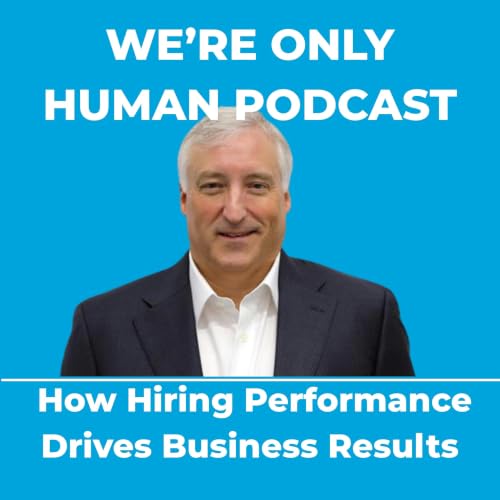
  • How Hiring Performance Drives Business Results
    Sep 30 2026
    How does hiring performance affect business performance, and how can talent leaders use AI without losing candidate trust? In this conversation, the Marc Thompson, CEO of ICIMS explains why hiring belongs in strategy and board discussions, not just HR. He covers why job openings are rising while hires stay flat, how to show a CFO or board the cost of vacancies and bad hires, and where AI helps recruiters and where humans must stay in charge. You will also hear why the difference between AI and automation matters, why context and the applicant tracking system are central to the next wave of agentic hiring, and how conversational tools may change the way managers hire. Key Takeaways Hiring is a strategy and operations issue. Businesses cannot meet their goals without the right people in the right roles at the right time. Job openings rose 17 percent in July while hires stayed flat, according to ICIMS workforce data. That means demand is not converting into people on the job, which delays projects and growth. One customer reached a 33-day time to fill, 33 percent better than its industry benchmark, while recruiter productivity rose 17 percent. To win board support, tie vacancies and bad hires to specific business objectives and back the case with data. Estimates put the cost of a bad hire at 50 to 200 percent of salary, and hiring, onboarding, and replacing someone can consume months of a 12-month plan. Speed matters, but a good hiring decision from a process both candidates and recruiters trust matters more. 58 percent of TA leaders could not clearly tell AI from automation. Automating a broken process only gets you to the wrong answer faster. AI works best on repetitive tasks like screening, scheduling, and interview communications. 80 percent of TA leaders say recruiters now spend more time engaging candidates, and 73 percent say it strengthens hiring manager partnerships. Humans should own the final decision. Candidates preferred the message "We use AI for screening, but a human makes the final decision." AI adoption will move at the speed of trust. The biggest AI opportunity is intelligence built on context such as roles, skills, hiring manager preferences, policies, and interview history. The system of record becomes more valuable as agentic hiring grows, with 46 percent of companies already using or planning agentic AI. Timestamps 00:03:00 Why the right person, role, and timing matter 00:04:00 Job openings up, hires flat: what it means 00:07:00 How to make hiring a board-level priority 00:09:00 The real cost of a bad hire 00:11:00 Balancing hiring speed with candidate trust 00:12:00 AI versus automation in recruiting 00:14:00 Keeping humans in charge of hiring decisions 00:17:00 Why context makes recruiting AI useful 00:19:00 Agentic hiring and the system of record 00:22:00 Conversational hiring and the future of the ATS Keywords talent acquisition, hiring performance, AI in recruiting, agentic AI, applicant tracking system, candidate trust, cost of a bad hire, time to fill, enterprise hiring, recruiting automation Connect with Marc and ICIMS To connect with Marc Thompson, follow him on LinkedIn, and to learn more about ICIMS, its intelligent hiring platform, and customer case studies, visit the company LinkedIn page and website below. Marc Thompson on LinkedIn: https://www.linkedin.com/in/marc-thompson-284a783/ ICIMS on LinkedIn: https://www.linkedin.com/company/icims/home/ ICIMS website: https://www.icims.com/
    Rozwiń Zwiń
    29 min
adbl_web_anon_alc_button_suppression_t1
Brak recenzji