• A Courageous Gift - The Power of Brain and Tissue Donation in Rare Disease Research with Anne Rugari
    Nov 12 2026
    ONCE UPON A GENE - EPISODE 214 A Courageous Gift - The Power of Brain and Tissue Donation in Rare Disease Research with Anne Rugari Anne Rugari is an advocating powerhouse, an author of two children's books, a mom, and two of her children have passed away from Krabbe disease. She joins us to share her personal story and also share her knowledge about tissue and organ donation. EPISODE HIGHLIGHTS Can you share how you became part of the rare disease world? In 1986, my second child Nick received a diagnosis of Krabbe disease, or globoid cell leukodystrophy, a terminal disease that took him just after his first birthday. I also had a three year old son who was unaffected and we decided we probably wouldn't have another child with a rare disease if we wanted more children. In 1999, my daughter Gina was born and tested for Krabbe disease, confident the odds were with us. Unfortunately, she tested positive. As a result of an umbilical cord blood transplant she had at three weeks old, she did remarkably well and lived to fifteen years old. What were your considerations when deciding to donate Gina's brain for research? It's an emotional, practical and religious decision. There are so many factors that play into the decision. For me personally, I wanted to make sure I was making a sound decision morally and spiritually. I felt we weren't going to learn more about the disease unless there were human tissues and samples to study. It was a decision I felt strongly about to help others. There's a source of comfort knowing that the tissues donated are being used to move research forward. Why is it important to consider and arrange tissue donation in advance? It's emotional and you don't want to be making those decisions at a time when you've lost them. There's also some coordination that needs to be planned, ensuring there's a pathologist available at the hospital for the retrieval. Planning in advance allows you time to coordinate the details, like if passing takes place at home instead of the hospital, and notifying the funeral home so they can coordinate with the pathologist. Getting the logistics organized in advance makes the transition when someone passes away easier. Discuss plans in advance with your care team so they can help with arrangements and support you. LINKS AND RESOURCES MENTIONED ⁠ONCE UPON A GENE - EPISODE 213 - Finding Strength In Every Step⁠ ⁠https://effieparks.com/podcast/episode-213-finding-strength-in-every-step⁠ ⁠ONCE UPON A GENE - EPISODE 198 - Advocating with Heart - Striking the Balance Between Medical Insights and Personal Narratives - A Tribute to Valerie Marie with RING14 Co-Founder Yssa Dean DeWoody⁠ ⁠https://effieparks.com/podcast/episode-198-advocating-with-heart⁠ ⁠Courageous Parents Network ⁠ ⁠https://courageousparentsnetwork.org/⁠ ⁠Anne Rugari Website⁠ ⁠https://www.annerugari.com/⁠ ⁠Just Like Me!: A Book About A Girl with a Rare Disease⁠ ⁠https://www.amazon.com/Just-Like-Me-about-Disease/dp/0982218710⁠ ⁠Just Like Me Too!⁠ ⁠https://www.amazon.com/Just-Like-Too-Anne-Rugari/dp/1970063378⁠ CONNECT WITH EFFIE PARKS ⁠Website⁠ ⁠https://effieparks.com/⁠ ⁠Twitter⁠ ⁠https://twitter.com/OnceUponAGene⁠ ⁠Instagram⁠ ⁠https://www.instagram.com/onceuponagene.podcast/?hl=en⁠ ⁠Built Ford Tough Facebook Group⁠ ⁠https://www.facebook.com/groups/1877643259173346/
    Toon meer Minder weergeven
    41 min
  • ONCE UPON A GENE - EPISODE #282: Delighting in the Child You Have: A Father's Journey Through Grief, Acceptance, and Joy Raising a Son with FOXP1 Syndrome with Brandon Boyd
    Nov 5 2026
    In this episode of Once Upon a Gene, Effie talks with Brandon Boyd, father of two and author of Delighting in Ben, about raising his son Ben, who lives with FOXP1 syndrome, and the shift from trying to change his son's future to learning to appreciate the person right in front of him. Brandon shares the grief he experienced in the early years, the pressure to pursue every therapy, and the loneliness of navigating disability as a dad before genetic testing and online communities were widely available. He also shares a turning point during an ordinary trip to McDonald's that changed how he connected with Ben. Together, Effie and Brandon talk about the different ways parents carry grief, the importance of emotional support for fathers, the realities of dividing and conquering as a family, and the unexpected places where connection and joy can be found. From garage doors and car rides to football games and family holidays, this conversation explores what it means to let go of the life you imagined without losing sight of the life you're living. Resources & Links Brandon's Instagram Delighting in Ben by Brandon Boyd — Available on Amazon or through your local bookstore Dads on Special Assignment (DOSA) — A support community for fathers raising children with disabilities Special Fathers Network — Resources and connections for fathers of children with special needs A note from our sponsor This episode is sponsored by Citizen Health, creator of Ari, an AI teammate for rare disease families. Ari helps families track symptoms, recognize patterns, organize medical information, and draft insurance appeals using supporting records, all through text. Learn more at ⁠citizenhealth.com⁠.
    Toon meer Minder weergeven
    36 min
  • ONCE UPON A GENE- EPISODE #282: Epilepsy Awareness Day at Disneyland—Education, Community, and What Families Can Expect with Brad Levy
    Oct 29 2026
    In this episode, Effie talks with Brad Levy, founder of Epilepsy Awareness Day at Disneyland, about what families can expect at the expo, how to make the most of the event, and why connection matters when you’re navigating epilepsy. The expo brings together families, clinicians, hospitals, researchers, and companies working in epilepsy. Across two days, attendees can hear expert presentations on epilepsy basics, EEGs, surgery, treatment options, clinical trials, and genetic epilepsies. Brad also shares how the event grew from a community day at Disneyland into a major gathering—and what he hopes families take away from it. Brad’s daughter Sophie’s epilepsy journey and the origins of the event What families can find at the expo, from expert talks to research and treatment resources Where first-time attendees can start, including Epilepsy 101 and “Understanding Your EEG” How to plan your schedule and bring questions or genetic test results Yoga, meditation, service dogs, and therapy mini ponies The value of meeting other families who understand the realities of epilepsy Tuesday evening’s concert and dance party Registration, Disneyland tickets, and accessibility planning Epilepsy Awareness Day at Disneyland takes place November 16–18. The two-day expo is free with registration; Disneyland admission is separate. After registering for the expo, attendees can access a link for a discounted park ticket. The event also includes a concert and dance party on Tuesday evening, followed by a day at Disneyland on Wednesday. For registration, the schedule, and event details, visit Epilepsy Awareness Day. Epilepsy Awareness Day on Instagram This episode is sponsored by Citizen Health and Ari, an AI teammate for rare disease families. Ari brings your medical records and updates together, then helps you prepare for appointments with a clear summary, questions to ask, and messages for your care team. Learn more at citizenhealth.com. Citizen Health on Instagram Thanks for listening to Once Upon a Gene! If this episode lit a spark, share it with a fellow rare disease family and help us spread the word about Epilepsy Awareness Day at Disneyland. X · Instagram · LinkedIn Leave a podcast review In this episodeEvent detailsSponsorConnect with Effie Parks
    Toon meer Minder weergeven
    33 min
  • ONCE UPON A GENE- EPISODE #281: Making Memories: A Mom of a Daughter with Friedreich’s Ataxia on Last Steps, Make-A-Wish, and Not Letting the Future Steal the Day w/ Laurel Frost Coffey
    Oct 8 2026
    Laurel on Amelia, Friedrich’s Ataxia, and Choosing Joy in the Face of ProgressionLaurel shares her family’s experience raising Amelia, who was diagnosed with Friedrich’s ataxia at age 8 after early signs showed up around age 5. This conversation covers the path to diagnosis, the emotional reality of progressive illness, and how Laurel stays present with Amelia while making memories now.We discuss Laurel’s perspective as a mom, the impact on Amelia’s brothers, the role of community, and the hope she sees in current research and clinical trials. Effie Parks and Laurel also talk openly about grief, joy, sibling dynamics, and what it means to keep moving forward when the future feels uncertain.Key topics In this episode, Laurel introduces Amelia as a creative, funny, and spirited 10-year-old who lives with Friedrich’s ataxia and still brings a lot of joy into the family. Laurel walks through the early signs that something was wrong, from leg pain and exhaustion on a family trip to France to frequent falls, clumsiness, and coordination issues at school. She describes the diagnosis process: physical therapy noticing neurological symptoms like nystagmus, head tilt, scoliosis, and difficulty standing with eyes closed, followed by an ER visit and later genetic confirmation. We discuss the genetic side of Friedrich’s ataxia, including FXN gene mutations, GAA repeat expansions, and why early-onset cases like Amelia’s tend to progress much faster. Laurel shares the emotional weight of learning that both parents are carriers and that Amelia’s diagnosis is life shortening, which brought a deep grieving process for the future they expected. The conversation explores grief in waves and how Laurel experiences it in “installments” as Amelia loses abilities, while still trying not to get stuck in future fear. Laurel talks about staying present by focusing on Amelia herself, saying that time with her is the best therapy and the biggest source of joy. Effie and Laurel compare notes on parenting through disability, including the pain of seeing other kids move freely and the challenge of not letting comparison take over. They dig into one especially hard moment involving a denied disability pass for a Disney trip, which became a reminder that small logistical battles can hit harder than they seem. Laurel describes how she tries to make memories now, including a hand and footprint art project for Amelia’s “last steps,” and why she’s pushing to travel while Amelia can still navigate more easily. The episode highlights sibling dynamics, including the so-called glass child experience, how her two boys respond differently, and how Laurel tries not to turn them into caregivers. They close on hope, including community support, rare disease connection, a clinical trial Amelia is participating in, and the broader progress in research for FA. Stay present, not predictive Grief and joy can coexist Memory-making as resistance Community as therapy If you’re parenting through a rare or progressive diagnosis, look for community connection rather than carrying it alone. Make room for joy now, even if it feels awkward or premature. Capture moments while your child can still participate, whether that means travel, art, or simple family rituals. Be honest about sibling dynamics and protect children from unnecessary caregiving pressure. Timestamps00:00 - Warm welcome and catching up after Rare Disease Day Cruise 02:07 - Amelia’s upcoming Make-A-Wish trip to Santorini 03:20 - Who Amelia is and what Laurel wants listeners to know 04:03 - First signs something was wrong during a family trip to France 05:30 - School concerns, PT referral, and neurological symptoms 06:29 - ER visit and the first time they heard hereditary ataxias 07:48 - Genetic confirmation of Friedrich’s ataxia 08:16 - Processing a life shortening diagnosis 09:48 - Why children can be diagnosed with FA while many people meet adults with it first 10:06 - FXN gene, GAA repeats, and why early onset is more severe 11:27 - Grieving as the parent who knew Amelia before the diagnosis 13:00 - Grief in waves and “installment plan” losses 14:03 - Amelia’s personality and why the diagnosis has not fully hit her yet 15:02 - Watching other kids move and feeling the contrast 16:17 - Redirecting away from future fear 17:20 - Staying present with Amelia as the best way to find joy 18:18 - Signs of slipping into a harder grief day 19:08 - The Disney disability pass denial and why it hit so hard 21:39 - Making memories now while Amelia can still do more 23:06 - Amelia’s “last steps” art project and the emotion around it 25:08 - Where the artwork lives and sharing it with family 26:08 - Amelia’s creativity and the impact on her brothers 26:41 - The boys learning about FA and the family’s different sibling dynamics 27:30 - Balancing fairness, safety, and caregiving boundaries 31:13 - Why Laurel avoids making the younger son a caregiver 33:16 - What ...
    Toon meer Minder weergeven
    39 min
  • ONCE UPON A GENE- EPISODE #280: Comparing Our Kids: Guilt, Milestones, and Connection in Rare Disease Parenting
    Oct 1 2026
    Have you ever celebrated another child’s milestone while quietly wondering why your own child hasn’t reached it? Or caught yourself thinking, “Their kid can walk, talk, and eat - why do they think this is so hard?” We don’t love admitting it. But maybe we could talk about it. In this Effisode, I’m brainstorming about comparison in parenting our kids with disabilities, including my own moments of seeing other children with CTNNB1 syndrome reach milestones and wondering whether I missed something with Ford. I know how much I’ve poured into supporting him. And yet, sometimes that little voice still asks, “Did I do enough?” I explore how comparison slips into guilt and shame, why it can hit harder when we’re tired or overwhelmed, and how it creates silence within the very communities we turn to for connection. Some families hesitate to share their hardest days. Others hold back their good news.
    Toon meer Minder weergeven
    22 min
  • ONCE UPON A GENE- EPISODE 279: Falling Into Place: A Pocket Bible of Wisdom from the Colorado Mama Tribe
    Sep 24 2026
    Colorado Mama Tribe invited me out to talk about storytelling. What I found was even more than I had hoped for. They did it. They figured it out - at least some of it. And what hasn’t been solved yet already has bones. That’s the falling into place. Not one perfect click. More like dominoes. One mama tells the truth. The next one doesn’t have to start from nothing. The piece that was missing finds the piece that was waiting, and suddenly the whole line can move. Little bites from the women in that room, recorded and stitched together as a memento for them and a field guide for anyone who needs one. Think of it as a pocket bible of mama wisdom: the advice they wish they’d heard sooner, the lines they keep repeating to each other, the stuff that only lands when it comes from someone who’s lived it. You’re not alone. A tribe can be built wherever you are. It takes work. It’s worth it. Thank you, Colorado Mama Tribe, for letting me see what falling into place can look like for all of us.
    Toon meer Minder weergeven
    34 min
  • ONCE UPON A GENE –EPISODE 278: His Son Was Diagnosed with Congenital Adrenal Hyperplasia (CAH) — A Dad’s Honest Story of Overwhelm, Faith, and Finding Hope Through Treatment w/ Matt Abernethy
    Jul 9 2026
    Effie welcomes Matt Abernethy, a father and biotech executive whose story feels almost too perfectly timed to be real. Matt’s youngest son, Ian (now 13), was diagnosed with classic congenital adrenal hyperplasia (CAH) at age two. While navigating the overwhelm, fear, and daily stress of managing a rare disease, Matt received a cold recruiter call for a CFO role at Neurocrine Biosciences — a company actively developing a treatment for CAH. He and his wife Brittany made the leap of faith, moving their family from Indiana to San Diego. Matt kept his personal connection private for years so he could lead objectively. Eventually, he shared his story in an emotional all-company meeting. Ian later became the first patient to receive the newly approved medication. Matt opens up about being a “dadvocate,” the role of faith through the hardest times, what he would tell his overwhelmed past self, the importance of seeking expert care, and communicating with your spouse. It’s a powerful, hope-filled conversation about divine timing, resilience, and the human side of drug development.
    Toon meer Minder weergeven
    37 min
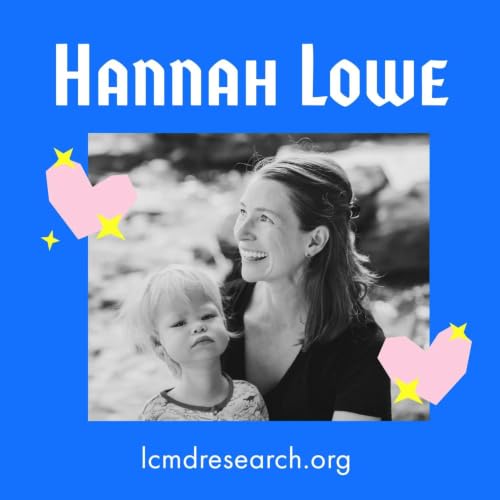
  • ONCE UPON A GENE – EPISODE 277: A Mother’s Son Was Diagnosed with the Rare, Debilitating Disease LMNA-Related Congenital Muscular Dystrophy (L-CMD) — A Mother’s Story of DNR Orders and How Those Decisions Change Over Time with Hannah Lowe
    Jul 2 2026
    Hannah Lowe is back on the show. In this episode, Effie and Hannah discuss do not resuscitate orders for children with rare diseases. Hannah shares her experience with her son Austin and how the conversation around DNRs came up for their family. They talk about the decision-making process, how feelings around these choices can change over time, and why these conversations matter in the rare disease community. The episode also touches on planning ahead, the emotional side of these decisions, and the importance of having these talks before a crisis hits. In this episode: Hannah’s update on Austin and the L-CMD Research Foundation How the DNR conversation first came up for their family The personal and practical side of these decisions Why more open discussion is needed in the community Links: Hannah’s first appearance on the show (Episode 108): effieparks.com/podcast/episode-108-hannah-lowe-lcmd-research-foundation L-CMD Research Foundation Instagram Listen now and subscribe for more conversations on rare disease life, advocacy, and family stories.
    Toon meer Minder weergeven
    41 min