• The Wild Life of Steve Irwin
    Oct 29 2026

    Crikey! In this episode of Dirt Nap City, we explore the wild, energetic, and unforgettable life of Steve Irwin—the world-famous "Crocodile Hunter." From his early days growing up at the Beerwah Reptile and Fauna Park to becoming a global television phenomenon, Steve transformed how the world viewed apex predators and often-misunderstood wildlife. With his signature khaki shorts, boundless enthusiasm, and fearless hands-on approach, he captured the hearts of millions and brought conservation directly into living rooms across the globe.

    We trace Steve’s journey from catching rogue crocodiles in Queensland’s waterways to launching the global phenomenon The Crocodile Hunter alongside his wife, Terri. More than just an entertainer, Steve was a tireless conservation pioneer. He channeled his fame into real-world action, purchasing vast tracts of land for habitat protection, establishing the Wildlife Warriors charity, and funding critical scientific research into crocodile behavior and biology. His mission was simple yet radical: to make people fall in love with animals so they would feel inspired to protect them.

    Finally, we examine Steve’s enduring legacy following his tragic passing in 2006. Today, his vision lives on through Australia Zoo, his family—Terri, Bindi, and Robert—and millions of wildlife lovers worldwide who continue to carry his message forward. Tune in to discover how one passionate Aussie changed environmental advocacy forever and proved that enthusiasm, empathy, and respect for nature can truly change the world.

    Drop us a quick text and we’ll reply in the next episode!

    Support the show

    Dirt Nap City is the podcast about the most interesting dead people in history.
    Subscribe and listen to learn about people you've heard of, but don't know much about.
    Someday we'll all live in Dirt Nap City, so you should probably go ahead and meet the neighbors!

    Mehr anzeigen Weniger anzeigen
    51 Min.
  • Be Kind, Please Rewind - The Cringe & Chemistry of '80s Video Dating
    Oct 22 2026

    Before the endless swiping, ghosting, and algorithmic matching of modern dating apps, singles in the 1980s had to face the ultimate romantic challenge: stepping in front of a giant VHS camcorder. Welcome to the awkward, glorious, and surprisingly revolutionary era of video dating services!

    In this episode, we rewind to a decade where finding "The One" meant browsing shelves of cataloged videotapes at local dating clubs like Great Expectations. Armed with feather-dusted hair, oversized shoulder pads, deeply questionable mustaches, and an absolute commitment to silk shirts, thousands of optimistic singles sat under harsh studio lighting to pitch themselves in two minutes or less. We’re diving into the bizarre rituals of reading through leather-bound profile binders, waiting days for a mutual tape exchange, and the cringe-worthy pickup lines that made it onto magnetic tape forever.

    Along the way, we’ll explore how these low-res matchmakers set the foundation for the digital dating world we live in today. From the hilarious sales tactics of early video dating franchises to the absolute iconic viral clips that still haunt the internet, we unpack why this trend took the '80s by storm and what it felt like to put your heart on a tape deck. Grab your popcorn, press play, and join us as we revisit the golden age of analog attraction—where love was just a fast-forward button away!

    Drop us a quick text and we’ll reply in the next episode!

    Support the show

    Dirt Nap City is the podcast about the most interesting dead people in history.
    Subscribe and listen to learn about people you've heard of, but don't know much about.
    Someday we'll all live in Dirt Nap City, so you should probably go ahead and meet the neighbors!

    Mehr anzeigen Weniger anzeigen
    32 Min.
  • Riveted - How Levi Strauss and Blue Jeans Stitched American Culture
    Oct 15 2026

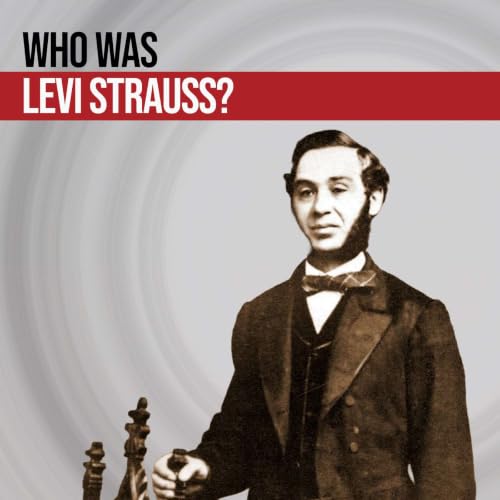
    From humble gold rush workwear to a global symbol of rebellion, style, and democracy, blue jeans are arguably the most successful piece of clothing in human history. In this episode, we trace the journey of Levi Strauss from a Bavarian immigrant in San Francisco to a legendary icon of American fashion. We explore how a simple copper rivet transformed durable canvas into an enduring cultural phenomenon, and how denim conquered Hollywood, music, high fashion, and the world stage to become a universal canvas for authentic self-expression.

    Drop us a quick text and we’ll reply in the next episode!

    Support the show

    Dirt Nap City is the podcast about the most interesting dead people in history.
    Subscribe and listen to learn about people you've heard of, but don't know much about.
    Someday we'll all live in Dirt Nap City, so you should probably go ahead and meet the neighbors!

    Mehr anzeigen Weniger anzeigen
    51 Min.
  • Tangs for Nothing - The Twisted Tale of a Horrible Orange-ish Drink
    Oct 8 2026

    Introduced in 1957, Tang gained legendary status when NASA packed it into space missions. Advertisements painted a picture of brave explorers sipping cosmic nectar among the stars, but the reality inside the spacecraft was far less glamorous. Legendary moonwalker Buzz Aldrin famously set the record straight when he publicly declared, "Tang sucks". The crew wasn't enjoying a gourmet beverage; they were just trying to mask the unpleasant metallic taste of the space capsule's internal water system.

    Beyond its cosmic hype, Tang isn't doing your body any favors. A single glass is essentially a neon chemistry experiment. Loaded with massive amounts of added sugar, artificial flavors, and synthetic colorings like Yellow 5 and Yellow 6, it delivers a massive spike in blood sugar with virtually none of the natural fiber, nutrients, or actual juice you would get from a real piece of fruit. Drinking it is less about nutrition and more about experiencing the liquid equivalent of eating a handful of orange hard candies dissolved in tap water.

    While Tang holds a nostalgic spot in pop culture, the world of powdered beverages is vast, chaotic, and filled with aggressive mascots. We also cover some classic powdered drinks in this episode, including:

    • Kool-Aid (The undisputed king of the pitcher and wall-smashing)
    • Nesquik (The ultimate chocolate and strawberry milk upgrade)
    • Crystal Light (The 80s low-calorie powerhouse)
    • Country Time Lemonade (Porch-side nostalgia in a yellow tub)
    • Gatorade Powder (The athletic sideline essential)

    Join us as we break down the weird history and marketing magic behind the drink that somehow convinced an entire generation that orange dust was the future.

    Drop us a quick text and we’ll reply in the next episode!

    Support the show

    Dirt Nap City is the podcast about the most interesting dead people in history.
    Subscribe and listen to learn about people you've heard of, but don't know much about.
    Someday we'll all live in Dirt Nap City, so you should probably go ahead and meet the neighbors!

    Mehr anzeigen Weniger anzeigen
    22 Min.
  • The Story of York - Little Known Member of the Lewis & Clark Expedition
    Oct 1 2026

    Uncover the powerful, often overlooked story of York, an enslaved man whose contributions were vital to the success of the Lewis and Clark Expedition (1804–1806). As William Clark’s lifelong enslaved companion, York became the first Black man to cross the North American continent to the Pacific Ocean, serving as an essential participant on a perilous journey that reshaped American history.

    Throughout the journey of the Corps of Discovery, York played far more than a supporting role. He was a skilled hunter, scout, and crucial negotiator. Indigenous tribes, having never seen a Black man before, regarded him with deep respect and revered him as "Big Medicine." In pivotal moments—such as deciding where to build winter quarters at Fort Clatsop—York was granted a vote alongside every other expedition member, a rare instance of full equality in early 19th-century America.

    Despite his vital role in navigating uncharted wilderness and securing the expedition's survival, York returned home to a stark reality. While white members received land grants, double pay, and national acclaim, York remained enslaved. His requests to Clark for freedom or relocation to be near his wife were repeatedly denied, leaving his immense sacrifices unrecognized for generations.

    In this episode, we dive deep into York's extraordinary legacy, the complexities of his freedom narrative, and modern efforts to restore his rightful place in American history. Tune in to explore the life of a true hero of westward expansion whose courage and legacy were kept in the shadows for far too long.

    Keywords: York, Lewis and Clark Expedition, Corps of Discovery, Black History, Enslaved Explorers, William Clark, American History Podcast, Westward Expansion, Hidden History.

    Drop us a quick text and we’ll reply in the next episode!

    Support the show

    Dirt Nap City is the podcast about the most interesting dead people in history.
    Subscribe and listen to learn about people you've heard of, but don't know much about.
    Someday we'll all live in Dirt Nap City, so you should probably go ahead and meet the neighbors!

    Mehr anzeigen Weniger anzeigen
    54 Min.
  • Close Shave - How the Straight Razor Lost Its Edge
    Sep 24 2026

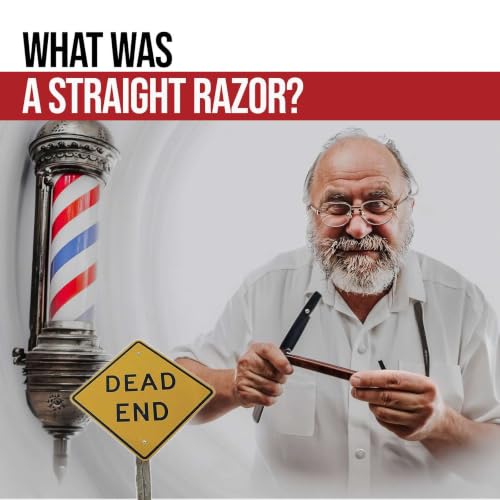
    Step into the barbershop of history as we explore the sharp rise, dramatic fall, and enduring legacy of the straight razor. Long before modern multi-blade cartridges, the open blade—often called the "cutthroat razor"—was the undisputed king of men’s grooming. Rising to prominence in the late 17th century following innovations in Sheffield steel, the straight razor transformed personal hygiene from an occasional chore into an essential, sophisticated ritual. For over two centuries, men either mastered the delicate art of stropping and honing or trusted their necks to professional barbers.

    So, why did a tool that dominated daily life for generations suddenly fade into obscurity? The shift began in the early 20th century when King Camp Gillette introduced the double-edged safety razor. Featuring thin, disposable blades wrapped in a protective guard, safety razors made shaving fast, affordable, and drastically less bloody. World War I sealed the deal when the U.S. government issued Gillette safety razor kits to millions of soldiers, cementing disposable shaving as the new global standard.

    In this episode of Dirt Nap City, we examine how the straight razor compares to what most men use today. Modern razors rely on multi-blade cartridges embedded in plastic pivoting heads designed for rapid, foolproof shaving. By contrast, a traditional straight razor consists of a single, fixed steel blade attached to a folding handle without any safety barrier. It requires patience, precise angles, and ongoing blade maintenance, but rewards users with an exceptionally close shave and zero plastic waste.

    Tune in as we dissect the evolution of wet shaving, the marketing revolution that made blades disposable, and why the ultimate "cutthroat" tool is making a surprise comeback among modern grooming enthusiasts.

    Drop us a quick text and we’ll reply in the next episode!

    Support the show

    Dirt Nap City is the podcast about the most interesting dead people in history.
    Subscribe and listen to learn about people you've heard of, but don't know much about.
    Someday we'll all live in Dirt Nap City, so you should probably go ahead and meet the neighbors!

    Mehr anzeigen Weniger anzeigen
    21 Min.
  • Beyond the Blade - King Gillette’s Revolutionary Business & Quest for Utopia
    Sep 17 2026

    In 1895, King Camp Gillette solved one of daily life’s most frustrating hazards by inventing the disposable safety razor. Before his breakthrough, shaving required a trip to the barber or a terrifyingly sharp straight razor that needed constant stropping. By pairing a thin, cheap piece of stamped steel with a reusable handle, Gillette didn’t just change personal grooming forever—he created the iconic "razor-and-blades" business model that continues to drive global commerce today, making his name synonymous with safety razors, shaving tech, and massive commercial success.

    However, behind the image of the consummate capitalist lived a radical idealist with a wildly different vision for society. Gillette was deeply unsettled by the chaos and perceived inefficiencies of free-market capitalism. In books like The Human Drift, he argued that competition was wasteful and destructive. His solution? Eliminate all private business and replace it with a single, state-owned corporation owned entirely by the public.

    His grandest vision was "Metropolis"—a single, massive utopian city powered by Niagara Falls that would house all 60 million Americans of his era. Designed using steel, concrete, and gleaming white porcelain, Metropolis was meant to centralize human living, eliminate poverty, and eradicate corporate rivalry altogether. He even offered Theodore Roosevelt a million dollars to serve as the president of his utopian venture (Roosevelt declined).

    This episode of Dirt Nap City dives into the fascinating paradox of King C. Gillette: a pioneer of modern corporate strategy who used his fortune to advocate for a socialist utopia. Discover how a man who built a global empire on disposable goods spent his life dreaming of a world free from competition, waste, and capitalist conflict.

    Drop us a quick text and we’ll reply in the next episode!

    Support the show

    Dirt Nap City is the podcast about the most interesting dead people in history.
    Subscribe and listen to learn about people you've heard of, but don't know much about.
    Someday we'll all live in Dirt Nap City, so you should probably go ahead and meet the neighbors!

    Mehr anzeigen Weniger anzeigen
    1 Std. und 5 Min.
  • Sucking Saves Lives - The Bloodcurdling Story of Medical Leeches
    Sep 10 2026

    For thousands of years, humanity’s favorite medical cure-all was a squirming, blood-sucking worm. Long before modern medicine gave us antibiotics, vaccines, or targeted therapies, doctors faced with everything from fevers and headaches to systemic infections reached for one trusted tool: Hirudo medicinalis, the medicinal leech.

    In this episode of Dirt Nap City, we dive into the murky waters of history’s most infamous parasite-turned-physician. We explore the ancient practice of bloodletting and how the belief in balancing the body's "four humors" turned leech collection into a massive global enterprise. At the peak of "leechmania" in 19th-century Europe, tens of millions of leeches were harvested annually, driving wild populations near extinction and sparking a lucrative international trade network.

    We’ll uncover the bizarre methods used to harvest these creatures—including workers walking into swamps to let leeches attach to their legs—and the gory details of how doctors applied dozen after dozen to desperate patients. But the story doesn't end in the Victorian era. In a surprising twist, we trace how these squishy invertebrates made a dramatic comeback in modern operating rooms. Today, FDA-approved medicinal leeches are actively deployed in microsurgery and reconstructive procedures to relieve venous congestion, using the powerful anticoagulants in their saliva to save reattached fingers, ears, and skin grafts.

    Join us as we untangle the strange, slimy, and surprisingly sophisticated history of the world's most dedicated bloodsuckers. Did medical leeches truly heal the sick, or were they just an elaborate form of torture? Tune in to find out how a humble swamp dweller earned its permanent mark in medical history.

    Drop us a quick text and we’ll reply in the next episode!

    Support the show

    Dirt Nap City is the podcast about the most interesting dead people in history.
    Subscribe and listen to learn about people you've heard of, but don't know much about.
    Someday we'll all live in Dirt Nap City, so you should probably go ahead and meet the neighbors!

    Mehr anzeigen Weniger anzeigen
    21 Min.