
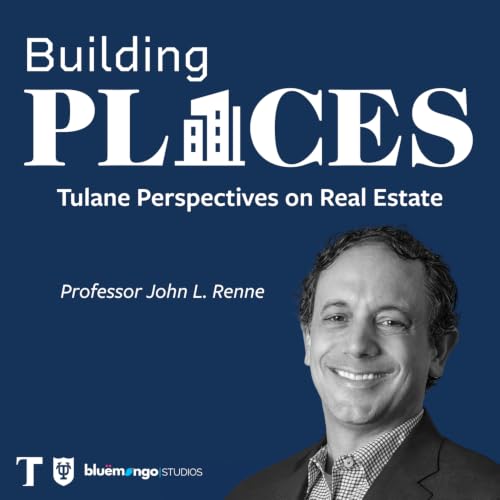
Building Places okładka

Building Places

Building Places

Autor: John Renne
Słuchaj bezpłatnie, bez subskrypcji

Saisonale Sparangebote | 0,99 € pro Monat für die ersten 3 Monate

Danach 6,99 €/Monat. Bedingungen gelten. Monatlich kündbar.
Cities don't happen by accident. Building Places goes behind the scenes with the people actually shaping the future of American cities, real estate professionals who are building more than buildings, they're building places. Hosted by John Renne, professor at Tulane University and director of its real estate program, the show is rooted in the Tulane real estate community: alumni, faculty, and students who are actively involved in shaping the industry, not just studying it. Each episode goes beyond the deal to focus on the place: walkable, resilient places people actually want to be in. That means blending finance, design, planning, and long-term investment thinking to understand how cities really grow. You'll hear real stories from the field, how deals come together, the risks developers take, and what happens when projects don't go as planned. The show also digs into the bigger forces shaping real estate today: sustainability, climate resilience, transit-oriented development, and artificial intelligence. New episodes drop every other Wednesday, twice a month, so there's always a fresh conversation waiting with someone building the places we live, work, and grow in. Whether you're a student, an industry professional, or just curious about the future of cities, Building Places connects classroom ideas to real-world practice. Connect with John Renne on LinkedIn or reach out at jrenne@tulane.edu.Copyright 2026 John Renne Ekonomia Finanse osobiste Sukces osobisty Zarządzanie i przywództwo
  • What 187 Drugstores Taught Him About Real Estate | Andrew Marcus - 008
    Oct 21 2026
    Some of the communities thriving today were shaped by developers who took chances on projects others walked away from.In this episode of Building Places, I am talking with Andrew Marcus, a graduate of Tulane's Master of Sustainable Real Estate Development program. Andrew also serves on the Tulane Real Estate Advisory Board and is an active developer in Greater New Orleans.Whether you work in real estate or simply care about the future of cities, this episode offers practical insights into the opportunities shaping Greater New Orleans.Episode Breakdown with Timestamps:From Tulane Student to Real Estate Developer (00:00:16 – 00:05:30)Andrew looks back on his time in Tulane's Master of Sustainable Real Estate Development program.He explains how the program prepared him for a career in development. It gave him a strong foundation in finance, planning, design, and sustainability.He also shares how those lessons still shape the way he evaluates projects and makes decisions today.What Sustainability Really Means in Real Estate (00:05:30 – 00:17:32)Andrew believes sustainability is about more than green buildings.He explains why strong local economies are the foundation of sustainable communities. Good projects create jobs, attract investment, and help people stay in the places they call home.The discussion also covers resilience, population growth, and the long-term future of New Orleans.From Software Sales to Real Estate Development (00:17:32 – 00:28:00)He shares the unexpected path that brought him back to New Orleans.After Walgreens acquired Rite Aid, many former K&B Drug Store locations became vacant. His family owned several of those properties.That challenge became an opportunity. Andrew began redeveloping the buildings and discovered a passion for commercial real estate.He explains why every property requires a different strategy and why understanding the local market is critical.Why Industrial Real Estate Is Driving Louisiana's Growth (00:28:00 – 00:34:00)Industrial real estate has become a major part of Andrew's work.He explains why demand continues to grow for warehouses, manufacturing facilities, and distribution centers across Louisiana.The conversation also explores the transition from NAIOP to CREDA (Commercial Real Estate Development Association) and why industry groups play an important role in sharing knowledge and supporting the profession.Why Andrew Is Optimistic About New Orleans (00:34:00 – 00:41:00)Andrew believes New Orleans is entering a new period of growth.He points to improvements in permitting, new investment across the state, and projects like the Louisiana International Terminal.He also explains how commercial real estate development creates jobs, attracts businesses, and strengthens local communities.Preparing the Next Generation of Real Estate Leaders (00:41:00 – 00:46:15)The conversation reveals how he is mentoring Tulane students and helping them launch their careers.He believes successful developers need more than technical knowledge. They also need strong relationships, curiosity, and a long-term mindset.He encourages students to build their networks early and stay open to new opportunities.Themes DiscussedBuilding a career in commercial real estateAdaptive reuse and retail redevelopmentSustainable real estate developmentIndustrial real estate and economic growthThe future of New OrleansCommercial real estate investmentProfessional networking through CREDAPreparing future real estate leadersKey Quote from the Episode"Sustainability is economic sustainability. If we can create projects that bring investment, create jobs, and help people stay here, everything else starts moving in the right direction." — Andrew MarcusResources MentionedTulane Master of Sustainable Real Estate Development (MSRED) ProgramTulane School of Architecture and Built EnvironmentCREDA (Commercial Real Estate Development Association)Louisiana International TerminalK&B Drug StoresFollow John Renne on LinkedIn:https://www.linkedin.com/in/john-l-renne Follow Tulane Real Estate on Instagram:https://www.instagram.com/tulane.real.estate/ CreditsThank you for listening to Building Places, the Tulane perspective on real estate, people, projects, and ideas shaping the future of cities, real estate, and the built environment.If you enjoyed this episode, please subscribe, leave a review, and share it with someone interested in real estate, architecture, or city development.Join us next time as we continue exploring the people and projects building the places where we live, work, and thrive.
    Rozwiń Zwiń
    49 min
  • Building Differently: Architecture, Development, and the Politics of Getting Projects Built | Matt Frank - 007
    Oct 7 2026
    What happens when you apply an architectural lens to the high-stakes world of real estate development? In this episode of Building Places: Tulane Perspectives in Real Estate, I’m talking with Matt Frank, a graduate of Tulane’s School of Architecture and current principal at Morvay.We explore his transition from a licensed architect to an "asset agnostic" developer and how he’s now focusing on specialized industrial spaces.The episode ends with Matt discussing the importance of mentorship and how his connection to Tulane eventually led to a lifelong business partnership.Episode Breakdown by Timestamps:The Foundation of Architectural Education (00:00:48 - 00:03:07)Matt began by saying his architectural education serves as the foundation for everything he’s done.He shared a great story about how an interviewer literally moved his folder from one box to another to get him into the program.According to Matt, the program wasn't just about design; it was a process for analyzing data and solving problems for specific places.Bridging Design and Finance: A Father’s Perspective (00:03:08 - 00:07:52)Since Matt’s son recently graduated from the same school, we discussed how the curriculum has evolved to include more robust real estate training.Matt admitted he was jealous of the financial analysis tools and internships his son had access to, which weren't available during his own time in school.In his voice, the modern program at Tulane successfully bridges the gap between design sensibility and the practicalities of financial viability.Being "Agnostic" Across Real Estate Sectors (00:07:53 - 13:11)Matt explained that he has been agnostic in terms of asset classes, working on everything from prefabricated social housing in the UK to large-scale office and industrial projects for a REIT.He talked about his current company, Morvay, which focuses on "shallow bay" industrial spaces for small manufacturers and distributors.The conversation touched on how diversifying into different sectors, like industrial and multi-family housing, acts as a hedge against shifting capital markets.The Brutal Reality of Entitlements (13:12 - 17:52)Matt defines "entitlements," a kind of global process of getting a project approved through all of the local and state and otherwise municipal agencies, regulatory agencies to allow you to put a shovel in the ground and start buildingHe essentially runs "political campaigns" to get community buy-in, which involves meeting with church groups and local neighbors.The biggest hurdle is "NIMBYism" people who support development in theory but don't want anything to impact their own lifestyle or "white picket fence."Traffic, School Children, and the Logic Gap (17:53 - 25:09)Matt noted that 90% of community pushback is driven by fears over traffic and the influx of school children.He expressed frustration that the public often ignores the "science" of traffic reports and doesn't believe that multi-family projects can actually generate millions in net tax benefits for schools.In his experience, even proving a massive financial benefit to a municipality often isn't enough to overcome emotional opposition.State Preemption and Overcoming Local Backlash (25:10 - 32:16)The conversation covered the trend of "state preemption" in California and Florida, where state laws are beginning to override local zoning to ensure housing gets built.Matt shared an example of a multi-family project in Los Angeles where state housing bonus laws are the only thing making the development financially viable against local backlash.He finds it fascinating that despite different political leanings, both states are moving toward reducing the regulatory "government overreach" that kills new supply.Mentorship and Building Better Developers (32:17 - 38:18)Matt’s advice for the next generation is to look beyond being a "finance ninja" and develop the ability to critically understand a real estate problem as a whole.He highlighted the strength of the Tulane network, mentioning that he actually started his current business with a former student he mentored.According to Matt, having a sensitivity to how buildings impact society ultimately makes for a more successful and responsible real estate developer.Key themes discussedArchitectural education and problem solvingThe entitlements processthe politics of developmentNimbyism and community concernsState preemption vs. local controlMultidisciplinary real estate trainingThe value of mentorshipQuote from the Episode"The entitlements process is generally the kind of global process of getting a project approved through all of the local and state and otherwise municipal agencies, regulatory agencies to allow you to put a shovel in the ground and start building." — Matt Frank.Follow John Renne on LinkedIn: https://www.linkedin.com/in/john-l-renne/Follow Tulane on Instagram: https://www.instagram.com/tulane.real.estate/ResourcesLearn more about Morvay:https://morvayholdings.com/Follow...
    Rozwiń Zwiń
    40 min
  • Building Through Every Recession: Chris Cobb's 30 Years in Real Estate | Chris Cobb - 006
    Sep 23 2026
    Some of the best real estate projects take years to complete. They also take patience. They take good timing. Most importantly, the ability to keep moving through difficult markets.In this episode of Building Places, I am with Chris Cobb, Managing Director at Grass River Property and a Tulane architecture graduate. Chris shares the lessons he has learned from more than three decades in architecture, development, and city building.Are you interested in development, architecture, urban planning, or commercial real estate? This episode is packed with insights from someone who has experienced both the highs and the lows of the industry.Episode Breakdown with TimestampsFinding the Right Career Path (00:00:00 – 00:21:40)Chris begins by narrating how a single drafting class in high school sparked a lifelong career in architecture and real estate. This opening chapter follows the path from Tulane's architecture program to Harvard Business School. And, into South Florida's development industry.Along the way are stories of rejection, career pivots, and valuable lessons learned through construction, architecture, and development. It's a reminder that successful careers rarely follow a straight line.Building Communities That Last (00:21:40 – 00:37:30)The discussion deepened as Chris explored how long lasting communities come to be. He says walkable neighborhoods don't happen by accident. They are shaped by thoughtful planning, long-term investment, and a clear vision for how people want to live.Projects like Downtown Doral, CocoWalk, and Grove Central illustrate how mixed-use development can transform communities. Encourage transit use. And create places where people can live, work, and spend time without depending on a car.The Truth about Surviving Market Downturns and Managing Risk (00:37:30 – 00:47:00)According to Chris, every real estate cycle brings new opportunities and new challenges. Few developers escape market downturns, but the best learn how to adapt.This part of the conversation looks at the 2008 financial crisis. The difficult decisions developers face during uncertain times. Chris also explores why patience often creates opportunities that don't exist during booming markets.Growth, Housing, and the Future of Miami (00:47:00 – 00:57:30)Miami continues to evolve, bringing both exciting opportunities and difficult questions.Topics include affordable housing, transit-oriented development, stronger building codes, rising construction costs, flood resilience, and the balance between growth and quality of life. The discussion also explores why thoughtful planning matters as cities continue to expand.Lessons for Future Real Estate Leaders (00:57:30 – 01:02:20)Success in real estate isn't built overnight. Experience, relationships, and good judgment often matter more than moving fast.The episode closes with practical career advice for students and young professionals. Along are reflections on mentorship, networking, and the value of learning from people who have already navigated multiple market cycles.Themes DiscussedReal estate developmentArchitecture and urban designWalkable communitiesMixed-use developmentCommercial real estateMiami's growthAffordable housingResourcesGrass River: https://grassriver.com/3650 Capital: https://3650capital.com/Urban Land Institute (ULI): https://uli.org/CoconutGrove: https://www.miamiandbeaches.com/neighborhoods/coconut-groveDowntown Doral: https://www.downtowndoral.com/Learn about the Live Local Act: https://www.floridahousing.org/live-local-actTulane School of Architecture and Built Environment: https://architecture.tulane.edu/.Tulane Real Estate Program: https://architecture.tulane.edu/real-estateKey Quote from the Episode"Don't always take the easy decision. You need to go out on a limb a little bit to really get the return." — Chris CobbCreditsThank you for listening to Building Places, the Tulane perspective on real estate, people, projects, and ideas shaping the future of cities, real estate, and the built environment.If you enjoyed this episode, please subscribe, leave a review, and share it with someone interested in real estate, architecture, or city development.Join us next time as we continue exploring the people and projects building the places where we live, work, and thrive.
    Rozwiń Zwiń
    1 godz.
adbl_web_anon_alc_button_suppression_t1
Brak recenzji