

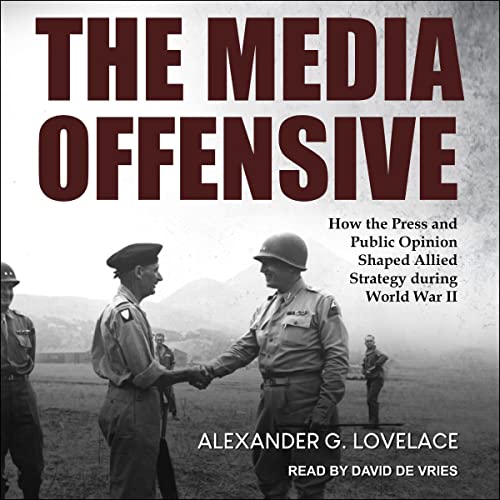
The Media Offensive
How the Press and Public Opinion Shaped Allied Strategy During World War II
Nie udało się dodać produktów
Nie udało się dodać tytułu do koszyka.
Nie udało się dodać tytułu do schowka.
„Usuń ze schowka“ nie powiodło się.
„Obserwuj podcast“ nie powiodło się
„Przestań obserwować podcast“ nie powiodło się
Wypróbuj Audible Standard bezpłatnie przez 30 dni

The Media Offensive
Kup za 21,04 €
-
Czyta:
-
David de Vries
-
Autor:
-
Alexander G. Lovelace
World War II was a media war. President Franklin D. Roosevelt used the press to a great extent, of course, but as the war progressed, the media also came to influence commanders' decisions on the battlefield. Negative media pressure and the fear of V-1 bombs damaging British morale provided the impetus for the breakout of Normandy and the unsuccessful attempt to liberate the Netherlands in the fall of 1944. Soon afterward, Eisenhower was forced to hold the dangerously exposed city of Strasbourg because of French public opinion. By V-E Day, even Eisenhower was attempting to get more publicity for American, as opposed to Allied, units.
The Media Offensive offers a new way to understand military-media relations during World War II. The press and public opinion shaped not only how the conflict was seen but also how it was fought. Alexander Lovelace demonstrates that the US military repeatedly discovered that the best effects resulted from accurate news stories.
Lovelace recasts World War II in a new and unique fashion by placing media and public opinion at the center of battlefield decision-making. In what could be called "the new history of war reporting," the focus is switched from how the military controlled reporters to how military decisions were shaped by the press.
©2022 The University Press of Kansas (P)2022 Tantor