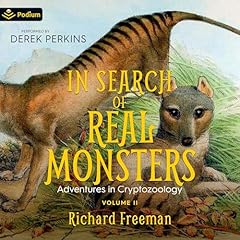
Adventures in Cryptozoology: Hunting for Yetis, Mongolian Deathworms and Other Not-So-Mythical Monsters
Adventures in Cryptozoology, Book 1
Nie udało się dodać produktów
Nie udało się dodać tytułu do koszyka.
Nie udało się dodać tytułu do schowka.
„Usuń ze schowka“ nie powiodło się.
„Obserwuj podcast“ nie powiodło się
„Przestań obserwować podcast“ nie powiodło się
Wypróbuj Audible Standard bezpłatnie przez 30 dni

Adventures in Cryptozoology: Hunting for Yetis, Mongolian Deathworms and Other Not-So-Mythical Monsters
Kup za 18,94 €
-
Czyta:
-
Derek Perkins
-
Autor:
-
Richard Freeman
Discover the science of (not so) imaginary creatures
Adventures in Cryptozoology is the perfect resource for the explorer who loves Josh Gates' Expedition Unknown and Cryptozoology A to Z.
Explore the world through its most unlikely creatures: Cryptozoology, the study of hidden, monstrous, and legendary animals, is truly the art of discovering the unknown. Richard Freeman, Zoological Director of Centre for Fortean Zoology, has explored the corners of the five continents on the search for creatures that many people believe are non-existent. In this book, he shares the exciting stories of his investigations of the Yeti, Mongolian Deathworm, Loch Ness Monster, Orang-Pendak, Ninki-Naka, and more.
The line between myth and reality may be more narrow than you think: Cryptozoologists throughout the years have studied unknown species of reptiles, lake and sea creatures, apes, and hominins. The science and history of this field of study includes examples of creatures that were once thought to be mythological, but that have since been proven to exist.
Our monsters, ourselves: The history of fabulous beasts and our searches for them is a history of the cultures of the world and the secrets we keep.
If you're ready to begin your search for Sasquatch and learn to hunt monsters, Adventures in Cryptozoology is your guide. In this audio, you'll find:
- Tales of mythical, extinct, and out-of-place creatures
- Hints about Bigfoot and other ape-men
- And tips for equipping your own cryptozoology adventure, including all the gear, field craft, and resources you'll need to record your findings
Continue the series