

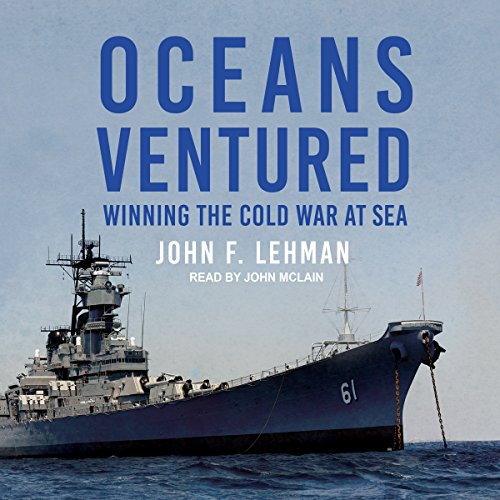
Oceans Ventured
Winning the Cold War at Sea
Nie udało się dodać produktów
Nie udało się dodać tytułu do koszyka.
Nie udało się dodać tytułu do schowka.
„Usuń ze schowka“ nie powiodło się.
„Obserwuj podcast“ nie powiodło się
„Przestań obserwować podcast“ nie powiodło się
Wypróbuj Audible Standard bezpłatnie przez 30 dni

Oceans Ventured
Kup za 18,94 €
-
Czyta:
-
John McLain
-
Autor:
-
John F. Lehman
When Ronald Reagan took office in January 1981, the US and NATO were losing the Cold War. The USSR had superiority in conventional weapons and manpower in Europe and had embarked on a massive program to gain naval preeminence. But Reagan already had a plan to end the Cold War without armed conflict.
Reagan led a bipartisan Congress to restore American command of the seas by building the Navy back to 600 major ships and 15 aircraft carriers. He adopted a bold new strategy to deploy the growing fleet to northern waters around the periphery of the Soviet Union and demonstrate that the NATO fleet could sink Soviet submarines, defeat Soviet bomber and missile forces, and strike aggressively deep into the Soviet homeland if the USSR attacked NATO in Central Europe.
New technology in radars, sensors, and electronic warfare made ghosts of American submarines and surface fleets. The US proved it could effectively operate carriers and aircraft in the ice and storms of Arctic waters, which no other navy had attempted.
The Soviets, suffocated by this naval strategy, were forced to bankrupt their economy trying to keep pace. Shortly thereafter the Berlin Wall fell, and the USSR disbanded.
©2018 John Lehman (P)2018 Tantor